Showing posts with label 1960s. Show all posts

Wednesday, April 10, 2013

The Beatles, "Penny Lane" & "Strawberry Fields Forever"


Y'know, it's funny. One day you're a rebellious youth in a rock n' roll band singing Elvis and Little Richard covers for dancing teens in a basement club, or drunk businessmen in Germany, basically doing whatever you can to escape your dingy backwater hometown. Suddenly you're a success, wearing matching suits and bobbing your head and having to turn your guitars way way up to be heard over the legions of screaming, breathless girls who don't even care what your music sounds like because they just want to be near you.

Then suddenly that gets old; real old. You don't want to tour for the screaming girls anymore, and instead of playing loud guitar music, you're writing jaunty tunes on a piano and filling them with wistful flutes and little trumpets. And instead of singing about getting up the nerve to ask a girl to dance, or wishing she could be near you when you're away, you're singing about barbers and firemen in that backwater hometown you worked so hard to escape.

Starting with Revolver, the Beatles weren't playing for crowds anymore, which meant not only an open invitation to workshop and tinker in the studio, but carte blanche to create music they had no intention of ever performing again. I don't know if there was any pop artist in history prior to that, who had that luxury. The record could now be the thing, cobbled together on tape from endless takes and tracks (well not endless -- there were some technical and practical limitations) for the artist to put out into the world and forget. Indeed, the premise of the forthcoming Sgt. Pepper's Lonely Hearts Club Band was to create an album that would "tour" for them -- how that was meant and whether it was possible let alone accomplished who knows, but it was a damn good record. The Beatles now only existed in photographs on a record sleeve, and maybe a promotional video, the prototypical "music video." And of course, as sound: a now increasingly experimental, loosely defined sound.

"Penny Lane" doesn't sound horribly out of step with a lot of previous Paul McCartney songs, like "Yesterday" and "Eleanor Rigby" or "For No One" with its fantastic French Horn solo. But unlike those somber affairs, the orchestration here brings a happy time: pleasant, carefree memories of a time and place. The way John Lennon describes his original take on the earlier song "In My Life" sounds very much like what "Penny Lane" ended up as: a series of value-neutral descriptions of activities, places, and people in Liverpool (indeed, "Penny Lane" appears on that lyric sheet, so they say.) The final version was a meditation on love and loss, an amazing song. But is that to say the song Paul McCartney ended up writing was inferior too?

Nope. Paul had a knack, when he tried, for the understatement. The implication. It appears in its rawest form in "Yesterday" but he refined his sense for the loaded detail in "Eleanor Rigby" and "For No One," which are purely descriptions left to the listener's imagination, which add up to something very full. In the words and music of "Penny Lane," the listener is transported away from their own time and place and into the 1950s Liverpool suburbs.

There is a hidden dimension to this song that is not literally stated: it's not a description of a day on Penny Lane, it's a description of all the days in Penny Lane. The chorus makes reference to "The blue suburban skies" but also in the lyrics is "The pouring rain." My own personal take on this is that the memories all sort of blur together: you see all these people on different days, the memories blend together when you try to call them back up together, the past becomes this weird, blended, changing thing. The details stated create the place, and then the way they are related shows your removal from it. This could be Paul's intention, it could be my overreading, but it's at least in there, and enhances my enjoyment of the song whether it means to or not.


Lennon, meanwhile, couldn't just write something and not wring his version of the truth out of it. The lyrics to "Strawberry Fields Forever" are like absurdist poetry: what does the title phrase mean, why does it seem infused with such deep implications? Why does the singer keep doubling back and stammering over his statements? I could try very, very hard to catalogue all the different lyrical tricks Lennon plays in this song in an attempt to tease out the meaning, but even that would be far from authoritative. In the big picture, it's another mystical broadcast from the Lennonverse, the ongoing process of learning to scoop out his own brain and put it down on record for the people, to create music that was authentically not just his, but him. This song contains one of my all-time favourite lyrics, "No one, I think, is in my tree / I mean it must be high or low." He later explained it was a statement that he didn't know anyone who was like him, so he must be either crazy or a genius. Not only a great thought, but a terrific way of putting it.

Because the song is sutured together from two separate takes with wildly different instrumentations, it's hard to tell exactly what's in the song: melted down horns, tense strings, bellicose drums. It's like "Penny Lane"'s acid trip. It's like that video where you're too busy watching the basketball being passed around to see the dancing bear mascot. Revolver inaugurated the "anything goes" post-touring Beatles incarnation, and "Strawberry Fields Forever" and "Penny Lane," together each in their own way, showed exactly how far they could stretch out.

Saturday, March 23, 2013

Cover: Ronnie Hawkins & The Hawks, "Hey Bo Diddley"


Back when The Band was still The Hawks, they backed Ronnie Hawkins on this cover of Bo Diddley's original, which takes elements from both "Bo Diddley" (which is based on the "Hush Little Baby" lullaby) and "Hey! Bo Diddley" (which is based on Old Macdonald.) The thing that bites me is that growing up, I only knew this version from the oldies radio station, and assumed it was Bo's original. So until tonight I was mad trying to find the version with this exact phrasing.

I came to think of it because I was listening to "Hare Krishna" by Husker Du, and I thought "Hey, they're doing a goof on 'I Want Candy!' Wait, 'I Want Candy' is just a Bo Diddley beat! Oh yeah, like a million songs have that beat in them!" It's a great, timeless rhythm that keeps getting used in rock music (though you don't hear it much anymore) because it's solid and propulsive but also sinewy and suggestive. "Bah-bah-bah---a-bah-bah." Check out this quote from Wikipedia about its prevalence:

“Other songs employing the Bo Diddley beat include “(Marie’s the Name) His Latest Flame” (1961) by Elvis Presley, “I Want Candy” by The Strangeloves, “1969” (1969) by The Stooges, “Panic in Detroit” (1973) by David Bowie, “Mr. Brownstone” (1987) by Guns N’ Roses, “Hari Krsna” (lyrics are even sung to the tune of ‘Hey Bo Diddley’) by Hüsker Dü from their album Zen Arcade, “Faith (1987) by George Michael, “Desire” (1988) by U2, “Boa-Diddley” (1990) by Phillip Boa and the Voodooclub, “Movin’ on Up” (1991) by Primal Scream, “Woodcutter’s Son” (1995) by Paul Weller, and “Screwdriver” (1999) by The White Stripes.[50] Other examples include “Magic Bus” by The Who, “Rudie Can’t Fail” by The Clash, “Get Me to the World on Time” by The Electric Prunes, and “Party at the Leper Colony” by “Weird Al” Yankovic.[51] Some of the more subtle uses of the Biddley beat include “Hateful” (1979) by The Clash and “How Soon Is Now?” (1985) by The Smiths.”

Wednesday, January 23, 2013

The Beatles: Revolver (1966)

Between the quality of the music and its legacy of innovation, Revolver is probably the most accurately praised Beatles album of the lot. There's no risk of over-praising it because there was no precedent for what it did, and it delivers on the promise of art pop you can really listen to. There's absolutely no room to overestimate this one, and its pleasures are apparent enough that it doesn't get underestimated either.

This album runs 34 minutes and 40 seconds. There are entire worlds in the songs on this album. "Eleanor Rigby" is only 2 minutes and 6 seconds and hardly contains enough words to convey its plot, but those few scraps, along with the dynamic strings that propel it, are enough to tell you more than almost any song you can name. The track that follows it is the first clanging, jangly step into John Lennon's dreamworld (well, the second after "Rain.") It has those yawning reversed guitars that perfectly put you in mind of both peaceful relaxation and fearful loss of control to imagination. It has those ghostly back up vocals that ooh and ahh and fade in and out. Many of the songs on this album, like that one, suggest or create entire worlds just for their own duration. Lennon went on to create numerous other ones soon after. Whatever they were on at the time (LSD, mostly,) allowed them to discard precise notions of pop songwriting that had gotten them where they were. They were emboldened to trust their (newly chemically enhanced) instincts, and it was paying off. A song about sleeping could now sound like a dream.

John, on his contributions to the album, is intent on translating the experience of taking LSD into music. Which is thoughtful, since I don't plan on ever taking LSD myself. So "She Said, She Said" will have to do, with its lapping, distant vocals and snarling, ringing guitars that shimmer like the stars themselves. John's songs, dotting the landscape of the disc, are a consistently unsettling yet serene experience, one of a grandiose otherworld where things are huge and distant and foggy yet clear. That song recounts a bizarre encounter with Peter Fonda (transformed into "She" to make the song even more enigmatic, to strange effect.) His love for strangely accurate dialogue comes in: "She said, you don't understand what I said / I said no, no, no, you're wrong." But mysterious all the same: "'Cause you're making me feel like I've never been born." A whole album that sounds like this would be one thing, a very welcome thing, but it's not. John broadcasts intermittently from that dimension, the feed coming in between Paul's next genre experiment. In the Lennonverse, things are familiar yet intimidatingly unusual. The most conventional of the lot is the loopy "Doctor Robert," the ode to the drug dealer that makes him a folk hero. The one that rattles me most, in a good way, is "And Your Bird Can Sing," because it rocks with that spiraling guitar winding through it. It's also completely insane - where "She Said She Said" is a recounting of a conversation that makes no sense, "And Your Bird Can Sing" sounds like one side of a conversation that makes no sense, even to the people having it. The meaning of the metaphor - if there even was one - is completely lost to time. And I think that's fine. It's a nice monument to the way Lennon could pick a stray thought or turn of phrase and make a whole song out of it.

While Lennon was out exploring his own dimension, Paul McCartney was mapping this one. "Yellow Submarine" gave him a bright, vivid palette to work with, and it resulted in some great splashy tunes like "Good Day Sunshine" and "Got To Get You Into My Life." "Sunshine" is built on a rumbling low-key piano riff, paradoxically low and bouncy, like a jovial fat guy. "Got To Get You Into My Life" is a declaration of romantic love and devotion to pot, marked by its indelible horn fanfare. If you ever have to pledge devotion to something, make sure there are trumpets nearby.

But aside from celebrating the simple pleasures of life, Paul was also finding a knack for enunciating its darker moments. I don't know, maybe I'm the only one who sees "Here, There and Everywhere" as a sad song. Not a tragic one, like "Eleanor Rigby," but with its cooing background vocals and minimal instrumentation, it hits on a certain kind of sadness, a fearful vulnerability in being that in love with somebody. I don't think of this as being an "at ease in love" song. It's a song about the pain of need.

But if we're talking about pain, we have to talk about "For No One," one of the best screenshots of a breakup committed to tape. Every element of this song is calculated, or at least moves intuitively, from its lonely staggering waltz tempo, and its mesmerizing piano under the chorus, to its solitary, just off in the distance French Horn solo (motherfucking French Horn solo!) It also has those amazingly pointed lyrics: "Your day breaks / Your mind aches / You find that all her words of kindness linger on when she no longer needs you." ... "And in her eyes you see nothing / No sign of love behind the tears / cried for no one / A love that should have lasted years." It's also written in the second person - accusative and judgmental, daring in its own way for a pop song. It deserves every bit as much accolades as "Eleanor Rigby," but is maybe a bit less beloved because instead of a profound statement, it hits on a very ordinary sort of pain, the kind that was the darkside of the pop music they were already performing for years. But they never captured it like this before.

George gets in on the action with three very good songs. "Taxman" manages to outdo the sardonic tones of "Day Tripper" or "Drive My Car" by airing real grievances and loaded with acidic humour, delivered in a sludgy form of funk that casts an exactly slimy type of character: if psychedelia was about the liberation from Earthly pursuits, here was the villain song. "I Want To Tell You" is about the way the mind sometimes cheats you out of what you want to say (a feeling familiar to me,) built on an inspiredly simple, slithering riff. The other, "Love You To," was George's first full-fledged attempt at an Indian raga. I was never a fan, I think you had to be there, but there's something charming in the clash between the mysticism conjured up by the sitar and the very earthly, very human voice of George Harrison.

"Tomorrow Never Knows" is shocking, with its thundering drums, skittering sound effects, distant vocals, laughing seagulls, like that whole world Lennon built rushing past you in three minutes. It seems like the culmination of the experiments conducted throughout the recording process, but it was in fact the first song recorded. It cuoldn't have gone anywhere at the end. Its lyrics, ripped from the Tibetan Book of the Dead, give the listener something to chew on, and provide an act that cannot be followed - or so you'd think. Turns out they were really only beginning.

The obvious selling point of Revolver is its eclecticism. They really do get away with a lot of stuff in only a half hour. What unifies it is its problematic relationship to reality. John scatters it with sound effects and scenery. Paul heightens it with judicious usage of genres, whether it's sunny pop, kids songs, classical waltz, or Motown. Paul's songs here show you the logical extension of your feelings. John's become something of an inkblot - you can see anything you want in them. One shows us a world we've never known before, one shows us a world we didn't realize we were already looking at.

Buy this album now: iTunes Canada // iTunes USA // Amazon.ca // Amazon.com


Wednesday, January 16, 2013

The Beatles, "Eleanor Rigby" & "Yellow Submarine"


In order to represent the scope and inventiveness of the Revolver album, the Beatles chose to release a double-A side single with two of the most diametrically opposed songs they ever bundled together - and since that was a move they often pulled that's saying something. While both tunes are illustrations, one is decidedly escapist and the other grounded in a rather harsh version of reality.

"Eleanor Rigby" is brilliant in just about every way it can be. It begins almost in medias res with the enigmatic chorus phrase "Ah, look at all the lonely people", while a string quartet swirls belligerently around the vocals. It wasn't the first time strings were used on a Beatles songs and not the last, but while "Yesterday" was meant for a languid beauty, "Rigby" has them tensing the situation up, wrenching pity out of the listener for the subject of the song. The details themselves are extremely well chosen, using only a few tableaux to draw Eleanor and Father McKenzie together without saying why they are inhabiting the same song, besides...

All the lonely people,
Where do they all come from?
All the lonely people,
Where do they all belong?


That. That fucking chorus. Man. That's a sentiment you simply would not expect out of the Beatles... ever. They're a Greek chorus, trapped outside the narrative. This is such an economical, load-bearing phrase. It sums up the song but instead of resolving it, deepens it by drawing up more metaphysical questions. Ambiguity was staking more and more of a claim in the Beatles' lyrics and music as of Revolver, as distinguished from vagueness by details and implications like the ones found in this song.


By contrast "Yellow Submarine" is an experiment of its own, and though it's more technicolor kiddie fantasy it's no less worth noticing. For the burgeoning psychedelic era, childhood imagery was a great tease, both an escape and a highlighting of how dire things were in the real world. It's quite tempting to run away and go "Live a life of ease" where "Every one of us has all we need," especially since that turns out to be "Sky of blue and sea of green." For the next while, the Beatles' music represented a passageway to the ordinary turned extraordinary, and the joys of a simpler existence. Real, earnest hippie stuff that doesn't seem so dated today.

As for the song itself, it works. As corny as I may sometimes find it, it hangs together as a kids song for adults, memorable and fun, with a thrown-together-in-the-basement, sound effect-laden, just for laughs feel.

Seriously, the contrast between the artfully baroque, existential craft of "Eleanor Rigby" and the anything-goes family friendly feeling of "Yellow Submarine" must have made for an irresistible teaser for Revolver when it was simultaneously released with this .45 in August 1966. How could you not want to know what else existed between these two signposts of advancing ambition, exploration, and plain old quality? Maybe there were better or more commercial songs on the album, but few paired together would have summed it up so succinctly. The dark and the light.

Wednesday, January 9, 2013

The Beatles: "Paperback Writer" & "Rain"


The "Paperback Writer" / "Rain" single is pretty notable for a few reasons beyond its pumped up bass sound. It continues the forward momentum of songwriting, and particularly marks an important moment for Paul. John had recently, on the Rubber Soul LP, unlocked the secret to a new kind of writing, bringing to the table a number of songs that finally cast off the obligatory boy-girl narrative that had driven every previous Beatles song to some degree or another. Paul was doing good work, but it was still variations on a theme.

Specifically, this is the first single they wrote that is not even halfway a boy-girl song, it's a song about an an aspiring writer brimming with enthusiasm for his project and trying to sell himself. Does it make it better that it's not about a man pledging his love to a woman? Maybe, maybe not, but I think it was important, especially for that they did in 1966 and 1967, to have new tools in the shed. What's more it does rock. John unfairly slighted this song as being "Son of Day Tripper" which diminishes the things that "Paperback Writer" actually does bring to the table, which apart form its subject matter, also include a neat usage of "Frere Jacques" as a backing vocal, the aforementioned bass (and roaring guitar riff, stinging the refrain) and motormouthed, polysyllabic lyrics. If anything, it might be the bastard offspring of "Day Tripper" and "Help!" If it's a bit of a copy, in that respect, then it's still got its own joys.

Here's the other thing. John was experimenting with his songwriting in ways that allowed him to turn the spotlight on the world around him and his place within it. "Nowhere Man" is social commentary as well as self-examination, "Norwegian Wood" and "In My Life" were self-mythology. Paul's songs are always less keen to reveal the self, and "Paperback Writer" is far from an autobiographical song, it's just... fiction. In music. It's a story about a storyteller, about a character with wants and desires, set to music. What's more, it's not even a story arc, it's just a scene from his life. Paul was becoming adept at seeing moments in the world and painting pictures of them with his words and music, as much as John was at exploding them outwards. While John's music was becoming more grandiose and ambitious - more art for art's sake - Paul embraced a path that seems easier but is riddled with its own difficulties. "Paperback Writer" is, perhaps too fittingly given its subject, a great example of Hemingway's iceberg theory. And it was a strategy he would use all the more the longer the Beatles kept going. John would build a world of his own, and Paul would reflect the one he saw.


Speaking of social critique, here's John's take on a reflection of modern life, a cutting takedown of the stuffy British upper class. John was getting better and better and articulating his worldview through his words and music. I've always liked this song for the way it sets dull, blase attitude about its subjects against a proto-psychedelic wash of guitars and bass and hammering, rat-a-tat drums, a bit of LSD-flavoured unreality impinging on the everyday norms. The difference between this song and "Paperback Writer" would become the key point for the upcoming Revolver album, and a lot of the Beatles' remaining recording career.

Wednesday, December 12, 2012

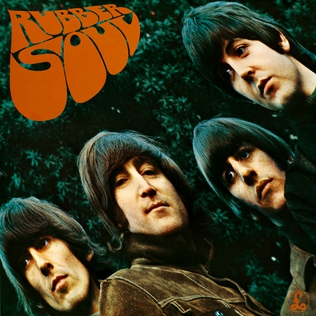
The Beatles: Rubber Soul (1965)

About a year ago, I was talking to a friend who isn't much of a Beatle fan. It was weird to me that someone wouldn't "just be into them" as a natural state, that anyone would ever need to find a way in. Nobody could tell her for sure which one would help her in. After a moment's thought I realized Rubber Soul was the one. The simple explanation for that is that its pleasures are the easiest to understand. Yes, there's a greatness to those first five albums, mostly within the sub-genre of "Beatlemania" music, which they were just starting to transition away from on the previous record. The sad truth, which I have suppressed in my reviews, is that if you're not into that music, if you don't just get "A Hard Day's Night" or "Ticket To Ride," there's maybe no reason you would start. And those later albums are brilliant and brimming with invention and ideas... but they can be a little off-putting. Try to convince someone the greatness of "Lucy in the Sky With Diamonds" or "A Day In The Life" or "She Said She Said" or "Across The Universe" or "Ob-La-Di Ob-La-Da," and again, they might balk. But, catching them at the precise moment they were kicking open the doors of creativity and inspiration, Rubber Soul is the most accessible, most evergreen album in the longview Beatles catalog. Its appeal is so basic yet so deep.

And the reason, I guess, is that this is still recognizable pop music, and if it was revolutionary at the time then it was a call from the future form that pop music would settle into. I've been thinking a while about some of the points I've made about "authenticity," and about how experimentalism and sensing the character of the author in the music became essential in rock music after the Beatles. As each Beatle pursued their own interests, it added up to a collection of 14 great songs with their own voices, together yet apart - a quality that would be blown up to epic proportions of subsequent records. Here, though, John's "In My Life" and "Girl" sit well with Paul's "Michelle" and "You Won't See Me" and it's all of a piece.

I think that because this album isn't as up-front about its brilliance, and subtler in its pop appeal, it's the most underrated Beatles album. It has rough points - the closing number, the unabashedly misogynistic "Run For Your Life" despite being catchy, is one of the most embarrassing things the Beatles recorded. Literally, I get embarrassed for listening to it. (John stole the opening lyric, "I'd rather see you dead, little girl, than to be with another man" from an Elvis song called "Baby Let's Play House," but the King managed to wait a whole song and build up to that statement so you wouldn't take him too seriously, whereas John put it right up front so you would.) "Wait" is considerably better, if simplistic by mid-60's Beatles standards. It has a zen-ness to it, in its shaking tambourines and softly bent guitars. "But if your heart breaks, don't wait, turn me away / And if your heart's strong, hold on, I won't delay." It would have been considered excellent just two years earlier. "What Goes On," the obligatory Ringo tune, shows how his microcosmic career within the Beatles was diverging, keeping true to that Western twang he displayed on "Act Naturally." Kind of a neat diversion in this folk-tinged proto-acid album. And in any case, it fits well with the album's undercurrent of trying to see into the hearts of others.

George Harrison's two contributions, "Think For Yourself" and "If I Needed Someone" both enhance his songwriting profile. Lyrically, they're extrapolations of his earlier efforts, putting a somewhat "iffier" spin on boy-girl narratives, wrenching open the quirks that tend to get missed out by mainstream writers. Sonically, they're lavish bits, with the roaring fuzz bass on "Think" and the commanding Byrds-esque 12-string on "Someone." He only got a few spots per album, but he made good use of them, drizzling each with special features.

A bunch of the songs, mostly Paul's, were really forward-looking pop numbers: smart but not psychedelic, meaningful but playful. "Drive My Car" doesn't get enough love. "You Won't See Me" and "I'm Looking Through You" are other great solid pop pieces that fill in the gaps of this album, do the heavy lifting, the way "The Night Before" and "You're Going To Lose That Girl" did on Help. Except they're way better. Every inch of "You Won't See Me" is slathered in greatness, from the backing vocal to the spiky guitar to the title phrase, which has been noted seems like the next step up the evolutionary scale from Help's "Tell Me What You See." It takes that John-esque angst from "No Reply" and replaces it with Paul's common touch. Dig also the scattershot guitar bursts in "I'm Looking Through You," it gets my heart racing. That these are the relatively minor tunes, not the blockbusters, shows how on-top-of-their-game this band was.

The album is laced, however, by several extreme highlights, mostly "Lennon" songs, although one really sweet spot is "Michelle," whose success is in being very simple without being simplistic, sweet but not saccharine, minor but not forgettable. Think about how it exemplifies the difficulty in communicating feelings. McCartney's songs on this one have a throughline of romantic disconnect. Lennon's are more observational. "Norwegian Wood," one of my favourite Beatles songs ever, is a perfect short story which offers no insight or explanation for the behaviour of its characters, it's just stuff that happens and speaks largely for itself. The sonic landscape, based on acoustic guitar and sitar (my favourite use of that instrument on a Beatle song) sweeps the listener up in the tale, then drops us back out of it, leaving uswondering what we've peeked in on. And in the long run, it's part of the Beatles' charm that sometimes they did things like this, just once, so perfectly, then never went back to it again. Because they had more stuff to try.

Then there's "Nowhere Man," which honestly always shocks me with how good it is. It shows how much they'd learned, from everything they'd been through, from themselves, from Dylan and other musicians along the way. It's a song about how useless and apathetic Lennon thinks everyone (including himself) is. It manages to be both catchy and meaningful -- and features a bitchin' guitar break that, like all great solos, seems to underscore the song's meaning. This was one of the first pop songs you really had to think about. Likewise, there's "The Word," one of many "Love will set you free" type anthems the Beatles penned, and for the first time it seems fairly obvious they're not really talking about romantic love. It's an anthem for the dawn of hippyism that is maybe a tad naive (though far from being "All You Need Is Love,") it's actually a bit practical if vague. Still, it gets its message across and is funky as hell, with Paul's bassline. With songs like these, they were either pointing their formerly teen audience into adulthood, or moving along with them.

And when you talk about "mature pop," you get to songs like "Girl," which espouses complicated emotions of a true love-hate relationship with a well-formed, dynamic female character (although she doesn't come off well,) and "In My Life," which depicts the strange balancing act between the past and the future for anyone in their mid-20's, who has lived some but still has a lot of time ahead. John Lennon was the same age when he wrote this that I am now, and it freaks me right the hell out. As on "Help," he digs down deep and comes up with something very personal, and specific yet extraordinarily relevant to listeners. This is his version of a "Yesterday."

Rubber Soul is one of my very favourite Beatles albums to listen to, one of the least susceptible to changing tastes and times. It's very chance-taking, and yet not in the sense that it's extreme... the music is lively and meaningful at once without ever being too loud or too low-key. All of the songs distinguish themselves with unique features, yet because of where the band was "at" at the time, they sound like they belong together. Here is a thoughtful band, with ideas about their music, writing tunes that have well stood the test of time.

For a while now it had seemed clear that each album was a chance to check in on the band as they moved through their lives and careers. That would only grow stronger as time went on, but here is where "who they are" begins to become crucial to what music they made and how it defined them. This is album is full of that extra ingredient, that sense of "who made this" that makes all great rock and roll what it is.

Buy this album now: iTunes Canada // iTunes USA // Amazon.ca // Amazon.com


Wednesday, December 5, 2012

The Beatles, "We Can Work It Out" / "Day Tripper"


"We Can Work It Out," like most great songs, mostly speaks for itself. There are few songs in the catalog more Beatley: it's brimming with the personalities McCartney and Lennon supposedly embodied, Paul's sunny optimism in the verses and Lennon's gritty realism in the middle eight.

It's an important single not just because it sounds awesome but because it sounds so distinct from every previous Beatles single. It's identifiable as pop, but doesn't quite follow that classic Beatlemania formula for a hit. It's not really in the mold of "I Want To Hold Your Hand" or "A Hard Day's Night" or the recent "Help!" and "Ticket To Ride." This single's release marks one of my favourite periods for the Beatles, as the drive to be creative and seek out new forms for their music kicks into high gear, but before experimentalism overtook them completely.

It comes back a bit to what I was saying about authorship and "authenticity" in rock and roll. Part of what makes rock and roll so good is that the audience wants to feel like the band is playing their own music: being a good musician isn't enough, you have to be an originator, finding your own voice. 1965 was more or less the year that songwriting itself became an instrument for the Beatles, moreso than it was already.


The on the other side of this double-A single is this riff-based rocker, not totally dissimilar to the Stones' "Satisfaction" or Roy Orbison's "Oh, Pretty Woman." But the riff is friendlier than the Stones', and the song rocks harder than "Pretty Woman" (with due respect to Roy.) The lyrics, about a "weekend hippie," find a nice balance between detailed observation and vague allusion, the kind of song where you might not quite know what it's about if you didn't already somehow know. They couldn't be mean like the Stones, but they could be cheeky and fun.

Anywhere. Here, more or less, is where they start making music that escapes the times. I love the early Beatlemania songs, they are perfect, catchy pop tunes that I can always listen to and probably won't be improved upon. But with this single and onward, you get songs that in 2012 sound like they've come out of nowhere.

Wednesday, November 28, 2012

The Beatles: Help! (1965)

One of the understated pleasures of Help! is that it brings a level of polished pop that isn't found on most other Beatles albums. They're now at the height of their pop songwriting abilities, and starting to dabble in genre-expanding exercises that would define their later career. In between exhilarating singles like the title track and "Ticket To Ride," and other songwriting high water marks, there is a surprisingly good mid-60's pop album, marking this one as a strangely underrated Beatles piece.

Underrated not without cause, because nobody is coming around for "The one with 'I Need You' and 'Another Girl.'" They represent a jangly, soft-bellied version of album-filling pop not present on the previous albums and not quite realized on the previous, mostly rockier ones. The latter of those is has a good, swift-paced twang to it, which shows that the Beatles at their worst are still as good as most bands. "I Need You" marks George's return to songwriting, his first since the universally underappreciated "Don't Bother Me" (which got to John's place Beatles For Sale mood a year early.) Really, George's better song here is "You Like Me Too Much," which like "Don't Bother Me" has a rather specific take on an otherwise generic scenario. He had d a gift for pointed lyrics, when he pushed himself. It's almost a taunt - "You're not going to leave me, no matter how I treat you. You like me too much." It's the kind of thing you couldn't get away with nowadays.

Likewise, nobody's going to point to "It's Only Love" as one of John's best lyrics, but it's one of his best-sounding songs to this point, hitting home a note of nervousness and self-consciousness at being in love that the lyrics don't quite live up to. It benefits from the fact that, as I've said, the band just sounds so good on this one: there's a certain beauty to it. The same can be said for "Tell Me What You See," whose climactic callout of the title phrase is really boss. Again, not one of their best taken at face value, but with hindsight it's an early clue to their growing fascination with perception and identity. Maybe, a little? No? Maybe not. But it's an A-moment in a B-song, pointing to the Beatles' growing ability to build their tunes around unique sounds rather than merely being songs for their own sake - soon they would lavish enough attention on even the minor songs that the minor songs would cease to exist. But I'm getting ahead of myself.

The two most telling songs about the Help album aren't the very best ones, but give a good sense of how far along their basic pop craft had come: "The Night Before" is a rollicking McCartney number based around an electric piano boogie that has a more innocent, affable take on similar terrain as Lennon's earlier "No Reply." It was a curiously off-kilter, funky guitar solo on it, courtesy of McCartney. Then there's Lennon's "You're Gonna Lose That Girl," based on a lightweight bongo tapping percussion, and "girl group" harmonies reminiscent of With The Beatles, but compositionally far beyond most of that record. Great album tracks like these did the heavy lifting while they explored new directions elsewhere. Not every track was a home run, but the ones that weren't were getting better.

As an album, bolstered by two bona fide hit singles (a rarity in the Beatles catalog) this album also has several other genuine blockbusters. One is Paul's motor-mouthed "I've Just Seen a Face," which perfectly captures in song that heart-pumping adrenaline feeling of meeting someone and instantly falling in love. Paul's narrator barely has time to collect his thoughts before spilling them all out. Then there's Lennon's Dylanesque acoustic heart-stomper, "You've got To Hide Your Love Away," which was one of the best indications that the band's sound could take on new, unprecedented dimensions and thrive. It succeeds in being "folk" because for all its being a song about isolation and dejection, it's still rousing and somehow unifying. Makes you want to link arms and sway.

And then of course there's "Yesterday," sitting like a sneak attack toward the end of the album. It marks a significant moment for Paul because it reveals a path that only he could follow, writing a song that nobody else could have. It's a perfect pop piece, the way the lyrics and vocals invoke sadness and sorrow without ever attaching it to an important concrete storyline: "Why she had to go, I don't know, she wouldn't say / I did something wrong now I long for yesterday." The strings are key: they're soft and understated, not melodramatic. This isn't a teen car crash song, this is something a bit more sophisticated. It could be anybody's pain. And though it's very sad, it's not so hurtful to listen to as it is sweet, because this pain is wrapped so neatly all together. Great pop music gives a voice to those things you can't necessarily sort out for yourself.

This album is filled out by two cover versions that basically shut the door on the idea of the Beatles as a cover band. "Dizzy Miss Lizzy" doesn't have the juice of a "Twist and Shout" or "Rock and Roll Music," no matter how forcefully John growls on it. "Act Naturally" at least makes better use of their instrumental dynamics with its reverberated twang. It's a perfect Ringo song, casting him as the likeable, put-upon everyman. It feels at least a bit more natural (har har) than the Carl Perkins and Buddy Holly covers from Beatles For Sale. Looking back, these covers are a farewell to the roots of the Beatles as they move to concentrating on engineering the future of music.

Help! is the growing pains album. They were mostly out the other side of it by the next LP, but for now they were still sorting out exactly what the way forward was. With Help!, things started falling into place, setting up the domino effect that would carry them through the rest of the 60's, the most even mix of rule-bending experiments and pop pleasures. So it gets forgotten a bit, left behind in ways, because it is an awkward part of the "narrative:" an album without a specific character. But in that split, it excels twice. So there.

Buy This Album Now:
iTunes Canada // iTunes USA // Amazon.ca // Amazon.ca


Wednesday, November 21, 2012

The Beatles, "Help!" & "I'm Down"


John Lennon often lamented that they ruined this song by speeding it up, instead of doing it as a contemplative, Dylan-like ode of self-reflection. Maybe that would have made for a remarkable recording, but it drains away so much of the song's charm and character - that immediacy, that bracing plea. Notably ,that "Help! / I need somebody" bit at the beginning, which does not re-appear, would simply not fit. It's such a visceral way to open a song.

Listen also to the way those guitars sink into lower tones, Bum, bum, buhhhh. There's something remarkable about how poly-syllabic the verses are ("I'm not so self-assured", "My independence seems to vanish in the haze.") These lyrics, these long sentences, are not built for a pop song and yet he delivers them like thy appeared in every pop song ever. I like the song the way it is, because it's articulate, and Lennon rattles off his problems and woes in such a motor-mouthed, panicked way, it adds to the urgency. I don't think this is a song that should be sung seated on the floor.

The other great thing about this song are those backup vocals. Typically, backup vocals sing in response, or in echo, but these ones sing the next line in anticipation - only partially, at their own mini melody. Jeezes. For one thing, where does that come from? How do you get the idea for something like that, what makes you think it will work, and since it does, why don't more songs do that?? It enhances the song so much, teasing the listener's ear, but you never even notice. Then, the more time you spend thinking about it (as I have obviously, perhaps too much) it seems so perfect for this song, because it's almost like the other guys are teasing John, rolling their eyes because they've heard the spiel so many times they can recite it themselves.


The other thing about the "Help!" single is that it features one of the first Beatles b-sides that could be an A-side in its own right. Maybe it doesn't have the artistic value that "Help!" was later revealed to, but it rocks to high holy hell, an effort to recreate those Little Richard tunes Paul was so good at covering. What I alays find is that nobody ever emulates anyone perfectly. The process of the Beatles trying to copy Little Richard resulted in something fairly original in its own right.

This song is great because it shows that at this point, the Beatles are still a working, touring rock band. The progress they made as musicians was not by design so much as it was finding their way through that. At this point in their career they were getting so good at so many things.

The Beatles, "Ticket to Ride"


1965 is a crucial year for watching the Beatles in their artistic development. They were still making gigantic pop smash hits but were doing so with an ever-confidence in their abilities to broaden their horizons. For a while yet, it would still be focused distilling perfect pop songs by improving every element they could.

There's something so excellent about this song, the way the music so perfectly conveys the lyrical subject, churning and droning and twanging. It's so gloomy, but never drags, resting as it does on the wistful melody of the vocals. There's a ton of extra goodies in there, from the chiming 12-string intro, which sounds like a little lonely cry sesh, to the little guitar lick that punctuates the refrain and the way the music drops out when they sing "Ri-hi-hiiide" leaving them swinging in the breeze.

Friday, November 16, 2012

Serious Contenders: Rolling Stones, "Ruby Tuesday"


With the release of the Rolling Stones' 3 disc (or more) retrospective, it occurred to me just how many different things the Rolling Stones did. The standard narrative was that whatever the Beatles did, the Stones had to try too, and did worse: The Beatles used strings on "Yesterday" so the Stones used them here. The difference is that the Beatles were that versatile, that whenever they would try something, they would become it wholly. It can be hard to pin down the exact nature of the Beatles after 1965 because of all the different stuff they threw themselves into. The Rolling Stones, by contrast, never weren't "The Rolling Stones." When they used baroque arrangements, they were still fronted by Mick Jagger's lumbering, dirty white blues vocals. The balladry was not a change or an adaptation or a new identity, it was a reference: the tough guy breaking down, reality crashing into the fantasy backdrop created by the musical arrangement. And because of that, the Stones' ballad work has a different effect than the Beatles'.

The Beatles were method actors, immersing themselves in their current role. The Rolling Stones were character actors, there to be themselves in whatever situation required it.

Thursday, November 8, 2012

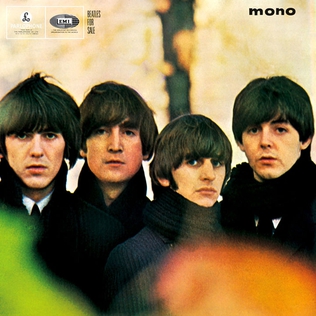
The Beatles: Beatles for Sale (1964)

Beatles For Sale is one of those hole-in-one shots for music critics. We like to write about it because it boils to two key points:
  • The Beatles, exhausted by the rigors of Beatlemania, were starting to get worn out, resulting in some negative music.
  • The music itself was still pretty awesome; the Beatles were approaching yet another creative peak, despite or perhaps because of the stress.
The Beatles, short on time and demanding too much of their new songs to crank out 14, went back to using covers to bolster their albums after the all-original A Hard Day's Night. By and large the song selection doesn't add to the narrative that Beatles For Sale was deliberately a negative album: "Words of Love" is very pleasant, and it's hard to read much into "Rock and Roll Music" and "Kansas City/Hey Hey Hey Hey." But the presence of covers at all, even competent, high-quality ones, is looked at as a surrender or a concession: "We have to crank out another album, but we'd need more time to write 14 songs of our own." This might not be the case exactly, but it's hard to blame them for digging down and pulling a few standbys from the back pocket.

My personal favourite is the much-maligned "Mr. Moonlight," which is if nothing else the most interesting. I love the vocal interactions built into the song, which suits the Beatles so well, the slight but jittery guitar work, and that muddy-sounding organ solo. And yet everyone else hates it.

As well, there are a few original tracks on Beatles For Sale that are not considered exceptional. You won't find too many people placing "Every Little Thing" on top of their list of favourite Beatles songs, same with "What You're Doing." And yet the truth about the Beatles at this point was that, for what they were putting out, even their less notable songs are still pretty awesome. "What You're Doing" has a sublime, muscular riff that perfectly sits in the mid-60s vibe. "Every Little Thing" has a good chorus, if not a hit-caliber one, bolstered by that little dramatic drumroll there. They are, it's said, "better recordings than songs." Not great on the page but really come alive in the studio. "I'll Follow The Sun" gets some love - Paul was responsible for all three of these songs, and this one apparently even dates back to the early years. I find that odd, since its light, sensitive lyrical matter, about moving on confidently after a break-up, sounds very "current" for the Beatles at the time of this album. While John was gaining a gift for introspection, Paul was mastering the art of writing a catch-all, the exact right level of vagueness appropriate for a pop song.

"Eight Days a Week" wasn't released as a single in the UK but was just too obviously a hit not to be one in the States. That's the kind of song you want all over the radio, with its glorious fade-in (who even does that?) It sounds like it's coming up over the horizon, a big towering thing. Lyrically and structurally, it's classic Beatles, catchy and pleasant as all hell, with a few interesting quirks to set it apart. I've also always loved the way they deliver the title phrase, keeping the pitch sharp, maintaining some giddyness. It's an oasis of positivity on this otherwise bleak album.

Bleak, I say. Not that this is a bad thing. Lennon's contributions, the oft-discussed opening trilogy of "No Reply," "I'm a Loser," and "Baby's in Black" as well as "I Don't Want To Spoil The Party," all explore negative emotions and occurrences, like rejection, doubt, frustration, and paranoia. It's hard to tell which is the best. "No Reply" has those dramatic crashes under the title phrase. "I'm a Loser" has one of the single best choruses, "I'm a loser / And I've lost someone who's near to me / I'm a loser / And I'm not what I appear to be." which is maybe a more revealing statement than was usual for a pop song.

And maybe the greatness of it was that it was still pop music. That these were still technically the friendly moptops who had only just taken America by storm less than a year earlier. In some ways it's like meeting someone really nice at a party, but an hour later they're spilling their guts about their recent party (and hey, I just told you there was a song about exactly that.) And yet somehow, they're so friendly, and charming, you hang on every word. These songs are easy to get caught up in, never overly melodramatic or bogged down by the negativity that runs through them. They aren't good because they're darker: they're good while being darker.

This is where it becomes important that the Beatles write their own material. From the shellshocked-looking cover to the title, the Beatles clearly enjoyed kidding their image a bit, apparently aware that people buying their albums were, in a sense, checking in with them every few months, and if they were being honest, this is how they felt: not like superstars but like refugees. They could form that kind of dialogue with their audience, even if it was primarily screaming girls. Maybe they knew I'd still be here 50 years later overanalyzing it. That level of openness and "authenticity" would be a defining aspect of rock and roll from then on. Rockers who don't somehow seem genuine don't get taken as seriously as the ones that do. That's why the Monkees aren't in the hall of fame.


Buy This Album: iTunes Canada // iTunes USA // Amazon.ca // Amazon.com


Tuesday, November 6, 2012

Serious Contenders: Lesley Gore, "It's My Party"


There's a reason why music is mainly for teenagers. Teenagers are still learning the world - learning what they're up against and how to deal with it. That was true in the 60's and it's true today, and there's not much difference between this Lesley Gore classic and a One Direction hit, in that respect. Songs like this walk us through the first shitty times we get thrown our way, in this case having an emotional breakdown at your own goddamn party.

Is it a brilliant song? Is there anything especially great about the lyrical depth or the musical arrangement? Not really, but it's one of those snapshots of being young and having "the feels." This is what good pop music does.

Wednesday, October 31, 2012

The Beatles, "I Feel Fine" / "She's a Woman"


Lyrically, "I Feel Fine" is one of the most basic tunes the Beatles released, especially right after A Hard Day's Night. But for that simplicity, it was a powerhouse, same as "I Want to Hold Your Hand." Where the past year or so had proven they had nailed down a winning formula, and were learning to produce it at a higher rate (more songs on A Hard Day's Night sound like potential hits than on With The Beatles, for instance) they were taking extra care that the songs that were singles sounded particularly excellent.

Musically, this is one of the best things they did before Rubber Soul. As much as I love the arresting "clang!" that begins "A Hard Day's Night," the fuzzy, feedbacking "geeeooooonnnngggg" that begins this song might be the better touch. It hits just the right level of discord for rock and roll, then last just long enough for the listener to take it, sustaining until the song's main riff, that jittery, jumpy, excitable one that seems so much more involved and particular that the ones that came before. Maybe that's the point - Lennon wrote some of the most basic lyrics possible, with just the right harmonic hooks in the right places to make it sound so smooth, then laid it out over this very intricate, very particular riff, marrying complexity and simplicity into one two minute burst of awesomeness. The music says stuff the lyrics can't. It's exactly the kind of some you want to listen to over and over - just like a hit single should be.

In a way, that complex-simplicity dynamic is what I feel both love and music should be like... it should take a lot of work, but appear easy and natural.


The b-side was "She's a Woman," which actually sounds more like a cover than an original, aping late-50's R&B that the Beatles would have devoured in their youth. To modern years it kind of sounds like CCR, who were years away -- which kind of gives it a timelessness in addition to feeling like a very specific era.

Thursday, October 18, 2012

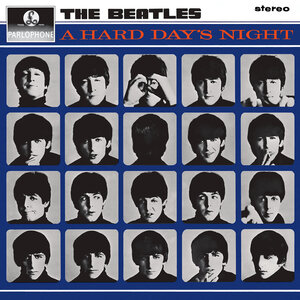
Beatles: A Hard Day's Night (1964)

The soundtrack album for their first movie was the only all-Lennon/McCartney affair in the whole Beatles catalogue. It shows them at the apex of their Beatlemania songwriting period, as Lennon was about to enter his "fat Elvis" period, where he grew understandably disillusioned by the machine. In the meantime, of course, the order was to find enough ways to sing about being in love - or alternatively being hurt - to fill an album with the spirit and verve that the Beatles were known for. As a result, more than any of the Beatlemania-era albums, this is 100% Pure Beatles.

The album benefits from the presence of the blockbuster singles "Can't Buy Me Love" and "A Hard Day's Night," but the album tracks showed they were hitting the mark more and more, as "Any Time At All" and "When I Get Home" are only a degree or two off in quality from those, with the same confidence and energy and maybe just a bit more grit. "When I Get Home," in particular, matches those Beatles screams with an Elvis-like swagger in the middle eight.

The standard narrative holds that John's stuff started getting darker on the next album, but you can see him start to give more voice to negative feelings - self-doubt, paranoia about the world around him - on these otherwise conventional pop songs. "I Should Have Known Better" is an interesting case. On one level, it's a pretty genuine declaration of devotion, but it uses that title phrase as a half-kidding accusation, like despite the positive feelings, someone got one over on him. Then there's the demanding "Tell Me Why" ("Tell me whyyyy you cry, and why you lied to me"), the vengeful, shamed, country-tinged "I'll Cry Instead" and the outright violent "You Can't Do That." It doesn't necessarily make these songs any better to know John later expressed darker feelings toward himself and others, in his music and interviews. But at the time they must have seemed like relatively innocuous pop statements, and he was starting to open up the formula a bit, finding ways of expanding the whole language of the Beatles popsong, while never breaking it. And album pitched at this level for a half hour would need that much extra effort. And they make it seem, like I said of the title track, effortless.

Then there's "If I Fell," which is practically a longform poem, expressing doubts in one's ability to fall honestly in love - there's that insecurity again, put into an excellent song. And Paul, for his part, writes some of his best work to date. With "And I Love Her" he outdoes the covers he had laid down on previous albums, creating something that, although a bit lightweight, has the exact sound it needs: an early example of his skill as a musical composer. Even better, though, is "Things We Said Today," which takes the opposite route of the Lennon songs. Outwardly, it sounds almost perilous, but ultimately becomes reassuring: it calls up that suppressed darkness from elsewhere on the album and beats it with that beautiful lyric: "Someday, when we're dreaming / Deep in love, not a lot to say / Then we will remember things we said today." Then that middle bit becomes quite spine-tingling. Rock-solid, and unlike anything else on the album.

By mid-1964, when this album was released, there were expectations of what the Beatles were, and what they were supposed to bring people. This album's mission was to deliver that for two solid sides. It does, and in places subtly advances their progress as artists, which we now know to be inevitable but was then thought limited. They never did record another album like this one, nor should they have. Like I said: this was the highwater mark of Beatlemania. The next 12 months would see the band try to find ways to move beyond that in an awkward but worthwhile transition. Think of it this way: If you were trying to take a snapshot of "The Beatles," this would be the first clear one without any motion blur.

Buy this album: iTunes Canada // iTunes USA // Amazon.ca // Amazon.com


The Beatles, "Can't Buy Me Love" & "A Hard Day's Night"


Maybe it was a sign of their maturing attitudes, or the circumstances of their lives, or just a coincidence, that these two consecutive Beatles hits, the first two written after their visit to America, matched love (the ever-present theme in all the early Beatles singles) with real-world concerns like money and work. "Can't Buy Me Love" is a step up, lyrically, from "I Want To Hold Your Hand" but it's still probably not worth drooling over the sophistication of its message. The idea that love is more important than money is pretty standard pop stuff, but it was a very well-written version of the pop stuff. It's a great song, don't get me wrong, and with the benefit of hindsight you can point out it's kind of embryonically hippie, but it's only revolutionary because it's just so good. But they did have to learn how to advance their craft by finding new angles to approach it from, and this was the next step of that.


The thing I've always thought about these Beatles songs from pre-1965 is that they hardly even seem to have been written: like they just happened. You don't think about them in the same way you think about "In My Life" or "Strawberry Fields Forever," and sure they didn't require as much work or personal expression as those, but there was a time before John Lennon sat down and conjured up the title track to their first movie. It wasn't really just always there. Although not everything they wrote was as good as this, this song was sort of the proof that the Beatles - specifically Lennon-McCartney - had a clearer vision now than ever of what a Beatles song was.

Tuesday, October 16, 2012

Cover: Otis Redding, "(I Can't Get No) Satisfaction"


As originally rendered by the Rolling Stones, "Satisfaction" is the ideal rock song: the relationship between Keith Richards' opening riff and Mick Jagger's chorus is the idealized singer-guitarist relationship in rock music. They are symbiotic.

With the guitars transformed to horns on Otis Redding's version, the weight shifts a lot further in the direction of the singer, which is what marks the soul version against the rock version. On an Otis Redding record, your only job is to make sure Otis comes through loud and clear, not that he needs too much help. The horns are more of an accent, to bounce the song along as he bebops and scats his way through the end of the song.

Wednesday, October 10, 2012

The Beatles: Long Tall Sally EP


Between With The Beatles and A Hard Day's Night, the Beatles released the Long Tall Sally EP, featuring three covers and one original not released anywhere else in the Beatles discography (now available only on the Past Masters discs.) The title track, a Little Richard classic, is one of the great covers of the whole Beatles canon, up there with "Twist & Shout" and "Money (That's What I Want.)" A Larry Williams cover, "Slow Down" is no slouch either, and "Matchbox," originally by Carl Perkins, helps Ringo's transition from screamers like "Boys" and "I Wanna Be Your Man" through rockabilly and boogie-woogie, which ended up in sprightly tunes like "Yellow Submarine" and "Octopus's Garden." Not that there's anything wrong with that. This is just the first time his distinctive tone was heard clear.


But for me, the highlight is "I Call Your Name," an early peek at the songwriting growth between With The Beatles and A Hard Day's Night. Lyrically, this is one of John's best, and while it's upbeat, it has this measured exasperation to the phrasing "I can't sleep at night - but just the same - I never weep at night - I call your name!" And the band sounds so good, with the unsympathetic percussion and tangled guitars.

The Beatles, "I Want To Hold Your Hand"


I love this song unquestionably. The case for it as the best pop/rock song of all time rests on its perfect realization of its purpose. Sure, the Beatles later developed into revolutionary artists, but in 1964, they were hitmen, trying to keep their career at its height, and to do that they just needed to make sure they topped themselves and never faltered from the main principles of pop songwriting. Pretty easy, right? Don't answer that.

But it so perfectly captures that Beatles enthusiasm I remarked about in my write-up of "She Loves You," that simple yearning desire for contact. It's not that they genuinely believe hand-holding is the apex of expression for a relationship, it's that when you're a kid, and you don't know better, that desire is so loaded you don't know how to express it. So when a song like this comes along and gives it a voice and a form: "I wanna hold your HAAAAAAAAND!" it just clicks! It does, moreso than "Please Please Me" or "She Loves You," great songs as they are. This one manages to hone in on a moment, a motion, a feeling, a position that is very real and tangible, and yet so impossible to describe. That's what music is for, especially pop music. It isn't there to outsmart its audience, or bring them higher. It's just there to sit next to them and nod along. It's there to hold their hand, and all that that implies.

See what I did there?

The oft-repeated line about The Beatles is that they "invented" the idea of the "rock band." In the past it was Elvis and the Blue Moon Boys, Buddy Holly and the Crickets, Bill Haley and his Comets. Pros whose job it was to make the frontman look good. But there was no frontman for the Beatles, there was four guys who all had to shine all the time. Everything on this song is a testament to that. The guitars are living things bouncing off each other, the bass weaving between them. A classic dual-lead from Lennon and McCartney emphasizes the song's soft-loud dynamic, jittery in the verse, gradually building confidence for the excited chorus, and dreamy and wistful in the middle eight. It's everything a pop song can be. Ringo even pounds those drums with extra zeal under that first scream of the title phrase. Everything about this song is put in place for a purpose, there's no background. Right from that opening riff, which puts the listener on alert that this is something new, this song is practically an opera.

Wednesday, October 3, 2012

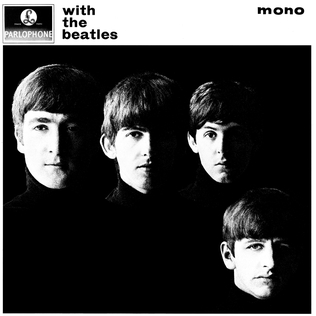
The Beatles: With The Beatles (1963)

Near as I can figure, the objective of With the Beatles was to keep the party going. In 1963 there was absolutely no telling when the gravy train from a pop rock quartet was due to stop, so the best you could hope to do is repeat the same formula as last time and hope lightning struck twice. Luckily, the magic was far from gone. It certainly helps that they were indeed "The Goddamn Beatles," full of life and energy and charm. Their singles, like "She Loves You," required them to be commercial, upbeat and energetic. On the album, they could explore their own character a bit more through covers and downtempo tracks that didn't play to the idea of what "The Beatles" were on the radio.

The album begins almost in medias res with "It Won't Be Long," an album that is just a bit too raucous and disorderly to be a single, yet misses the mark of being the next "Twist & Shout" by a hair. It's good, a lot of fun to listen to, as is the later "Hold Me Tight" but I've never heard the band speak favorably about it. In the case of that one, it also gets the knock that the band is playing a bit wonky and Paul's vocals are off-key, but to my ears, that's just part of the beautiful imperfection of rock and roll. Maybe not worthy of a single, but still worth girls going gaga. I often get the sense that on early albums, the pressure of writing "Beatles Songs" was tiring for John and Paul, if they knew a song was just going to end up as album filler rather than a single. Yet since there was no roadmap to writing songs like "In My Life" and "Strawberry Fields Forever," not to mention no audience for them yet, the Beatles take only a few timid steps out into the broader world on this one. "All I've Got To Do" is a Motown-like tune based on a staggered rhythm, providing a bit of a breather and managing to emphasize the lyrics a bit more, while also playing to the base with its "You've just gotta call on me" refrain, which seems like an upgrade on "From Me To You." It's a great song.

There are three other truly excellent originals on this album, although two of them aren't what you think. One is "I Wanna Be Your Man," another pulse-pounding showstopper with Ringo on lead vocals after "Boys." It's hard for me to get how his songs ended up sounding like "Yellow Submarine" and "Octopus's Garden" all the time, when they started out giving him these throat-shredders. Maybe he got tired of them and decided John could do them better. Anyway, as simple and throwaway as this song is, it's one of those songs that just accomplishes exactly what it's meant to. The second is "Don't Bother Me," the first George Harrison-written tune on record. I think I'm probably the only person in the world who really likes that song, but I like it enough for everybody. It's terrifically dark and gloomy, uncommon in the early Beatles, with its demand for solitude. It's lyrically smart, a brooding breakup song, where the narrator doesn't want to talk to anyone at all because his girl has broken his heart so bad. It's an approach on a well-worn pop subject that freshens it up because it just sounds so bitter. "I'm sad, so fuck you." George also does an affable job leading the band through a pleasant version of Chuck Berry's "Roll Over Beethoven" that helps up the album's balls-out rock quotient.


The other excellent original of course is "All My Loving," which seems simple, but sounds so gorgeous. It's one of those real killers that shows why the early Beatles remain so great to listen to. You just don't get a vibe like that anymore. It's a bit of an inkblot, too, because the way Paul plays it, I can't tell if it's sad or happy, upbeat or slower. It has a life of its own depending on the day. "Not a Second Time" is not especially noteworthy, but worth a few listens, providing a breather along with "Devil in Her Heart" amidst the largely raucous second side.

As for the covers, they're mostly well chosen, with a few missteps that haven't aged perfectly and seem very stuck in their time, like "Devil in her Heart" and the already-aged "'Til There Was You," which signaled Paul's interest in the distant past and old persony things. That one is notable for students of the band, who want to understand the breadth of influences and interests that went into making up their sound, but isn't much good to a kid like me who just wants to rock out, even if I can normally stomach ballads just fine.

That leaves "Please Mr. Postman," "You Really Got A Hold On Me" and "Money (That's What I Want.)" All are faithfully done, like the professionals they are. "Please Mr. Postman" is exactly the kind of star-eyed pop number they needed to load onto their albums, especially because of its theme of making contact (see also: "All My Loving," "It Won't Be Long," "All I've Got To Do.") They were marketing devices, sure, the subtle indication that the Beatles were accessible and longing to hear from you, but they were also great songs. "You Really Got a Hold On Me" is the perfect slow jam for the album, and "Money (That's What I Want)" is one of the best pop/rock/soul songs ever written, and is almost impossible to fuck up, so the main thing is that it gives John a chance to scream his head off.

The Beatles were blooming at this point. It wasn't quite the case yet that their future was assured, so it was smart to record an album that just sounds like a more polished version of their previous. There were a few innovations but few seem like risks in hindsight. They were just getting started, rolling up their sleeves and seeing what they could pull off.

Buy this album: iTunes Canada // iTunes USA // Amazon.ca // Amazon.com