Saturday, March 24, 2012

Serious Contenders: TLC, "Unpretty" & Lauryn Hill "Doo Wop (That Thing)"


I'm not sure when the integration of rap and soul began. Either TLC started it or they really took to it, with tracks like "Waterfalls" and "No Scrubs." Notably, "Unpretty" doesn't feature a rap verse by their resident Badass MC Lisa "Left Eye" Lopes. The only vestige of their hip hop tendencies is that the song is based on a really good sample from a song called "Don't Look Any Further," lending the song an Earthy, honest, wizened vibe. The track is the kind of thing you wouldn't expect to hit home with me, being as it's an anthem of women's empowerment and overcoming image obsession, but I think it's a really powerful message, well delivered. If I had to compare to their earlier hit, it's a fair bit less heavyhanded than "Waterfalls," delivering a message about a complex issue without cheapening it.

While I was thinking on rap & soul, I looked in on Lauryn Hill's "Doo Wop (That Thing)" which is still an excellent song. Notably, as the two genres edges closer together, I think Lauryn was instrumental in melding them. She wasn't a rapper inserting soulful hooks into her songs, she wasn't a soul singer that tossed in a gratuitous rap. Her raps are soulful and her chorus has that same street-tough bedrock in the verses. Compositionally, this tune is a complete success and has been a guideline for female vocalists ever since.

Sunday, March 11, 2012

Naked & Famous: Passive Me, Aggressive You

I worry it's going to happen: That part of my brain that's up for new things shutting off and leaving me with an appreciation only for classic rock throwbacks and smooth jazz. I'll buy a Michael Buble CD and that'll be the end of it. It would be death for me as a music appreciator if I didn't feel confident in my ability to discern good new stuff from shitty new stuff. While I feel perfectly fine dismissing a lot of what's out there for my own tastes, I need to find something new that I like often enough to make sure my tastes are kept sharp and malleable: to make sure I'm not set in my ways yet.

The Naked & Famous isn't quite unlike anything I've ever heard but I wasn't sure it was a version of it I wanted to deal with. Before sitting down with it, I could've gone either way on it. "Punching In a Dream" has an intense, shrill vibe to it, might not have an incredibly strong hook, is mostly just a pulsing drum beat and a distant vocal and some buzzing noises. Ah, but it got my head bobbing. I bought this album knowing it was either my mind playing tricks on me with baseless doubts, or that the rest of the album wasn't even that good: That their experiments and work might've yielded a couple listenable tracks and a lot more messes. Not everything can be Foster the People.

Oh, but what an awesome mess they turned in. It's thoroughly cacophony, all sounds all the time, but everything fits tightly in place, even when the beats are off kilter and the droning noises pulse weirdly. Dig the chanting in "Frayed," or breathless, urgent tornadoes of sound like "Spank," and the opener "All of This." After "Punching," the other big song off the album is "Young Blood," which skips ahead on a light new romantic synth riff (maybe I'm the only one who is reminded of "The Safety Dance") and Alisa Xayalith's anthemic cry of "E-yeah-ee-yeah-eeyeah-eeyeah." Throughout the album she alternates vocal duties with Thom Powers. Both of their vocals seem distant and spaced-out, buried beneath layer upon layer of sound, fighting for breath. Alisa in particular seems breathless, at the brink of emotional breakdown most of the time. Like The XX, the two voices seem to temper each other, with Thom grounding Alisa, most of the time.

She gets some of her best moments in the slower numbers. "No Way" is quite symphonic and powerful, one of the moments on the album when most of the instrumentation drops out to let Alisa carry it. It reminded me of My Bloody Valentine (always a good thing) the way they can unspool a few of their instrumental layers seemingly ad infinitum, letting them sink deeper and deeper into you until catharsis has been reached. In a lot of places through the album, the band gets their best results by managing those intense moments with subtle ones. "Eyes" is similarly gorgeous. "The Sun" accelerates, charging toward its finish faster and faster like, well, a dawning sun. "A Wolf In Geek's Clothing" marries the spacey, immense harmonies with a squealing, painful, barnstorming garage riff.

"Girls Like You," led by Thom's pleading vocal, is possibly the best song for song's sake on the album. It's the one that feels most "real" and "down to Earth," on casual listening. It harnesses the album's strengths, that scope of softness and intensity, that sense of rough rhythm and emotional frayed wires, and binds it into a really effective pop song.

I don't mean to say, from my opening statements, that you have to be young or even particularly open-minded to enjoy this album. I definitely don't mean to say that disliking this album means you have lost your ability to discern greatness from crap, because although I like it very much I know it can't be for everyone. Everything that made me reluctant about it is true: It's shrill, noisy, obscure and far from pop in formula. Disliking it doesn't signify bad taste any more than liking it signifies good taste. It's important, though, for a guy like me, to happen across an album he can be unsure about, that can be unrelated to most of his daily listening, and still find new pleasures in. This album isn't made of great 3-minute pop songs I'll be humming all day. It's constructed out of moods and moments and moves between them in a way that is musical but not overly songlike. I find that it's more the case when you're young, when you're looking to find your own way and you want something to speak to you, that something like this album will speak to you, that you'll be more open to alternative, non-conventional expressions of music, mixed in happily with the rest, taken as regular as anything. When you get older, sometimes, you feel you have a more firm understanding of what works for you, and something that doesn't fit won't be up your alley. It doesn't mean you're dead inside, but it also might make you miss out on something you'll end up liking.

Buy this album now: iTunes Canada // iTunes USA // Amazon.ca // Amazon.com

Wednesday, March 7, 2012

Serious Contenders: Pink Floyd, "Wish You Were Here" & "Comfortably Numb"


In their way, the guys in Pink Floyd did a great job making their personal problems into everybody's problems. My favourite Floyd album is Dark Side of the Moon, because the observations and sorrows of that album feel truly universal... getting older, wasting your life in the pursuit of money and peace of mind, and losing it all. As they progressed, they turned a bit inward, mining their own situation more and more, particularly in the case of Roger Waters' songwriting.

"Wish You Were Here" is one of those great, haunting delicate ballads. It has a dusty, sorrowful guitar picked expertly by David Gilmore, and all the background instruments swell just perfectly to underscore Waters' oblique, well-done, simple-yet-effective lyrics. It sounds like the ultimate lovelorn, break-up, "I need you more now than ever, but we can't be together" type song, particularly at its climactic "Two lost souls swimming in a fishbowl" line.

It's not that. It's very specifically about Syd Barret, the founding leader of Pink Floyd, who vacated the band after one album and a handful of singles due to drug use and psychological... disintegration. Whether Waters was nostalgic, or whether he felt Barrett's presence was a stabilizing one that was long missing and ultimately reflected in the band's turmoil... I'm not sure. But he's definitely singing about Syd.

Things got even more specific, more autobiographical, and yet more obscure, on The Wall, which tells a story of rock star alienation. Now, I've listened to a lot of music about rock star alienation, and even though I am not a rock star and find it somewhat silly to whine about having achieved great success in your chosen field, I often find it makes for some of the best music. No, no kidding. Hey, Greek tragedies were always about nobility, played for the commoners, and they managed to get the point across. In general, I think, the problem of being disappointed by your greatest desire is easy enough to relate to.

I think the distance between the rock star lifestyle and the average listener's helps this. Everything about the rock life seems exaggerated and impossible, including its grief. They got where they did, after all, by taking the feelings, all the little ones we deal with daily, and stretching them out to 3-minute moments, twelve to an album. So by necessity, it must be bigger, or feel bigger. In The Wall, "disliking your audience" is equally tragic to losing your father in the war (all in all, they're both "just bricks in the wall.")

"Comfortably Numb" captures this ambivalence, lyrically and sonically. It's mellow yet tense (the brooding bass, the breathing guitar.) Waters voices the Doctor administering the shot that will allow fictional rock star Pink to complete the show, David Gilmour plays Pink as zoned out and losing connection with reality (...Syd?) Again there is beautiful poetry in the lyrics, particularly Gilmour's parts. The money, however, is in the guitar solos, which manage to reach both a warm beauty that only music can reach, and a cold detachment as signified in the lyrics. The great thing about a song's execution like this is that it forms a bridge between what the song is literally about in its lyrics and context, and what it stirs up in the listener. The song really does a great job not just being about, but living out, that ambivalent, two-sided rock star fever dream.

Sunday, March 4, 2012

Arkells: Michigan Left

Michigan Left, the second album from Arkells, is a lot easier for me to love than their first. I reviewed that one, Jackson Square, early on in the site's life, saying that I loved a lot of the songs on it, but a number of the songs were skippable to me, including "Pulling Punches" which was a radio hit before I ever picked up the album. At the time, I was experimenting with how much negativity I wanted to include in my reviews, because although I was being honest, I was also nitpicking some. Even the songs I didn't like on that album had their virtues, they just weren't ones that resonated with me. I hope you bought it. "John Lennon" is a particularly excellent song, as are all the highlights from that one.

The good news about Michigan Left is that it's a better album. Maybe the best moments aren't as brilliant, and it doesn't give as broad a view of their abilities, but it's an excellent set of songs from head to toe. On this album, the band fulfills their promise of "black and blue eyed soul" by infusing their sound with a easygoing beat and a heavy stomp. Most of the songs are actually based more around bass riffs and drumbeats, accentuated (rather than led) by by the pianos and guitars. That's not to say they're not there, and not well used... there's a subtlety to the sound that is really welcoming and invites repeated listens, usually a simple ringing and progression splashing in and out, swirling around the vocals. It makes the album into good white-boy soul, a guarded sincerity not usually executed in radio rock these days. It helps that Max Kerman has a good basic voice: he doesn't strain his boundaries too much, but he forms a good foundation, with those drums and bass, on tracks like "Book Club," "Where U Goin" (with its neat call-and answer lyric that laps itself.) The album is loaded with great hooky choruses, including the title track's "Decorations will be wasted..." bit. Just about every track offers similar pleasure: "Kiss Cam" and "Bloodlines" feature sing-along choruses, matching sprightly melodies with reflective or weighty content. This is coffee-house sized stadium rock. Intimate yet huge.

Occasionally, they even go big, with the moody quiet-loud of "One Foot Out The Door" and the fiery loud-loud of "Whistleblower," which are standout tracks stylistically. The album concludes with a warm, soft-focus tune called "Agent Zero," suggesting we all "turn the lights down low, turn the lights down low." Quite nice.

My favourite tracks are "Coffee" and "On Paper." "Coffee" has a whole lowdown dark Film Noir feel. It begins with a stuttering guitar intro, which takes A Flock of Seagulls' "I Ran" and wrings it for all it's worth. "On Paper," in addition to having one of those great hooky refrains ("I can't keep up, always playing catchup...") exemplifies one of the best aspects of the band, going back to their first album: their songwriting. They're not just capable of writing damn catchy hooks or measuring and balancing all the different instruments to make an effective sonic experience. They also craft great stories, usually by way of setting a scene, outlining specific characters, moods, and problems without seeming like they are too wrapped up in telling a story to forgo the formal framework of their songs: Kerman's vocal performance goes a long way to helping this.

In essence, what I'm saying is that Arkells have it all on this album. It sounds good, it makes you feel good, and it feels like a real accomplishment for the group. It's a great rock and roll album for people that have lost faith that there's anything left to do in rock and roll.

Buy this album now: Itunes Canada // Amazon.com
// Amazon.ca

Wednesday, February 29, 2012

The Monkees, "Daddy's Song"


It probably says something about the temperament of this blog that I didn't do anything to mark the passing on Whitney Houston (whose talent was obvious) but that I really feel I have something to say about Davy Jones, who died today. The Monkees are one of those bands from the far-flung past that you don't really have to love, but whose fans are pretty enthusiastic. Just the other day they came up in conversation with a customer about great oldies. I wasn't even the one who mentioned them first.

Davy was great for the Monkees not only because of his poster-ready image, but because, like all four of the bandmembers, he brought a particular angle. Mike Nesmith was the country boy, Peter Tork was the zonked-out folkie, Dolenz was the garage rocker, and Jones had his Broadway background, as well as the weepy ballads. The combination of these four (or five) ingredients on the Monkees albums made them, if not consistent listening experiences, remarkably interesting collections.

This clip, taken from their notorious film project Head, pretty well distills my feeling about the complicated relationship between art and commerce inherent in the Monkees enterprise. Here we have Davy performing a really impressive, Fred Astaire type routine (made psychedelic by Bob Rafelson's editing) while singing a brassy old-school jingle about a father and son. It seems both sincere and satirical, as the lyrics are a fair bit tragic, but delivered in an over-the-top sunshiney matter to rival the throwbacks Paul McCartney was writing at the time.

I don't know if this has any basis in reality, but there's a scene in the Monkees biopic, (Daydream Believers,) where Davy returns home and seeks advice from his father, it's weirdly sweet. And this song was written by Harry Nilsson, underlining the fact, as I've already stated, that regardless of whether the Monkees count as "real," the people responsible for making the music was indisputably top-notch.

Oh, yeah, and that's Frank Zappa at the end there.

For an even better write-up of Davy Jones' place in the Monkees (and highlights from his career,) check out Rob Sheffield's article in Rolling Stone.

Tuesday, February 21, 2012

Serious Contenders: Alice Cooper, "Poison"


Considering it was the late-80's, and this is Alice Cooper, it's remarkable how much less silly it is than its contemporaries. Don't get me wrong, it's still a bit much, but considering it next to Poison or Winger it seems rather subdued and subtle in both its instrumentation and lyrical matter. It's not surprising that this song, with its definitive 80's lead guitar and quintessential vocal hook, was a big hit in 1989. What's a bit more surprising is that it holds up 20-some years later better than most of its contemporaries (aside from Aerosmith's Pump.)

It was the perfect Alice Cooper song, as much as "I'm Eighteen" or "School's Out," love as a game of life and death. Alice, with his knack for theatricality, does a great job wringing out the melodramatic overtones without sacrificing whatever meaning there is in the song. Alice comes off like a vulnerable psycho on the brink of disaster.

It's silly, as hard rock frequently is, but it's not afraid of itself. I dig Alice Cooper because at his best, he is simultaneously highly theatrical and over the top, but very controlled and conscious of his image. That's what makes many of his best songs stand up alongside rock's best: very much of their time, but also standing out from the pack.

Sunday, February 19, 2012

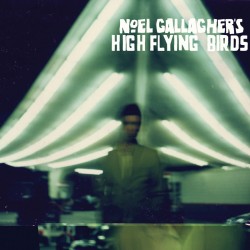
Noel Gallagher: High Flying Birds

No matter what I thought about Oasis, it was a successful rock band that is still talked about today (although much moreso in the UK.) A while back I addressed the fact that although I wasn't a fan of their work by and large, I could still admit when a song of theirs was good. I have their two-disc greatest hits and find myself skipping a lot. Regardless my feelings about those other Oasis songs, Noel Gallagher is someone whose songwriting talents are considerable. He's internalized so much classic pop rock that he seems to compose his records with his eye closed and one hand behind his back. It's easy for him to do, I'm saying.

The sound of High Flying Birds isn't the sound of genius at work, I don't think. It's not innovation in progress. It's the work of a really good songwriter knowing what works and what he wants to play: not only that, but it seems to dovetail well with what his fans want and expect from him. He does it so consistently and with such ease that I don't find myself skipping around much, although I do always let my ears perk up when I know "The Death of You And Me" is coming near. Even the most basic-seeming tracks, like "Dream On" or "(I Wanna Live in a Dream In My) Record Machine" offer anthemic, strummy pleasures. If not all the songs quite stand out, at least they all offer a little ingredient that endears me, like the swaggering "So long, baby, buh-bye" chorus on "(Standing On) The Strong Beach" or the oceanic late-Beatlesness of "Stop The Clocks." Most have really catchy, toe-tapping choruses, the insidious kind you find yourself humming to yourself. "If I Had a Gun..." has some of the best lyrics I've heard the usually-incomprehensible Noel has cranked out.

"The Death Of You And Me," though, is the moment of greatness here. Although I made note of Noel being fine to fall back on his apparently-natural ability, that's the one that feels like it took some doing and it paid off. If it doesn't totally break from his Oasis pattern it certainly feels like a development of its own, a slight development but an effective one. It swirls like gypsy music, swells with horns (which recur throughout the album, along with plenty of other sonic accents) and has a chorus that really commands attention rather than settling in the back of the mind. The whole exercise was worth it if only for that piece.

There's nothing shocking here. It's what you might expect from a solo album from the main creative voice of Oasis, the same basic pop chords and word salad lyrics and vague-feelery. But Noel is no longer the brash, world-beating young man of Oasis' heyday. This sounds like an album by someone who's been there and back, who knows his skillset and has settled in nicely to it. It offers a lot of the same goodies as the Oasis songs I like, like "Wonderwall" or "Lyla," but toned down considerably. Because Noel is handling the vocals, it sounds a good bit more subdued and down-to-Earth. His voice sounds less rock star and more coffee shop than his brother. So the music comes off as an interesting mutation between the arena and the coffee shop: epic yet grounded. Dreamy and Earthy. Familiar yet fresh.

Buy this album now: iTunes Canada // iTunes USA Flying Birds // Amazon.ca // Amazon.com