Showing posts with label SOTW era. Show all posts

Tuesday, October 22, 2013

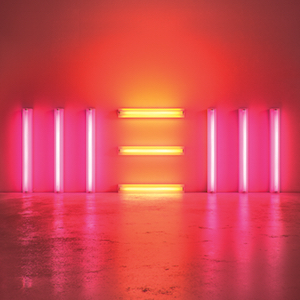
Paul McCartney: New

This doesn't exactly sound like a veteran's album, although there aren't many who have been around the pop game longer than McCartney so I guess he's setting the pace about how good you can be 50 years into your career. You expect sappy old man music, but this isn't it by a long shot. The litmus test I have applied to New is, "What if this were the debut album from some other artist?" Discounting the defensive-reflective "Early Days," you could almost buy into it. And this hypothetical artist would be onto something. He would be lauded for getting to a Paul McCartney-like sound while also adding something new into the mix: as someone with an advanced knowledge of pop songcraft and the way things used to be/ought to be, but with their own spin and atmosphere. That's what gets me. There is a safe way to "do Paul McCartney," a certain way we expect our rock vets to comport themselves. And maybe there's some of that here: a good-natured safeness creeps in at times...but by and large it's almost daring how nakedly poppy it is. We're talking full-bodied, all-rhythm, hooky wall-of-sound classic pop. Not in a cloying way, either, but a real brassy one.

Paul McCartney has not reinvented himself by any stretch. When you've been around this long, and have done that much that is so varied, it's really just a question of which aspects of your style are you going to present at any given time? What you don't really expect, at least not right out of the gate, is an opening track like "Save Us," a buzzy, bracing, breakneck rocker that reminds us that yeah, "Cut Me Some Slack" happened. He's well aware of his toolkit, and he's not afraid to mix and match that kind of growling guitar with his quirky self-harmonizing on "Alligator." There are tracks like the Brian Wilson-like title track or "Early Days" that celebrate and acknowledge the past, and then there are ones like "Queenie Eye," which are just fun. There's an abundance of songs that sound like a way forward, like the thumping electronic "Appreciate," the grooving "I Can Bet" or "Road," which sounds lightly Arcade Fiery. Whether your enjoy this album or not, you can't accuse it of trying too hard to rehash past successes. It wins or loses on its own merits, here and now. The win column, though, for me goes on and on. "Everybody Out There," sounds like a mid-era Beatles tune covered by a modern band. "Looking At Her" is just nuts.

It announces right up front that Paul McCartney is not just interested in putting us through the paces of "being Paul McCartney." He wants you to remember that he is Paul fucking McCartney, and he has forgotten more about writing awesome music than most people ever learn. Every single type of song conceivable, he's already done. Even amidst today's diverse and experimental crop of indie popsters, one of the biggest compliments you could level is still "Hey, that sounds like something Paul McCartney did." So presented here, to take or leave, is what Paul McCartney is doing. Writing Paul McCartney music for 2013. He manages to avoid being stuck in his ways, while showing the virtues of the first principles. There are flaws if you look hard enough for them, and sometimes it feels like the spirit is willing but the flesh is weak, for the most part it works within his strengths, and it's nothing I wouldn't forgive when I'm having a good time. Believe me, I'm no blind devotee: I wasn't going to like this album just because it existed and applaud Paul for just getting up in the morning. I had no intention of even checking it out until I started reading the reviews.

Albums like these are fascinating cases to write about. It's won't win new fans, and it's not designed to appeal to old ones per se, just to wake them up, to test them and see if there's room in their hearts to grow along with him. Maybe, in fact, it's for me, the 26-year-old avowed lifelong Beatlemaniac and music nerd, who wants to see what the old fella has left in him. I return to my original premise. As a Paul McCartney album in his overall discography, it's somewhere in the middle, sure. As a Paul McCartney album in 2013, it's great. If it were the same album by a new 26-year-old artist, you'd think he was a damn genius. So there's that.

Friday, October 18, 2013

Sonic Sandwich: The Icy Poetry of Phoenix and the Stuffiness of White Lies


This is just to remark on the difference between Phoenix's 2008 album, Wolfgang Amadeus Phoenix and their 2013 effort, Bankrupt. I was slow to come around on Wolfgang Amadeus... it was one of my first reviews and I was still sussing out my voice as a critic, so I was more reticent to give it praise, and more keen to take it down for minor flaws. It's one of many pieces of writing I've done that I consider embarrassing to have written. My current opinion of that album is that there's a real beauty to it, a humanity that evades a lot of synth-based music (usually by design,) a certain nuance and icy poetry. Every little bit has its place, and there's a soft touch to it. When I was younger I thought they were maybe aiming too high and missing, but as I've gotten more experienced I've learned that they were right on target. I like just about every track on that album very much.

The follow-up, Bankrupt!, is a different creation. It's much bolder and brasher, noisier, in the mold of Foster the People or Passion Pit. They've filed all those fine points down, and filled in the gaps with, well, whatever sounds. I object to it, in the sense that I liked the earlier product much better, but it's clear they're trying something different. And sometimes it works. Not enough to get a thumbs up from me, but I can adjust my head, I think, to say "Okay, they did this, and assuming it came out like they wanted, it is what it is." There are moments on Bankrupt that really do think are great, like "Oblique City," the closing track, which feels like a good midpoint between the two modes. They are good enough at being a big, hooky band, as on "Entertainment," and "Trying To Be Cool," that they deserve continued success, and they still have ideas as on "S.O.S. In Bel Air" and "Bourgeois," that make the album into a fairly consistent product. I just think they excelled on the previous album.

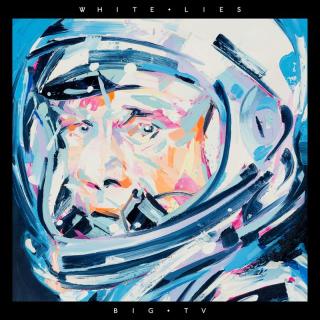
Another album that I reviewed early on was White Lies' second album, Ritual. I found it such a serious, stiff affair, a bit silly and oversized. But there's a charm to that, the deadly melodrama of the musical backdrop and the severity of the delivery, the way the singer just can't seem to loosen up, like your college roommate who's really into New Order. Unlike with Phoenix, who made a conscious alteration to their sound, White Lies appear to have merely ironed out some of the kinks in theirs for 2013's Big TV. They've found a balance of all the attributes in their sound that appeals to people. Everything about this album seems to have leveled up, in conception and execution. It just clicks more.

And I think, objectively, it's a better album, but I miss that weird stilted stuffiness of the earlier one. It's one of those quirks of personal taste, that I prefer the one that is a bit gangly and lumpy, compared to the slick post-success affair. There was a life to it, if a neurotic, utterly mannered one. It was nakedly itself. I would recommend Big TV first, to a new listener, but I'll listen to Ritual more often on my own.

These cases reminded me of each other, so I sandwiched them together in this article. In both cases, I liked the predecessors more, but that doesn't invalidate the later album. There are always questions in situations like this: Is it a response to success, an attempt to paly to the audience, or merely what happens sometimes after you've recorded one album: you want to record something that sounds a bit different? I can't say authoritatively in any direction, and I'm wary of people who presume to. Mine isn't to suggest why Bankrupt! or Big TV sound the way they do, after Wolfgang Amadeus and Rituals. Mine is just to listen, if I like them, and see if I can bring them to others who might.

So here's the bottom line: Phoenix and White Lies are both bands that use a synth-heavy approach rooted in 80s pop music. Whereas Phoenix's is hooky and intended for the dancefloor, White Lies' is contemplative and in its way, romantic. Both albums feature some solid hooks and really well-done tracks, although both bands have recorded albums I like better. Sometimes, you've just got to lay your stance bare.

One of my little pet peeves in other reviews is when the critic simply cannot get over their opinion of the earlier CD enough to judge the new one on its own merits. And that may in fact be the case here, but I'm willing to cop to it. I like Wolfgang Amadeus a lot, and this is a different thing that I don't like so much. But hey, I didn't always like Wolfgang Amadeus that much, so maybe in time I'll come around.

Monday, September 30, 2013

Mazzy Star: Seasons of Your Day

Heck of a year for returning bands. My Bloody Valentine dropped their first in two decades on us, the Pixies have an EP, the Replacements are touring again, even David Bowie came out of semi-retirement. Mazzy Star's legacy may not be as bombastic as those heroes, but they have their place, their niche neatly carved out, with the gentle, soft-focus guitar of David Roback and the sweet, whispery vocals of Hope Sandoval. Their new album, Seasons of Your Day is just a really lovely 50 minutes of that. It'll sit nicely on my shelf with recent releases from the xx and Feist, and classics from the likes of Nick Drake and Richard & Linda Thompson. It's power might be the exact thing that people who like Lana Del Rey's music get from her. It's a thing of measured beauty, subtle and low-key, restful and relaxed. Sandoval's cooing voice carries a distant, enigmatic sweetness. The slight instrumentation - full of instruments, but with everything operating at the lower end of the power gauge - takes you in and wraps the whole affair around you. Dusky steel slide blues guitars add weight, a shamanistic feel here and there.

There's a real human spirit at work here. It suggests itself, rather than taking a concrete, knowable form, leaves us to ponder and interpret and to take from it what we can, depending on what we brought in. Personally, tonight, I needed something with this distant glow. This introspective comedown.

I was talking with an aunt tonight about meditation, and about "being present." For all the talk one might sling about putting on an album like this and "drifting away," the question remains where you drift to: deeper inside yourself, it seems. You listen to an album like this and you are forced to just sit there with yourself and take it all in. Think about yourself, think about the world around you, and the one inside.

Monday, September 23, 2013

Sonic Sandwich: Rival Sons and Queens of the Stone Age


Safe to say, 70s-flavoured retro-rock is an increasingly prominent part of the great musical tapestry. For a long time now, there's no shortage of bands in their 20s who grew up listening to music from before they were born and learning from that. I've expounded before on how good it is that these bands exist. They crystallize everything that holds up about Led Zeppelin, Bad Company, Foghat, et al, and remove it from context. Meaning, I'm guessing bands didn't have much of a conception that they were doing "70s rock" at the time, they were just trying to find the way forward from what had been done in the 60s, and what was popular at the time. Now it becomes a conscious decision, a statement of identity. And we've seen enough of it that it's not enough for it to be a novelty or a gimmick. You have to live it.

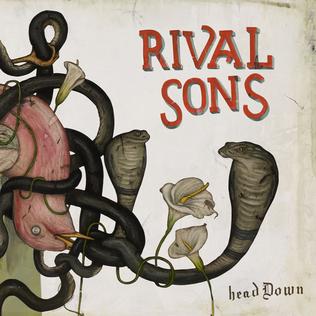
Rival Sons are a band whose work I am always quick to steer people toward if they're looking for something fresh but familiar. I'm thinking of calling it "New Old," and it goes in a category with The Sheepdogs and Monster Truck. On Head Down, they hit all the major hallmarks of a classic rock album, to the point where no classic album might actually sound just like this. There are pummeling party anthems like "Until The Sun Comes" and "Wild Animal," soaring anthems like "Run From The Revelation," and George Thorogood-like bar rock like "All The Way." Beyond being competent imitators, they find their way to some of the more eccentric corners of their chosen era, like "The Heist," which has the most classic of choruses, the Led Zeppelin III style campfire psych jam "TRUE" or my personal favourite track on the album, "Jordan," which calls up the kind of spirituality not typically used in rock music anymore and almost on its own validates the whole deal. An album like this at first feels comfortable and recognizable, then it's impressive that they got it "so right," then at last it just has all the same pleasures as the actual old music. It strikes that balance between repetitive/consistent and wild/energetic.

There's a difference between, say, a 70s-influenced band like Queens of the Stone Age or Foo Fighters, and a real retro-rocker like Rival Sons. The former camp takes the old ways as a starting point and then moves forward, tracing rock back to a certain point and then taking off from there. QOTSA's new album is very much a 2013 affair, offering an alternative representation of rock from what is typically offered to the Top 40 (as if there's any rock on the Top 40.) Their music is loaded with stylistic decisions that are informed by both decades of nostalgia and a generation of experimentation. It has classic appeal and modern sheen. It takes chances that may in fact alienate fans of the old ways, simply by being modern. That's the downside. The upside is that you get the freshness, the inventiveness of a defined artistic voice. If it scares people off who are looking for comfort, so much the better, because the people who prefer it will like it more. For instance, "The Vampyre of Time and Memory" sounds like something that could have been recorded in the 70s, but doesn't sound exactly like something we know of that was recorded in the 70s. This is the rock that is dedicated to pushing the form forward, or at least keeping it alive in the now. They're not just paying tribute, they are taking up a cause. For shit sakes, Elton John appears ("You need an actual queen on the record!") on the awesomely proggy "Fairweather Friends."

The common denominator to both these albums is that they cut the bullshit that's piled up in rock over the last few decades: the accumulated cultural memory of hair metal, post-grunge, and rap-metal. They use pulverizing riffs and power-fantasy lyrics to assert a huge sound that is completely carefree and escapist. This is headbanger paradise.

Monday, September 16, 2013

Tame Impala: Lonerism


Lonerism might actually be the platonic ideal of an indie record in the 2010s. The lyrics carry obscure meanings that are left to the listener to decipher. The music soars with synthy, loopy goodness. The structures of the songs seem to change abruptly, and tracks seem to flow directly outward from one another, only leaving a change in mood to determine that a new song has begun. It follows its own path, basically. It has that "Dude, you must have been so high when you made this" quality, but I suspect they weren't. It may be strange and warped, but you have to be pretty focused and clear-headed to get it all just right like they do here. The songs are grounded by a backbeat that sometimes invokes Motown or 70s funk. I definitely hear where people are comparing this to Revolver-era Beatles (the lyrics seem like an extrapolation of "She Said She Said") but that's only part of the equation, so I would say it's also got something to do with Curtis Mayfield. It has that basis, but it's way down there beneath the spaceyness. It's like a sunnier Dark Side of the Moon.

It can be hard to be patient with an album like this. I bought it on a whim and listened to it once and I really did not understand what I was hearing. It can be challenging to give the necessary due to a band that so fully follows its own whims. I bring a certain amount of baggage to every album, as I think most listeners do, and its up to us to be able to put it away and stop resisting, stop expecting to be impressed with yet another expected version of something we know. At first I thought, "shit, these guys are just noodling around with loops," but there's a real solidity to the construction of this album, a genuineness of purpose. It isn't just "One weird thing after another." If you let yourself be carried by it, it will take you someplace interesting.

That's not to say, at long last, there aren't tunes to go with it. "Elephant" is a standout, not the least because its gritty, pared-down, menacing psychedelia hardly sounds like the rest of the album's ostentatious attack, but it's a natural curb on the album's flightier tendancies, especially coming off "Keep on Lying," which is kind of the definitive track here, the way it builds to a trance-inducing coda. Kevin Parker's voice really comes out on "Why Won't They Talk to Me," and "Apocalypse Dreams" is the early standout to get you into the album. Check out the bass and drum groove of "Feels Like We Only Go Backwards," the way it sets against the leads and vocals.

The upside of an album like this is that though it puts up a difficult front, if you stick with it, multiple listens reveal a lot of greatness. And then, because there is so much scenery, that greatness feels fresh every time you listen to it.

Monday, September 9, 2013

Franz Ferdinand: Right Thoughts, Right Words, Right Actions

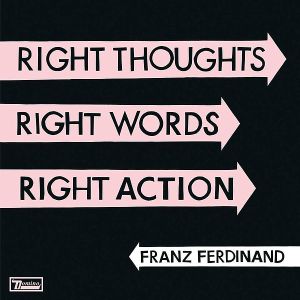
Franz Ferdinand's new album comes to me as a breath of fresh of air. It actively excites me. It carries a verve and spirit that sets it apart from the current crop of rock acts. I say this because this is my third draft of this review and in the previous two I was driven to tangents complaining breathlessly about things I don't like about other bands. But none of that's important because what I do like is this album.

Franz has concocted an effective new batch of their particularly dance-tinged, kinetic rock music. It feels right to me, like they didn't need to study up on how to sound like themselves, or work too hard to infuse their music with obvious hooks. Working too hard is the enemy of rock music. You can get bogged down. Instead, this music contains a lot, does a lot, has a lot of ideas, but is never overworked or overly tidy. It's messy and beautifully imperfect: Alex Kapranos' voice sounds a bit thinner and wavers more, almost like a karaoke singer who's had a few. I feel like if you isolated the vocal track to this album you would be mostly unimpressed with the efforts. But he's from the David Byrne school of histrionics, and its his energy that really sells it, definitely matching the overall calamitous musical atmosphere. Altogether, the band plays with an unstudied ease that would be at home in any era: they retain the timeless immediacy of their earlier singles. It takes balls to be this unpolished. It retains a character and humour about itself, while never getting tripped up and leaving the moment behind. "Right Action" is one of the bassiest, self-assured singles I've heard this year.

It all comes out thrillingly because they know the difference between "a fun pattern" and "mind-numbingly repetitive." There are enough change-ups, as in the melancholic "Stand on the Horizon," the easy-breezy croon of "Fresh Strawberries," and the motor-mouthed "Bullet," which all come one after another. Some of the intros kid the listener, but gradually unfold the song to reveal how it works with the rest of the album. It all adds up to a really consistent listen. You can put this whole album on a loop at your next party and never have the energy falter. I just love this energy. You can't teach this. You can't fake it. You can only hope it comes out the way it's meant to when you're done making it.

Thursday, September 5, 2013

Dinosaur Jr.: I Bet on Sky


I'm not going to pretend like I'm the authority when I'm not. I'm the newcomer here, as I have the good fortune to be often. Like, that's the thing I actively do with this site: to find bands I haven't checked out yet, for whatever reason, and get into them if I can. Since I'm pretty selective in what I let get near me, it usually works out well (when it works at all.) So no, I'm not going to pretend I am the expert on Dinosaur Jr. and their multi-decade body of work, and how this album fits into that. I am just going to tell you that this is a fucking great album.

I named my site "Sound of the Week," basically to foreground the fact that I'm just really interested in the way things sound. The way it comes together. The sound of this album - the glamlike tone of the guitars, the hammering drums and the dried-out sound of J Mascis' voice, is just exactly what I want to hear. The highly charged opener, "Don't Pretend You Didn't Know," is a meal in and of itself. "Stick a Toe In" has a tense melancholy to it, with its tapped-out minor piano in the background and one of Mascis' most wizened, sorrowful vocals. "Watch the Corners" and "I Know It Oh So Well" are pretty breathtaking too, and then "See It On Your Side" puts it all together as an epic final exam. It's like a jam between Ziggy Stardust & the Spiders from Mars and Neil Young & Crazy Horse.

This is exactly the kind of album I always want to hear. On the one hand, the instruments, the music itself is grand, melodic, fiery, lively, passionate... but they're grounded by the vocals and lyrics, hitting the dimmer on their brightness, stifling their flame and adding a note of sour to the sweet. As observations about Dinosaur Jr. go, these may be pretty pedestrian, but they're also accurate, I think, and speak to what I believe is the simple pleasure of listening to truly great music. There are so many excellent, elegantly realized nooks and crannies on this album, you could just move right in and live in it, or at least rent it out for a while.

Thursday, July 25, 2013

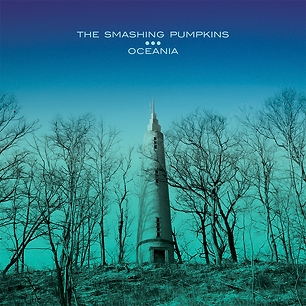
Smashing Pumpkins: Oceania

I'm impressed. Really. I feel like this is an album, a piece of work, that Billy Corgan has known he had inside of him for years, and that he has tried to coax it to the surface in a lot of different ways, but for some reason it only just came out now. That he always saw his music as being huge and grandiose - even when trends dictated otherwise - with movements rather than verses and choruses, with symbols and ideas as much as emotions and actions. Maybe it doesn't have "the songs" the way Siamese Dream and Mellon Collie did, but I think it might be more the cohesive achievement, the fully realized vision. It's such a strange damn thing. It's recognizably Smashing Pumpkins: Corgan's voice is unmistakable (for better or worse) as is his ear for details, his particular placement of every loop and layer and drumbeat and instrument, and his vocals, (again for better or worse.) Yet it's fresh, not at all an attempt to retread or cash in on the cache that his band name carries. If you told me that in 2012, the Smashing Pumpkins could be a relevant musical force, I would have backed away slowly. Zeitgeist was more than a bit of a compromise between Corgan's vision and what it was believed they needed to provide. Here they are telling you what it is you really need from them. That might be the only condition under which art can be made.

Yeah, art. Corgan is that most arty of rockers, fussily putting everything where he feels it belongs, devouring each new toy, letting his work exist as a growing organism. As with most topics, I wouldn't consider myself to be the final word on the subject, but that seems to be a fair assessment. It was what set him apart in the 90s, when alt-rock either meant slashing and burning or being cutesy. I think that when Corgan has met his best success, he has found that narrow path between singular personal vision and crowd-pleasing populism. Go too far toward the former and the music becomes insufferable, the latter it becomes bland. Oceania walks that line for 60 minutes.

The sound of this album is big, wide-open and full. There is always something going on, usually a lot. Even the soft parts are kind of loud and heavy, and usually build to some huge climactic moment. This is an album loaded with musical instruments played like musical instruments, not as vehicles for hooks and solos. There is beauty in that, genuine sincere beauty. Here is an album by a 90s band in 2012 that doesn't sound like it belongs in either time period. What's more, it's a damn cohesive album: each track feels like it needs to be heard after the last. It's weighty, but never a slog to listen through. This is especially ironic given that Corgan has mulled over the idea of abandoning albums and releasing songs each on their own. As it turns out, he does one of the best justifications for the full album statement in the 2010s.

What's key about this album are the vocals and how they do not override the gorgeous symphonics of the music. If you let them, they become part of the sonic palette, his nasal voice a roughened counterpoint to the immaculate instrumentation. The music isn't there to back up the vocals, the vocals follow along, he seems to be singing along to the sounds in his head, and the actual lyrics in there are just to hit the right rhythm and inflection. On the printed page, the words might seem like clumsy spirituality, or overwordy new age ramblings (philosobabble?) but as delivered they become mantras and keys to another dimension, one that lives inside Corgan's head and far, far out in space. This is real heavy prog stuff, man. Such grandiose music demands such extreme subject matter. No "The world is a vampire" here.

Does it amount to anything? Is it deep or profound? Does it matter? Does it matter if it matter? Because Goddamnit, it sounds good. It sounds probably exactly the way Corgan envisioned it and I have enjoyed listening to it many times over since I acquired it last fall. It could have gone way, way off the rails, but it works too damn well to be ignored. It wants to be a very specific thing: a huge, outsized epic album that sounds like nothing else sharing shelf-space with it (only the recent Queens of the Stone Age album can compete, and that came out nearly a year later.) And it succeeds overwhelmingly at that. It's liberated from the idea that rock just needs to be rock: with titles like "The Celestials" (which I want to believe is a shoutout to Jack Kirby) and "Panopticon," this wasn't going to be a modest item. Its entire attack is on point, validating Corgan's instincts, his impulses, his dreams, his desires. Unlike Nirvana or Pearl Jam, Smashing Pumpkins was never really a band, but a project, and that project was to build albums like this. This might even be a truer realization of that project than the earlier, arguably better SP albums. Back in those days, he was aiming for huge music at a time when it was not cool to do so. Now, with the internet and the splintering of audiences, the conditions have changed so that you can do anything you like, and people will be into it so long as it's good. For SP, this is the uber-album, the mother lode. If you think this is something that might interest you, don't waste any more time reading me talk about it.

Buy this album now: iTunes Canada // iTunes USA // Amazon.ca // Amazon.com


Monday, May 20, 2013

The Vaccines: What Did You Expect From the Vaccines?

This is my dumb review blog, so I'm going to tell you something about my dumb life for this dumb review of The Vaccines' very good first album. Every so often, my family has a boozy night. Sit around, rehashing old stories, reminiscing about dead pets and old houses and the 90s and old times. This is a recent development. My family never used to care about old times. There weren't any old times to care about. Now I guess there are, and some of them relish the chance to drudge it all up, telling all the old stories like they contain profound revelations that haven't been rediscovered dozens of times in the last year. The tone of these nights is so sincere and so earnest and so desperate to feel. And I'm not one for those. I sit there while members of the family force themselves to feel deep and think about how profound it is that we've been through such things... and I just shrug. I roll my eyes. I'm not into it. Maybe it's because I don't happen to be drinking. I chip in a sarcastic remark every now and again when things get too intense, just to insinuate myself and undercut the melodrama and maybe, unsuccessfully, deflate the scenario to a level that I'm comfortable with. That's me. For all my big talk on the blog, in my day to day life I'd rather be living my day to day life, complete with snide remarks and an acknowledgment that my pain is pretty mundane. I'm a heartless bastard.

I see myself, that part of myself, in The Vaccines. If an album can be as snide as I tend to be at family dinners, this is. There are big grandiose movements in the music: intense punky energy, operatic U2 moves, power pop, the whole shebang, and then Justin Young undermines the whole thing with his vocals. I don't know how to describe it, his delivery is so bored of emotion, so unconvinced by emotionality, he's the reverse Bono. He makes the music work to win him over. He sneers, "What did you expect / From post-break-up sex?" and it sounds more revolutionary than anything I've heard in the punk section lately. The opening track, "Wreckin' Bar (Ra Ra Ra)" is a lie. He brings this proper dry British sensibility to the music, this stiff upper lip punk that simply will not give. So removed.

Meanwhile, the music itself is quite great: there are hooks, there are riffs and licks and rhythms worth banging one's head to. It's just all disrupted, happily, by the clash between the sound and the voice. The message and its delivery.

And yet it's not cold. It's not like an icy Canadian indie pop album, not a whimpering postpunk, not a brash garage band. It's something more difficult to classify, more difficult to read. It's so flummoxed at the idea of feeling and dealing with other people and searching for that profundity that everyone else seems to access so easily, looking hopefully for things to get so pumped about, as on "If You Wanna" or to be anthemic about on "Wetsuit." It's the audio equivalent of a Greg Daniels TV show: sincere and earnest and whimsical at times, but willing to accept that sometimes things are worth observing because they're so normal. And normal things include meeting people, falling in love, having sex, being bored, getting your heart broken, moving on and wondering why it happened. For all the capacity pop music has to make these events into golden coins, here's one that seems to reveal them, to me at least, as the basic plain bricks that build our lives. When he urges you to "Blow, blow, blow it up" it sounds more like a polite suggestion than a command. When he cries out for "E-e-elenor" it's less pleading and desperate than it is casual and curious. Is there anything worth getting worked up over?

It mashes together the observational quality of The Hold Steady with the Gen-Y passivity of Tokyo Police Club and the "show me something" restlessnes of the Strokes.

Normalcore. What an innovation. Maybe I'm wrong, maybe it's just me, maybe I'm just looking for a way to normalize and understand my own situation, but I think it's worth noting that I got this out of this album, and that that feeling feels so unique. Unique, and yet... ordinary.

PS Guys please don't ever tell my family I talked about them in a music review, I don't want to have that conversation either.

Buy this album now:iTunes Canada // iTunes USA // Amazon.ca // Amazon.com


Tuesday, May 14, 2013

Matt Mays: Coyote

Truism: Find an album with a good title and half your work as a reviewer will be done already. Matt Mays called his 2012 album Coyote, a figure often invoked in Native American tales of mischief and magic, but also a perverse kind of wisdom and savvy (if I've got my Thomas King right.) Mays' music seems to come from a hot, dusty, sunset desert landscape, half a continent away from the pastoral fields of the Sheepdogs' version of a throwback, the steel and glass of Gary Clark's blues, or the swamp of Alabama Shakes. Like that collection of retro artists, Matt Mays' music seems to come from another era, a remixed and refined version of 70s outlaw rock, with a hint of otherworldly vision. It's a whirlwind of thundering guitars, brutalist riffs, and rasped missives from a dimension soaked in peyote. It isn't really about showing off or songform, it's about tapping into another state of mind. There are solos buried underneath thick hurricane percussion of "Take it On Faith" but it's hard to grab ahold of it. The music never really stops for you. It pushes you around, commands you, and requires repeat visits.

There's some really great rock on here, in addition to that bracing track, we get the swaggering curtain raiser of "Indio" (named for a border town: the album situates you in geography by calling up other disparate corners like Santa Fe and Portland Street, which is in Matt's hometown of Dartmouth, NS.) "Ain't That The Truth" whirs with menacing organs and a pleading vocal: "He said to me the devil can't get you 'cause he ain't got proof / And I said aaaaaaaaain't that the truth." He sounds like someone who's be somewhere and seen something, and he's trying as hard as he can to explain what, exactly, it was. There's the jangling, unsubtly named ode to San Francisco "Stoned" and the towering, Chris Bell-era Big Star-like "Zita." There's the electric eel of a riff that opens "Drop the Bombs," where he sermonizes, "Brothers and sisters hear what I say / Drop the bombs on yesterday!" before exploding into a wild storm of sound. You nevr know when this album is going to freak out, as when "Drop the Bombs" becomes the wild "Rochambo," or "Airstrike," the frantic bridge between "Indio" and "Ain't That the Truth." On the throwaway "Madre Padre," he seems to channel Beck.

You don't see a lot of this distance, this rock and roll mystique anymore. Most artists want to either reveal as much of themselves s they can via stripped-down confessionals, or gloss over it with shiny pop pieces and pastiches. With this album I always feel like the truth is an elusive thing, that it's not put out there for me to absorb, but off on the horizon for me to search. Here's an album for a wandering heart.

He's got a great skill with the ballads, too, using steel guitar the way it was meant to. There's the shattering "Loveless," the somber "Dull Knife" and the weary, dim closer "Chase the Light," which sees the album off into the distance, set for parts unknown. All of them seem sincere and vulnerable, but never betray Mays' outlaw outcast loner preacher searcher imagery. It's intuitive, not obvious.

It's all pretty effortless, but based in a tactful deployment of Mays' rock philosophy. He knows when to barrel on and when to ease off and let the sound take over. It's a journey, not a destination.

Buy this album now: iTunes (Canada) // iTunes (USA) // Amazon.ca // Amazon.com

Monday, May 6, 2013

Feist: Metals

I think it’s pretty neat that, when Feist was ready to capitalize on the popularity of her appearance in an Apple commercial, she went and released an album like this. Specifically, it sounds to me like a Feist album, although it’s the first one I’ve ever listened to, it’s exactly what she should be doing. If there was any pressure to write another giddy-in-love pop tune like “1234,” she didn’t bow to it. And at a time when big voices and big production are the big ticket for female vocalists (as if they ever weren’t?) Leslie Feist releases a soft-focus, broken-down, weepy, whispery lo-fi affair that shows off the unique skillset she’s got, that no one else on the scene really approaches.

It’s got the courage to be quiet, the strength to be sad. And not grandiose, melodramatic, “Someone Like You” sad, although that has its place (as the market has proven!) but quiet, contemplative, sulky, sullen sad, the kind familiar to moody teens and adults alike. She evokes this with her voice that creaks when she pushes it, her phrasing and lyrics, which are the kind of poetry that could easily line notebook margins: all concerned with desolate nature and weather and the world around. There’s also the very, very well-done instrumental arrangement of soft horns, light strings, and discordant olde blues guitars that twang and blare at just at the right time. Sometimes, Feist’s voice disappears right into it. “Undiscovered First” is built around a tambourine that hisses like a rattlesnake, before building to a hymnal war chant. You can tell she comes from the indie world and not the pop one because she’s not afraid to let her songs develop beyond a traditional “hook.”

My favourite tracks are the sultry “How Come We Never Go There,” which like the best points of the album is built around restraint, the mesmerizing “The Bad in Each Other,” the rhythmic “Comfort Me,” and the dusty, willowy “Graveyard.” In general, I like how increased exposure only made Feist want to keep writing Feist songs, being Feist, doing Feist. It’s not easy to be this defiantly yourself. This is some heady stuff and it will not be for everyone. It reminds me of the Low album I reviewed last year, C’mon: it takes patience and intense listening, although it also works in the background as well.

Buy this album now: iTunes (Canada) // iTunes (USA) // Amazon.ca // Amazon.com

Monday, April 15, 2013

Hollerado: White Paint

If you're the type of person who is worried that excessive praise will turn them off from listening to an album, I will save you some time: White Paint by Hollerado is very good and you should buy it. You can skip the rest of the post. Have a great day. For the rest of us...

Well, between you and me, I have come to feel, in the three years since I first heard their debut, Record in a Bag, that Hollerado is one of the best things going. That's just a an unqualified fact. They rock harder than most contemporary rock acts and seem to have a lot more fun doing it. They are are as smart about their music as any art group to hit the scene, writing lyrics that are not only insanely catchy and memorable, but thought-provoking and original. The lyrics on this record take you from a scrap picker in Fresno to the Pinta Island home of the late Lonesome George, from the occupation of The Netherlands in World War II to the deepest chambers of the human heart, and it begins and ends, in a sense, in deep space. Not only do they have ideas about promotion and packaging (hand painting the entire pressing run so that each case is unique) they have a lot of ideas about their music, and they all work.

The music takes the form of sweet, raggedy garage power pop, putting Hollerado in the tradition of Weezer, Sloan, The Replacements, Hüsker Dü and Big Star. They sound like guys who just love music so much and want it to always be good: "Desire 126" sets a peppy, Cars-like riff against a lyric "Desire / Is just a chemical / It goes and it goes and it goes... / Desire, sometimes it's good enough..." acknowledging, dismissing or even celebrating the sad contradiction of that statement. Likewise, "Thanks for the Venom," declares "You were my friend, but you are a rattlesnake / Thanks for the venom!" The whole album seems to be gloriously built out of the contradictions inside us. "Too Much to Handle" is a great piece of hyperkinetic danceable rock that really shows off their skills in coming up with, then pulling off, musical tricks no other band would even dare attempt.

The band has also always shown a flair for the dramatic. The spacey first track, "Wonder, Velocity, Charlie and Me" blends into "Don't Think" to create a mini epic that includes phrases like "Levitation is made out of jet fuel and patience" and "I remember the time we went to the museum, slow, I said dinosaurs look said, you said just some thinking." The lyrics in the liner notes, unlineated, seem like the inspired ravings of a lunatic. 90% of the verbiage on here would never appear on another band's album. Then there's "Lonesome George," the tribute to the late Galapagos tortoise, in the way this band often writes, doesn't specifically refer to its subject but opens it up to make a grander statement, with its somber tone and great lyric: "You got no way to break my heart ... walk over me."

Everything in Holleradoland is a potential song. A while ago they posted the story behind "So It Goes" on their Facebook page, which is about uncommon kindness shown by a German soldier to one of the bandmember's grandfathers. It would be an exceptionally dynamic song even without that dimension. They also really flex their muscles on "Fresno Chunk," a spellbinding darkened funk rocker with bizarre, colourful lyrics, portraits of desperate people making due with what they can scrape together by picking through junk piles.

But probably the finest moment of the disc comes in the form of "I Want My Medicine," one of the finest odes to the devotion to music I have ever heard. In another band's hands, it simply would not have worked, but they sell it and imbue it with heart and pathos and grandiosity that is uncommon - seemingly impossible - from a guitar group in 2013, but here we are. You would hardly even know what the song was really about if you weren't following along, but when you start catching stray details in the lyrics, you put it together, and it becomes the most gorgeous, tragic thing. That phrase: "I want my medicine" is one of the heaviest, most honest things I have ever heard in my time reviewing for this site, because it's just such a concrete statement that emphasizes the gravity of the situation. I do not often get choked up when I listen to music, but I will freely admit when something gets to me and buddy, that hit hard. It's all in the execution. And then, before you collapse from the strain, the song comes to its end, and you get a little buffer in the form of the rollicking "Pure Emotion." Love it.

The album wraps up with "Pick Me Up," which is a wild power pop gem that sums up everything that is great about this band, not only their great music, but their worldview: We are young and in love / We are twirling through space / On the luckiest rock, in the loneliest place.

The sound of the album is polished, with clean bouncy hooks and grand production, but it still carries a "live off the floor" quality, a willingness to be imperfect or weird. It's exemplified by the often angular guitars and Menno Versteeg's unpolished rocker-next-door vocals. Some of the lead vox are handled by Nixon Boyd, whose deliveries are marked by reckless abandon compared to Versteeg's earnestness.

I love this band. They give so much value for your record-buying dollar. They convey, through their music, a curiosity and wonder at the universe and the people and things that fill it, the stories that every person, every animal, every item carries inside it, and the belief that people are good and things can get better, without seeming blindly optimistic about it.

More than that, they care about their music. They seem to put a lot of work and a lot of themselves into every lyric, every riff, every drumbeat. It resembles a lot of things but stands out as its own.

Hollerado has made two albums that belong up there with any two albums from any band ever. I really think that. Both Record in a Bag and White Paint bring such life and spirit to a listening experience that their quality simply cannot be denied. When I listen to music, all I want is to be taken out of my life, the world I think I know, for forty minutes or so, and shown something amazing. Hollerado does that with joy.

Buy This Album Now: iTunes Canada // iTunes Canada (Deluxe) // Amazon.ca // Hollerado.com Store

Sunday, March 31, 2013

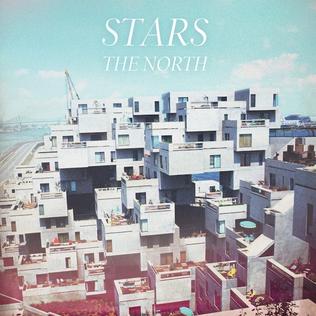
Stars: The North

As we crawl slowly out of this winter of 2013, I find myself thinking of this very good Stars album, which came out toward the beginning of it and seems to capture its character. On the title track, Torquil Campbell sings, "It's so cold in this country... every road home is long." That seems to sum up the album pretty well: although it's fairly lushly instrumented and accessibly hooky, the sound is very minor and subdued, with the wall of sound working to overtake the moody, theatrical vocals. The backdrop is pale but deep. The singers are hushed and aching, lonely and isolated and singing about it.

It's an interesting item after the band's previous album, The Five Ghosts, which I reviewed early enough on that I can't bear to look back on what I said. There were a number of powerful, mold-breaking moments on that album, and a number of wide shots that didn't land with me. The North has a higher floor and lower ceiling: they don't go out of their range as much, and as a result they wind up with an album that is a more consistent and overall enjoyable listen, but one with a less thrilling upside. I can listen to it the whole way through, and only a few tracks will stand out as being high points, and even fewer will stand out as being lesser ones.

It's made mostly out of chilling, frozen pop, which like much of Stars' music skirts an 80s-like line between dance and rock. "Backlines" transmutes from a guitar riff to a synthy chorus and builds string-laden denouement. The elements never clash because they are all with a single purpose. Their command over tone on this album is impressive. The liquid "Lights Changing Colour" and mystic duet "Loose Ends Will Make Knots" are among the finest, most Starsy in atmosphere. "Progress" improves on some of the stilted indie-beat of The Five Ghosts, revealing one of many moments where you really see the heart of the album. "Through The Mines" feels like a reminder that as good and popular as Of Monsters and Men is, Stars got there first and are capable of doing it as well as ever. Amy Millan's voice is a beautiful coo. As more and more top acts feature female vocalists, none has quite the bittersweet earnestness of hers.

Nestled between these moody atmospherics are some nimble indie pop tunes that are bright and upbeat but don't quite break the tone of the album, helped by Campbell's stately delivery. "Hold On When You Get Love And Let Go When Give It" benefits from this restraint, with the music swelling beneath him and gradually overtaking him. "A Song Is A Weapon" is my favourite individual moment on the album, balancing the precious tone with a catchy beat and good lyrics.

The album cinches up its mastery of tone, its command of "swoony indie rock balladry" with the closing tracks, the staggering "The 400" with its choked up refrain of "It has to go right this time", and the tactful dubstep-lite of "Walls" with its call-and-answer vocals. Ultimately, the album leaves more suggested than outright stated, which is where it has the edge over its predecessor.

Stars are a good band, but sometimes hit and miss with their album packages. Here it all seems to come together. The songs stand out from each other but also stand together into a 43-minute piece that plays very well in a single sitting. I think none of the songs on it will be as well-regarded, years down the line, as "Your Ex-Lover Is Dead" or "Reunion" or, for me personally, "Wasted Daylight." But this is the set they've probably been hoping they would put together for many years. Each song isn't a knockout, but as it goes on all the pieces go into place and the individual moments assert themselves for what they are. Pick it up if you were thinking about it, and you'll be glad you did.

Buy this album now: iTunes (Canada) //iTunes (USA) // Amazon.ca // Amazon.com


Tuesday, February 12, 2013

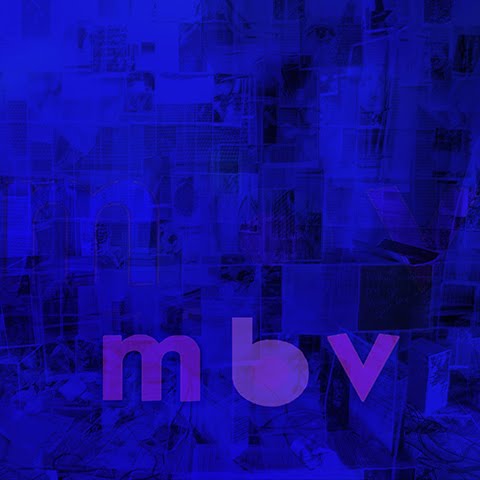
My Bloody Valentine: m b v

What am I supposed to say? What does it matter? Last week, My Bloody Valentine King-Of-Limbsed us with a new album. I don't know if there was any advance press for its release, I didn't hear it was happening until it was suddenly available for download, and then I downloaded it and suddenly I was listening to it. I did not know when I woke up that morning that I was going to end the day by listening to the first album this band has done in 22 years. Twenty-two years. That's a long time for expectations to build up. A lot of people have a lot of themselves tangled up in that previous My Bloody Valentine album, including me. I've listened to it many times in the past few years. I even wrote about it sometime early in this blog's run. And I was then and still am without a perfect expression for how much I love that album. It's spacy and distant and imposing and yet raw and personal and up-close. It seemed almost impenetrable, and then one day I got it. Maybe I don't understand it, but I get it. But this isn't Loveless we're talking about. This is what happens after an album like Loveless. 22 years after. Maybe that entails a certain amount of baggage, and if that keeps you from enjoying the new album, m b v, then I guess I can understand that but I don't agree. If anything, the years have improved this album for me, because it helps avoid the context, trimming the fat away from the usual expectations of a follow-up. It may have two decades of anticipation, but its arrival may have given it amnesty.

I think if they had come out with a new album within two or five years of Loveless, a lot of people would have had their ideas about what MBV should have done. What directions form Loveless were worth pursuing further, what should be discarded, what new avenues were or weren't worth pursuing. There's a lot that can go wrong with a follow-up project, especially something whose appeal is so nebulous yet all-consuming as Loveless's. People think that it belongs to them, that their interpretation of it, their idea of it is the correct one, and the follow up is a perversion of that. It's a no-win scenario so for years we got used to the idea that there would never be another My Bloody Valentine album. Then suddenly there is one. And you guys, it's really, really good.

It has that distance, that rawness, that coldness yet warmth, that slow-spinning hurricane of everythingness sounds, it has sounds that Loveless did not have and it lacks sounds that Loveless did have. At times it feels more rhythmic and maybe even more structured, but it also has "nothing is" which is a churning, mechanical sample for 3:34 very unpleasant-to-listen-to minutes but for some reason I keep letting it play instead of skipping, because it is part of the set and sitting at the end of this album it feels somehow earned. There are bits on this album that I love more instantly and completely than bits of Loveless, like that sad, staggering riff in "only tomorrow," which sounds like exhausted glee, excitement about being depressed, the million contradictions that MBV's music seems to inhabit. Delicate and brutal. "new you" is almost the pitch perfect MBV song you didn't know you were missing.

My Bloody Valentine has a monopoly on a certain sound... scarcely imitated and even more rarely duplicated. That they can play around within it, still sounding faithful and fresh, is very exciting. They took their time and were able to labor over this one for two decades -- okay I do not know how much of that time was spent literally working on music, but my point is they were given breathing room to decide exactly how an MBV album sounds and this is it. This is one. They are the makers of this music that I still don't fully understand but will revisit time and again to experience, to be in awe of the choices they made in creating it, the particular ways the guitars warp and drums chunk and vocals mutter.

Few things account for themselves as well as this band, these records. I have absolutely no business telling My Bloody Valentine how to make their records, nor telling people they should be into MBV. Quite honestly, not everybody has to. As much as it feels nice to be in this club, the point is that it definitely does not need to be for everybody. It's different from other things and as enjoyable as the only other albums by this band, which is what matters to me. It's a matter of taste and this satisfies mine, far above and beyond the call of duty.

My only gripe is that they didn't wait a couple of weeks to release it on My Bloody Valentine's Day. But if that means I got to hear it sooner so be it.

Buy this album right now! Seriously, do it!

Monday, January 21, 2013

Gary Clark Jr.: Blak & Blu


Buy This Album Now: iTunes Canada // iTunes USA // Amazon.ca // Amazon.com


Gary Clark Jr.'s major label debut is the easiest recommendation I have made in my entire time selling music to people. I have never felt more comfortable putting a CD into peoples' hands. There have been CDs I liked more, ones that were more forward-thinking and artistically progressive, but few that I've been more sure more people will like. There also haven't been that many CDs I've liked more. In terms of musical recommendations, this is the mother lode.

The basis of the album is Gary Clark's guitar chops. That means huge, walloping riffs that give Auerbach a run for his money, and mind-warping solos in the Hendrixian tradition that seem to last decades in a minute. If Guitar Hero was still a thing, I could see "Numb" appearing somewhere near the climax of the game, or "When My Train Pulls In," both highly gloomy, thundering testaments to modern six-string pyrotechnics. Tracks like these capture the way a psychedelic blues song can pump emotions up way beyond their dimensions, and other ones like "Glitter Ain't Gold" and "Ain't Messin 'Round" remind of the smooth-roughness of a good blues rock song. Comparisons could be made to Cream or ZZ Top, but he isn't a copycat playing by rote: the style is all his. He's also got a good, soulful voice to go along with it, sometimes reminiscent of John Legend as on the swaggering "Bright Lights," where he boasts "You gonna know my name by the end of the night." And by the time of that track, the fourth one on the set, you believe it. The boasts of someone who knows he has something to prove, and the muscle to back it up.

But Clark goes one step further by bringing classic guitar workouts face to face with post-90s Fugees-esque R&B/Rap, "The Life," the Al Green-esque "Things Are Changing" or the smooth, lo-fi title track. He can switch styles between each song, always sound like himself, and not need to blur the lines by forcing his other talents into each piece. He's not a postmodernist mix-and-matcher; when he takes a genre, he takes it for what it is but makes it gold by linking it with common elements to all music, not infusing it with things that don't belong. In this way, he innovates subtly, disguising himself as a throwback while always moving forward. "Travis County" earns praise for being the "Chuck Berry" moment, but he doesn't have to make too much of a detour because he knows how much Chuck Berry there is in everything. Another highlight is the opening raveup, "Ain't Messin 'Round," a horn-tinged triumph of composition, playing, and production. Likewise, an entire history of psychedelia, soul, and hip hop are blended together in a combination of "Third From The Stone" and "If You Love Me Like You Say" that is absolutely seamless.

I will praise this album endlessly. It reveals new things about the potential of each genre it calls up, and of course is a showcase for a dynamite singer/guitarist. It's exactly what a lot of people are looking for every day of their musical lives: Something that sounds like stuff they already like, but surprises with the thrill of the new, shocks them out of their familiar old Hendrix and Clapton albums. It seems like a cheap trick to just do a new version of what others have done, but trust me, if there's one thing I know about music (and there may just be only that) it's this: If it were as easy as it looks, everyone would be doing it.

Monday, January 7, 2013

Fang Island: Major

Some bands make it so easy. They are so good and consistent at what they do that I certainly don't need to over-exert my muscles by explaining to you exactly what is so awesome about them. Usually, they are bands with a "sound." Lately on this site, I've been targeting acts like this, whose sound is, for one reason or another, particularly appealing and strong, compared to, say, writing a well-realized and broad scope of songs. Neither approach is guaranteed to produce better results, one is just easier to talk about. Before the New Year's break I wrote about Japandroids. Here's another side of that coin.

Fang Island, man, they really know what to do with their guitars. "Dooney Rock." "Chompers." Come on, guys. I do not need to tell you anything about this band other than I can safely get out of the way, let them find their way to the people who are going to want to hear it. Which should be everybody, or at least everybody I let know about this blog.

What is this sound? This majestic quality that speaks for itself? It's maid with mountains of sharp, clean, orchestral levels of guitars, playing riffs that are exuberant and full of enthusiasm for life and creativity. This is fun, joyful music, not terribly different from that of Japandroids in philosophy but far apart in execution. Instead of ringing, brutalist concrete garage anthems, we have delicate, pinpoint riffs that reach very specific peaks and valleys, cresting and crashing all over each other, almost too shiny and perfect to exist. Also appearing sometimes are pristine, refined pianos, on the curtain-raiser "Kindergarten" and closer "Victorinian," lending some class and dignity to the affair. It's highly managed, far from my own conception of what rock "should be," in its raw and untamed state. Yes, I have my own ideas about that, but I am not closed-minded. There are also propulsive drums and usually cheerful vocals.

It's definitely art-rock, with emphasis on rock, and with more of a classical interpretation of "art." The members of Fang Island are obviously extremely talented players and they are not afraid to show off - there is so much going on on this record it surprises me on listen after listen. But they also manage to avoid the pitfalls many technically skilled players risk when it comes time to create a piece of music. They get out of their own way and let the music do the talking, sometimes obscuring their obvious skills behind a talent for finding the right level of simplicity.

The songs are not quite songs but compositions: there are vocals and sometimes verses and choruses, and definitely some structure, but it's all mostly just there to provide some frame of reference, scenery, a skeleton to hang the absorbing riffs and vibrant, towering solos over. I don't want to dismiss their lyrical acumen (they prove a vital part even when it's as simple as "All I know I learned in / Kindergarten" or "I hope I'll never understand") but it's clear they have their priorities in order. Through their music, Fang Island does what most great bands aspire to, and that's reach someplace nobody's ever explored before. Glad to have them as guides.

Buy this album now: iTunes Canada // iTunes USA

Friday, December 28, 2012

Japandroids: Celebration Rock

Celebration Rock is a simple pleasure, but a real and valuable one. It sounds like a car roaring down a lonely highway, barreling through at twenty over the speed limit, windows open arms flailing out in the wind. This is not so much an album made up of individual songs that are great, but a great cachet of a sound, of thundering drums and roaring guitars that scorch and seem to multiply the longer they are left playing. It sounds like a triumph over humility: brash and bold and of course, celebratory. This is victory.

"Authentic" is a dumb word but they come by their thrills honestly, with anthemic chords and shout-along choruses, like "The Nights of Wine and Roses" and "Fire's Highway" and "Adrenaline Nightshift" and "Younger Us" and "The House That Heaven Built," never marred by overthought. They're all visceral and physical and instinctual. So many "Ohs" and "Yeahs." Albums rarely get made like this, because of the natural desire to flex creative muscles and go in a different direction with each song, but haven't you ever listened to a song and thought "That was awesome, put it on repeat!" Of course you have. And Celebration Rock does that for you by making the tracks themselves the repeat - with slight subtle new wrinkles each time to keep you interested. It puts you in that young, exuberant, energetic state of mind and keeps you there. The call-and-answer lyrics reaffirm every positive, defiant thing, and the mix lets those vocals sound like the sound of a distant crowd clamoring to be heard above the more immediate instruments, all-powerful guitars and propulsive, firework-like drums. The lyrics themselves underscore the mood of overcoming yourself and throwing yourself into the thick of it.

There are two tracks on the album that are distinct in any way, and they still fit the overall aesthetic of the album pretty damn well. One is the menacing southwestern-tinged "For The Love Of Ivy," which snarls a bit too much to be one of the album's highlights, and the other is the slow-burning "Continuous Thunder," which gradually slips us out of the fiery dream this album has created. It's the cherry on top.

I dig the single-mindedness with which this album approaches its music, and by committing to it wholeheartedly it becomes compulsively listenable, loopable, livable. Not (merely) an album loaded with great songs but an album built out of a great sound, like the bizarro world counterpart to the xx, where loudness and raucousness were a virtue, rather than spareness and restraint... but the result is oddly similar, a genuine, no distractions, piece of concrete.

This has been a loud year for me. Of the albums I heard in 2012 - not just the ones that came out this year - I've mixed in Sleigh Bells, Death From Above 1979, Pretty Girls Make Graves and Sonic Youth (as well as Dinosaur Bones and Naked & Famous, which weren't exactly lullabys.) Japandroids are by no means the loudest, but they are so dedicated to their sound that it's impossible to deny the power they wield. They strip away all extra bits that conventional wisdom would insist are important to any kind of music, scrubbing away any bit of self-consciousness about repetition or any pretense of self-effacement... this is trance-inducingly good, body-rockingly good, soul-movingly good. This is what we need. When they cry out for "Younger Us," that's exactly what they bring you with this music.

Buy this album now: iTunes Canada // iTunes USA // Amazon.ca // Amazon.com


Monday, November 26, 2012

Sheepdogs: The Sheepdogs

When I listen to the Sheepdogs' music, I often think of the movie Dazed & Confused. Set in the mid-70s, one of its major characters is Randall "Pink" Floyd, a star quarterback for his high school team outside Austin, TX, who has to choose between signing a waiver to abstain from sex, drugs and alcohol for the season, or quitting the game. His fellow jocks plan on signing and worrying about getting around the waiver later, but Floyd has a dual identity: moreso than his teammates, he's equal parts jock and burnout. He doesn't look too athletic, wears his hair long, doesn't like the hazing rituals as much as everybody else. He basically has to choose between living up to his coaches' and teammates' expectations or embracing freedom and a worry-free lifestyle.

Not only does the Sheepdogs' music evoke that era, it calls up that same feeling, that same mood of the time, the idea that rock and roll should be something easy and fun. Not cheap, mind you, but that if you have to work hard at it you aren't going to end up with a result that feels natural. I'm sure the boys in the the Sheepdogs work hard at their craft, but it certainly feels, from my outsider, listening perspective, that they're just naturals, that they've absorbed their music so much that they picked up their guitars one day and a fully-formed set of 14 tracks suddenly manifested out of thin air. That's a bit naive, but the trick is not to make a show of it. The guitars twang very nonchalantly, the songs roll by in a solid groove, the lyrics very openly preach of a relaxed, let-it-be lifestyle. Some of the tracks are pretty fiery: "While We're Young" is a fist-pumping anthem, and "Is Your Dream Worth Dying For" is certainly a standout, the way its dreamy, neo-hippy chorus contrasts with the muscle-rock verses. But mostly the music is very loose and casual. Look at the titles: "Laid Back," "Feeling Good," "Alright OK," "The Way It Is." Even "I Need Help" is just a lot more of a shrug-of-the-shoulders than an outward cry for change. They approach this idea, or overall sound, from enough different directions that they make the album a treat to listen to.

Retro-classic rockers have it easy, in a sense, because they're working in a millieu with certain expectations and well-worn song forms. They're not far at all from their roots in the Allmans and Skynyrds and CCRs on the past. But the trick is in creating something that appeals to classic rock fans without merely being a cover band. And I think that, on their debut as they do here, the Sheepdogs manage to sound both faithful and fresh, bringing their own righteous energy to the set.

They come out on this CD, in case there was any doubt after Learn & Burn, proving that they are a genuine article rather than cheap knockoffs. It should be enough to say that they are extremely good at playing a type of music that most would agree is inherently pleasurable to listen to. They bring a lot to the table and ultimately, create a fantasy land version of classic rock, rebuilding out of memory and practice a version of the past that never really existed. All their skill, then, is in making sure it never becomes a shallow imitation. Cream rises to the top, and they're just very, very good at what they do.

Buy This Album Now: iTunes Canada // iTunes USA // Amazon.ca // Amazon.com


Monday, November 19, 2012

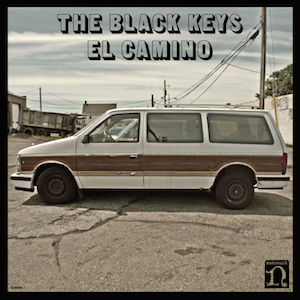
Black Keys: El Camino

With El Camino, the Black Keys follow through on the promise of Brothers. Oddly enough, to do this, they had to make an album that sounded very little like it. Brothers had a decade of obscurity behind it, and with its unexpected success, brought everybody over to their side. But getting them to stay there was going to require some doing. El Camino represents one of the finest examples of deliberate hitmaking I've seen in a very long time.

Basically, after you have a hit like "Tighten Up" and "Howling For You," you don't get to go back to the little rooms (to paraphrase Jack White.) Some bands elect to chase their newfound audience off. Some bands try too hard to keep them. With a band like the Black Keys, that would be bad. There's the problem: if they made an album that ignored their success, their label would probably chuck them to the curb. If they tried too hard to please their new fans, they'd end up pleasing nobody. Everybody wants to have hits, but nobody wants to get caught in the act of aiming for a hit. The magic of El Camino is that it succeeds and in fact thrives: it gives the people what they want, the Black Keys album they dreamed was next. No more, no less.

All that is why this album is noticeably brighter and more upbeat than the often dour Brothers. That one was good music, and I wouldn't fault them if they didn't change the routine for their next album, but instead they rose to the challenge of creating a great Black Keys album that was also a chart topping monster. This sort of premise is usually a recipe for a compromise that pleases nobody.

What they ended up with was not merely an album that contained hits, but an album that was made out of them. Every track on this album has a welcoming air to it, a feeling like you've been hearing it in the background of your entire life since forever. That's not just because "Little Black Submarines" is a compressed version of "Stairway To Heaven," but also because songs like "Gold on the Ceiling" and "Stop Stop" have those irresistible grooves you didn't know you'd been craving this whole time. Moments in between those peaks, like "Money Maker," "Run Right Back," "Sister" and "Dead and Gone" keep the ear from waning. This album is compulsively listenable. Each track cements the fact that Auerbach and Carney are the makers of great rock music.

Still, it never betrays the sound that brought us to the Keys two years ago. Auerbach's guitar wails with wry, dark pain, his vocals distant and obscure, Carney's drums thundering insistently, tons of interesting minor choices all throughout. This is auteurial rock, still, while also being for the masses.

It works because they're great at what they do, and know how to soak the album with those primal elements that makes music so addictive to so many people. "Lonely Boy," the opening track and first single, announces it with great urgency. There's a reason why this is the "mainstream" stuff, though: it's fun. It's big, it's groovy, it's hook-laden, you find yourself humming it, it moves you. It's fucking delicious. If you're an artist playing to small audience, it's no great shakes to make an album you can be proud of, just by following your instincts. An album like this requires walking a remarkable tightrope act.

Buy this album now: iTunes Canada // iTunes USA // Amazon.ca // Amazon.com


Friday, October 19, 2012

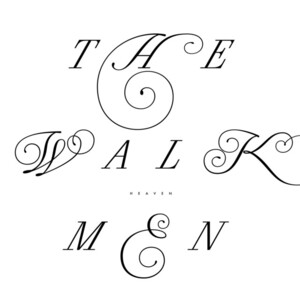
Walkmen: Heaven

On "The Love You Love," drummer Matt Barrick hammers out a racing beat while while one of the guitarists strums away heedlessly, and vocalist Hamilton Leithauser wails away to the heavens: "Baby it's the love you love / Baby it's the love you loooooove / Not me." This is an objectively upsetting thing to have to say, but it's delivered with such affirmation, such a good, clean feeling, you enjoy it. They have a sound that sounds so familiar and yet owns it so distinctly. Those guitars are so clean, even when they're ragged. Leithauser's vocals are so pure, even when you can hear his throat straining. It's that balance of sweet and sour that makes so much of this album irresistible to me. The determined way he sings the chorus to "Song For Leigh," with the music forming a brick wall to help him stand his ground, is one of the best individual songs I've heard all year.

Leithauser has a very strong voice. He carries half of "We Can't Be Beat" almost totally on his own, with a bit of light backup. That's as much a triumph of construction as talent, since the moment the rest of the band really kicks in is like a breakthrough. The album is loaded with deftly-executed vocal hooks, and besides those crystal-clear-picked guitars, there is also the twangy "Love Is Luck" and the skittering, ringing "Nightingales." "The Witch" is led by an appropriately haunting organ. The instruments seem supernatural while the vocals are very Earthly. It's a good mix.

In my review of Of Monsters & Men, I mentioned Mumford & Sons, not to compare the two but to point out that the latter's popularity has made the terrain safe for a certain type of act. The Walkmen don't quite carry that twangy, country folksiness (nor OM&M's Icelandic spiritual nature) but their hopeful, good-natured, indeed Heavenly sound plays very much to the same audience. This is good honest music and a great piece of work.

Buy this album now: iTunes Canada // iTunes USA // Amazon.ca // Amazon.com