Showing posts with label 1970s. Show all posts

Thursday, August 15, 2013

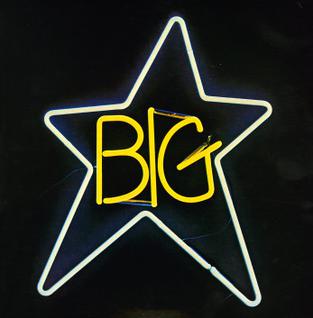
Big Star: Radio City

Big Star's second album finds them a lot less eager to sound pretty. There were some reasonably rough-sounding moments on #1 Record, sure, with "Feel" being an impressionistic simulation of the insanity of being in love (or something,) or the confrontational "Don't Lie To Me," but it was generally defined by tenderness, hope and sensitivity. It was mostly lush and clean and simple, and we loved it for that. And Radio City is a fucking wonderful mess. My best hypothesis is that without Chris Bell around, Alex Chilton's darker instincts were allowed to roam unchecked. That probably how the guy who penned "Thirteen," one of the sweetest and prettiest songs ever, was now hissing "You Get What You Deserve," on one of the album's many excellent tracks, not to mention the later "You're gonna die / You're gonna decease."

This album has a particular kind of craziness. Because the three remaining members seem to have such a perfect instinct for pop-rock songwriting and playing, they go absolutely crazy trying to break the sound of their first down into shattered pieces, knowing it will all still fit together in the end. I always think of the insane instrumentation on "Life is White," culminating in a hurricane of battling instruments that barely even seem to belong in the same song: jolly piano, raunchy guitar, whining harmonicas thrown in for good measure, all wrapped around a perfectly twisted hook ("I don't want to see you now / 'Cause I know what you're like / And I can't go back to that now.")

It's actually only 36 minutes long, but it's a lot of music in that 36 minutes. A very busy set of unrelenting pop chaos. It goes breathlessly from "O My Soul," every bit the arch 70s anthem that "In The Street" was, to the wild and wooly "Daisy Glaze," and beyond, pummeling you the whole time but always managing to fall back on the safety net of pop instinct. More like a crash pad, which they hit at terminal velocity. Even one of the cleanest-cut tunes here, "September Gurls," which never seems to stray too far off the beaten path, has a certain pumped up alchemy to it, and a skewed sensibility. Not every song can nail the simultaneous joy and sorrow of romance, and Big Star does it often.

Maybe that's really it. Radio City is an album of contradictions: of joy and sorrow, bitterness and hope, all the things we really want out of music, preferably all at once. Mixing it all together in this chaotic way produces something that feels genuine, something we can comprehend but still be utterly surprised and thrilled by. The best music seems to be easy and hard at once: rough and clean, sweet and sour. Even the sweet, tender, strummy ballad "I'm In Love With A Girl" seems to be loaded with doubt ("I'm in love with a girl / The finest girl in the world / I didn't know this could happen to me.") I may not personally think that Radio City has the tunes the way #1 Record does, but the way it exceeds in every possible facet gives it a character, a power of its own.

Buy this album now! iTunes Canada // iTunes USA // Amazon.ca // Amazon.co


Wednesday, July 17, 2013

Case Study: Van Halen, "Dance the Night Away"


Fuck, Van Halen had a ton of good songs. Just looking at the hits, you've got the titanic "Jump," the rock solid "Running With the Devil," the gloriously sleazy "Hot For Teacher," cover versions of "Pretty Woman" and "You Really Got Me" that brought them to new frontiers, showy instrumentals like "Eruption"... this band was the glitzy, glamorous synthesis of everything rock was becoming in the late 70's.

But for me, the song that sums up all the pleasures of listening to Van Halen is "Dance the Night Away." Not a little-known song by any stretch, but one that seems to take a backseat to those gems. This song has it all, though, and to the fullest degree: it has one of Roth's best vocals, sexy but charming and playful, beckoning in the lyrics, "But don't skip romance 'cause ya old enough / to dance the night away." Those lyrics are terrifically simple-minded, but they're aptly effortless. They soar and infuse the soul to do just that. It's a perfectly fitted good-time rock and roll song that comes with a genuine sense of wellness.

And that guitar. Oh, boy, that guitar. EVH was a player of immense technical skill and discipline, and sometimes even his best work sounds overly clean and precise for my rock tastes, but that groove, the way it ebbs and flows beneath the vocal, especially the hook under the chorus, the way it walks and pings, oh yeah. That tone is so crisp, and that riff leading into the fadeout just completely sums up the entire mood and movement of the song. You could listen to it for ten more minutes, especially thanks to the fine rhythm work of Alex Van Halen and Michael Anthony. This is the best possible combination of his pristine guitar and Diamond Dave's wild vocal, I tell you, and that's amongst many fine examples. The strange alchemy that was Van Halen (the real Van Halen) is in its best balance here. If it's not their "best song," the one that marks the highwater of their accomplishments, it's the one that shows exactly what this band is like.

Monday, January 28, 2013

Mixed Results: "80s & Beyond" (circa 2003)

A few years ago, a friend of mine, who has always shared my passion for a breadth of musical topics, asked me when I first became aware that there was music out there "that was good." Music that we maybe weren't just hearing because it was on the radio.

I couldn't pin it down... old music always had a ton of currency in my house. My parents were big into the major Oldies station, so I knew a ton of ancient songs that my classmates in grade 5 wouldn't have. By the early 2000s, my dad had nudged the radio dial in his Buick Century over to FM and a station that specialized in "The hits of the 80s, 90s and today." So we got a lot of Tears for Fears and Depeche Mode and Bon Jovi and U2 in high rotation, and I could count on hearing The Police or the Proclaimers or Jesus Jones on almost any car ride, sandwiched between recent hits by Sugar Ray, Goo Goo Dolls, Avril Lavigne or Mary J. Blige (it still blows my mind though that my dad once listened to a station that regularly played "Family Affair.")


Though I no longer consider it the apex of musical innovation, the station painted me a picture of the 80s as a fertile time for esoteric one-hit wonders. The early MTV era was like the wild west when any odd act could somehow emerge with a quirky video or strange hook and briefly conquer the world. This may explain my lifelong devotion to Dexys Midnight Runners. It's clear that's the running theme of this Mix CD, potentially the first one I ever made (around this time but possibly later, I made a CD for a girl, a classic rite of passage for music nerds, but its contents have been lost to time.) The only really surprising thing is that I put on "Roxanne" and "Don't Stand So Close To Me" instead of "Every Little Thing She Does Is Magic," which I considered my personal anthem. Maybe even then I was dismayed by the low production quality.


My career as a musical scavenger begins here, finding stray tunes to call my own: hence, Dokken's theme to the third Nightmare on Elm Street film, Huey Lewis from Back to the Future, and The Buggles, well known to me as the answer to the trivia question "Who had the first video played on MTV?" I genuinely loved that song and thought it was profound. There's also the inferior English-language version of Nena's "99 Luftballoons" and two Combat Rock-era Clash hits, a time period I would soon all but disown. I liked thinking of these artists appearing suddenly on the international stage before I was ever born, then disappearing and leaving behind all these low-quality videos to fill VH1 specials. I was very, very aware that there was music outside my everyday context.


I wrote the phrase "80s and Beyond" on the CD because it included a few 70s tracks (Kinks, AC/DC) and a few 90s ones - Beck's "Loser," and two songs that captivated me in my actual youth, Green Day's "Longview" (which began to appeal to me a lot more once I realized I was living it) and Offspring's "Bad Habit," which maybe wasn't the best track on Smash, but certainly had the most cussing.


None of these are bad songs and some of them (Beck, Dexys, and yeah the Clash) are genuinely great. It's clear from looking at this set that I'm very interested in looking outside my own everyday context for music, but still don't have any discernible taste... a lot of them are songs I found one way or the other and let stick with me.

I just finished reading Rob Sheffield's "Love is a Mixtape," and while I would be deluded to say my life is anything like his (even my devotion to the art of mixing is lacking) it's gotten me thinking about different stages of my life, and what songs I put together, and why. You might see a few more songs like this in the future... you know, when I'm behind on reviews and need something to fill space.


Tuesday, November 6, 2012

Alice Cooper, "Elected"


Happy voting, America. Don't fuck this up.

Saturday, May 5, 2012

Big Star: #1 Record

Something I don't like to talk about very often is the very real social aspect of listening to music. There are a lot of thorny sociological issues that go along with any album, stuff that I'm aware of, but not as comfortable or competent in talking about. My policy has always been to look at an album stripped of its baggage and determine, based on my subjective (but critical) tastes, what's valuable about it and if people should hear it. That said, there will always be that aspect of what your music says about you, and who you are able to talk about it with. There's the case of Big Star. I was going to say "There are two types of music geek, those who've heard Big Star and those who haven't" but the thing is, I'm not even sure I can recognize you as a true music geek if you're not familiar with this record.

That's not a statement that has anything to do with Big Star's music, what it sounds like, or what it means to me. You could hear this album, dislike it, and still call yourself a music geek. Big Star as a band and a musical entity has two lives: Its content and its reputation. It has a marginal place in mainstream music history, but has been taken up by music writers like myself with great passion. Finding it, and making the decision to listen to it (not even liking it, just hearing it at all) means you have done some serious digging, and are trusting tried-and-true devotees in their opinion, and have the right frame of mind to judge. Basically, to me, the moment you decide Big Star is something you need to hear even once, is the moment you truly dive into the great depths of popular music. There's a lot of dialogue about this band and shockingly little of it has to do with what they actually sound like. When I first got the disc, I was worried that nothing it contained could justify that reputation. But if you take that leap, you will be rewarded.

At the time this CD, which comprises Big Star's first two vinyl releases (#1 Record and Radio City,) found its way into my hands, I was a more guarded listener than I am now. I had seen it listen on numerous lists of greatest, favourite, and most influential albums, and I was afraid to peel back the curtain. I wasn't sure, based on what I knew about music history and music of that era, what could have been so revolutionary and yet remain so obscure. And the truth is, when I first heard it, I didn't quite get it. It was so unassuming, so in-line with what else was being done at the time, and so overshadowed in my mind by what came later. I had a hard time believing the album I listened to had the reputation it did. I realized later that it was simply that good at being what it was. Albums aren't generally recorded with the intention of revolutionizing pop music or being mind-expandingly brilliant (albums that are usually end up as a chore to listen to.) Sometime later, I realized that an album can be that great merely because it is so enjoyable to listen to.

The standout track for any new listener will be "In The Street," which is familiar as the theme song to That 70's Show. At first I thought the cover improved on the original. Where Cheap Trick were one of the great late-70's stadium fillers, who knew how to build an anthem, Big Star sounded stuck in the garage, much smaller and quainter. But of course, it is small and quaint and garage-sized. It's about being a bored teenager, and Alex Chilton's voice reflects that so well: how else are you supposed to sing, "Wish we had / A joint so bad?" but in the frustrated whine of youth?

All through the album, lead vocals (by either Chilton or Bell depending on the track) are spot-on for rock and roll. It's not that they're technically accomplished, but that they're "in character" for the song. When theyneeds to sound young and exuberant, they do, and then when they needs to sound aged and wizened, they do that too. By 1971, he was already an old pro from his time in the Box Tops, now playing his own material for the first time. The songwriting is acutely aware of what it's like to grow up listening to music, and to find yourself in a world where it's possible to make those records for yourself. The style of a blend of post-hippie early 70's folk and pre-arena hard rock: a blend we'd now call power-pop, but was at the time not recognizable as anything but "music."

It immediately announces itself with the first track, "Feel," a blend of post-psychedelia and garage rock, with the vocals seeming to melt all over the song while the guitars (and saxophones and other instruments) claw their way up from a deep chasm. This is, I think, one of the album's most inventive songs, while also having somewhat rudimentary musical theory. A great show of bombastic rock misery. You can also see a different sort of late-psychedelia in the mellotron-led "India Song," a Lennonesque bit of escapism, idealizing British colonialism, hopefully sarcastically. It's a good example of how Big Star was taking what their heroes did and remade it with their own quirks intact. They were, again, that first post-Beatles generation, who had learned to play because of them.

That exuberance is on full display on tracks like the shout-along "Don't Lie To Me" and the stomping "When My Baby's Beside Me." If this were a fair world, we'd be hearing these tracks on the classic rock radio every weekend between Bad Company and Rush. The guitar break on the former is pure rock, and the latter is one of the last vestiges of a time when writing a "rock song" meant aiming for Chuck Berry: the missing link between Lieber/Stoller and Free. "My Life Is Right" is a hard one to pin down. In fact, it closely resembles an extremely epic version of the theme song to Cheers, with its earnest, melodic verses and its humongous, drum-led chorus, and more gorgeous harmonies. It seems like a roadmap for a lot of power-ballads, although it isn't one, again you can see Big Star bridging the gap between the styles of eras. They could be the common denominator between Whitesnake and the Replacements, and isn't that just totally fucked up?

There is a run of ballads leading up to the end of the album. "Give Me Another Chance" is yet another perfect deployment of harmonies. Chilton starts on his own, then the rest join in on the chorus, deepening and strengthening his longing, "Don't give up on me so fast / I see it's me who's wrong at last / Give me another chance..." what you see here is a spot-on understanding of what background vocals are for, what they add to a song. By comparison, "Try Again" is stark and haunted, simply worn out but determined, pushed forward by those steady-beating guitar strums. "Watch the Sunrise" comes as a relief after it, ebullient and sweet, like Chilton and Bell's own "Here Comes The Sun," especially that little giddy-up riff.

The real superstar ballad on this is the beautifully earnest hymn to childhood music love, "Thirteen." With a gently-picked guitar and a trembling voice, Chilton recounts the timid movements of a preteen during the British Invasion, crystallizing a moment when music suddenly becomes important as a means of expression, reflecting on the very reason for this album's existence. The modest songwriting includes a brief guitar break that says more than words could, although the heart still lies in lyrics like "Won't you tell your dad, get off my back? / Tell him what we said 'bout Paint It Black." Suddenly, you speak a language your parents don't, and everything starts falling into place.

As you can tell, I certainly believe in the greatness of this album. It's all over the place, infusing every track with musical love and a blueprint for the future. I can still remember the exact moment I realized this was an excellent, singular piece of work, not just a collection of songs I thought were pretty good. It was in that moment when Chilton's voice hiccups just a little bit on "The Ballad of El Goodo," when he sings "At my side is God", and you can feel he's getting just a little twinge of barely-suppressed excitement in anticipation of jumping into that chorus, that indelible, unforgettable round: "And there ain't no one going to turn me 'round." This album is absolutely teeming with love for its craft, the desire to match its influence in greatness, to be to the future what those old records were for them.

But wait: There's more. As I mentioned, #1 Record is now only available on CD as a package deal with Big Star's second record, Radio City. It is absolutely loaded with great moments, and is in many ways an even more interesting piece of work than its predecessor. It also was recorded amidst frustrating conditions (always a plus for great art) and without guitarist Chris Bell, who brought much of the mellow, folk sensibility, leading to something a bit more raw. But it's definitely a different record, one that I feel deserves more attention than a tacked-on summary in this review.

For people like me, it feels fresh an exciting because it's an excellent, new version of music we already liked. What's more, it's a window into an alternate dimension, because it was created at a time before "how to sound like The Beatles" became codified in our minds. Big Star wanted to make music that would appeal to a lot of people, but we'll never know exactly how it could have been, because a bad business deal basically ruined anyone's chances of hearing this album. They were making music very few people were destined to hear, falling through the cracks of history. But since picking it up, the music journalist community has protected it fiercely, examined it, lauded it, and rediscovered it every time a young curious soul reads an article like, well, this one, I hope. If nothing else, it feels excellent because it was made by people with the same level of love for music as the people now most likely to discover it.


Buy this album now! iTunes Canada // iTunes USA // Amazon.ca // Amazon.com


Wednesday, March 7, 2012

Serious Contenders: Pink Floyd, "Wish You Were Here" & "Comfortably Numb"


In their way, the guys in Pink Floyd did a great job making their personal problems into everybody's problems. My favourite Floyd album is Dark Side of the Moon, because the observations and sorrows of that album feel truly universal... getting older, wasting your life in the pursuit of money and peace of mind, and losing it all. As they progressed, they turned a bit inward, mining their own situation more and more, particularly in the case of Roger Waters' songwriting.

"Wish You Were Here" is one of those great, haunting delicate ballads. It has a dusty, sorrowful guitar picked expertly by David Gilmore, and all the background instruments swell just perfectly to underscore Waters' oblique, well-done, simple-yet-effective lyrics. It sounds like the ultimate lovelorn, break-up, "I need you more now than ever, but we can't be together" type song, particularly at its climactic "Two lost souls swimming in a fishbowl" line.

It's not that. It's very specifically about Syd Barret, the founding leader of Pink Floyd, who vacated the band after one album and a handful of singles due to drug use and psychological... disintegration. Whether Waters was nostalgic, or whether he felt Barrett's presence was a stabilizing one that was long missing and ultimately reflected in the band's turmoil... I'm not sure. But he's definitely singing about Syd.

Things got even more specific, more autobiographical, and yet more obscure, on The Wall, which tells a story of rock star alienation. Now, I've listened to a lot of music about rock star alienation, and even though I am not a rock star and find it somewhat silly to whine about having achieved great success in your chosen field, I often find it makes for some of the best music. No, no kidding. Hey, Greek tragedies were always about nobility, played for the commoners, and they managed to get the point across. In general, I think, the problem of being disappointed by your greatest desire is easy enough to relate to.

I think the distance between the rock star lifestyle and the average listener's helps this. Everything about the rock life seems exaggerated and impossible, including its grief. They got where they did, after all, by taking the feelings, all the little ones we deal with daily, and stretching them out to 3-minute moments, twelve to an album. So by necessity, it must be bigger, or feel bigger. In The Wall, "disliking your audience" is equally tragic to losing your father in the war (all in all, they're both "just bricks in the wall.")

"Comfortably Numb" captures this ambivalence, lyrically and sonically. It's mellow yet tense (the brooding bass, the breathing guitar.) Waters voices the Doctor administering the shot that will allow fictional rock star Pink to complete the show, David Gilmour plays Pink as zoned out and losing connection with reality (...Syd?) Again there is beautiful poetry in the lyrics, particularly Gilmour's parts. The money, however, is in the guitar solos, which manage to reach both a warm beauty that only music can reach, and a cold detachment as signified in the lyrics. The great thing about a song's execution like this is that it forms a bridge between what the song is literally about in its lyrics and context, and what it stirs up in the listener. The song really does a great job not just being about, but living out, that ambivalent, two-sided rock star fever dream.

Sunday, February 12, 2012

Serious Contenders: Elton John, "Madman Across the Water"


Elton John's career with Bernie Taupin is probably one of the most fruitful, rewarding partnerships in pop music history, right up there with Lennon/McCartney and just ahead of Steinman/Loaf. I don't have to love "Your Song" or "Candle In The Wind" but I can respect how ably they and songs like them hit that commercial sweet spot, all while John and Taupin had their other feet on the art-rock side of things. I don't have any goddamn idea what "Madman Across The Water" is supposed to mean or represent, but it gives me a chill, and I think it's pretty boss that this is on the same album as "Tiny Dancer" and the same career as "Rocket Man."

Sunday, January 22, 2012

Serious Contenders: Tom Petty, "American Girl"


Whenever anybody talks about Tom Petty, they always seem to think of "Free Fallin'," but for some reason my mind goes right to "American Girl." He's one of those artists who has so many great songs that even some of the better ones get lost in the shuffle. This seems to be the case even though this song really does stand out, cutting a faster pace than most of his later stuff, and just being so balls-to-the-wall awesome.

There's a lot to talk about with this song. There's the way the intro riff just rings out while the bass drops in delicately. There's the lyrics, which don't go into much detail at all but seem to come together to paint a full picture. There's Petty's ultimate rock and roll delivery, especially "God it's so painful / How somethin' can be so close / And still so far out of reeeeeeeeeee-eeeeach!" And that grunting, "Oh yeah, all right / Take it easy baby, make it last all night." And that funky middle section that leads into the climactic outro. It's all fairly unconventional, but not too showy about it, and it comes together so wonderfully. And it was, like, his first go.

Monday, January 16, 2012

Serious Contenders: Elvis Costello, "Radio Radio"


I heard this song first thing this morning and as I got out of bed I smiled. It was playing on my iPod, which I use as an alarm clock because I simply cannot stand the radio. Can't stand the top 40, bored of classic rock radio, and every other format is way worse.

Anyway. I love this song. I love the urgent organ riff and the sneering pissed-offedness in Costello's voice, as he articulates (verbosely) the problems he has with radio programmers ("I wanna bite the hand that feeds me / I wanna bite that hand so badly!" being the classic line.) This is one of those great songs where it all comes together.

Wednesday, December 28, 2011

Serious Contenders: Big Star, "In The Street"


It just happens to be the theme song to That 70's Show, which makes sense. Like The Wonder Years (and in some ways, Happy Days,) it was a song from the show's era, which sums up its attitude perfectly. "Not a thing to do / But talk to you" says a lot about being young in any era, not to mention "Wish we had / A joint so bad." Alex Chilton's voice drawls out in a whiny, bored way that nonetheless seems to revel in the nothingness of youth. The original here still outdoes the TV version by Cheap Trick for me.

The line on Big Star goes that their jangly-poppy sound was not appreciated (or at least, not properly heard) in its own time, but was taken up by more notable college rock acts like REM, who eclipsed the earlier act and made their qualities sound less impressive. But I think these things come in cycles, and now that history has marched on some, Big Star sounds different enough from the bands they influenced that it sounds fresher than ever. I myself don't quite have another frame of reference for the funk-meets-folk sound they often embody, and I don't hear them too much in the bands they influenced. In any case, I don't believe the question of "influence" properly indicates a band's quality. What they've got on their own is that mixture of innocence and experience that permeates any great music, but the flavour remains their own.

How incredible is life... when this album was released, they couldn't even get it in stores due to a shipping catastrophe. Now, you can download it, like, right now, on iTunes. Music is yours to discover.

Serious Contenders: Aerosmith, "Dream On"


Fantasy and reality collide in Aerosmith's first big song, and in general whenever Steven Tyler is involved. It's in his vocal style, his lyrics, his whole presentation, this blend of the unreal and the down-to-Earth: the haunted past and the hope for the future. The song begins with that mesmerizing piano.guitar harmony, then climbs hand-over-fist as Steven's voice goes from a spaced-out rumination to a yowl of release. After all this time I'm not sure I've heard anything like it.

As anyone who's been paying attention knows, Aerosmith is my favourite band. Sometimes it feels like I have to actively suppress this fact, and I always feel like people confuse what they actually sound like with some of their more generic, less interesting contemporaries. "Dream On" isn't a power ballad: it isn't "Here I Go Again" or "I Can't Fight This Feeling." There's nothing smoothed over or evened-out about it. It's "Stairway To Heaven" in microcosm. It's a trip up and down the spectrum, from the intimate to the gigantic, in pianos and sweeping gutitars. Bitch, this is rock and roll!

Tuesday, December 13, 2011

Serious Contenders: Led Zeppelin, "Fool in the Rain"


Like previous examples of classic rock on this site, "Fool in the Rain" isn't the song you probably think of when someone says Led Zeppelin. No, it's not an epic, medieval hymn to Tolkien, nor is it an explosive psychedelic blues crunch. It's just a simple story set against a neat little looped riff, which curves up then laps down on itself. If it's not the greatest song they did, then it's certainly an excellent example of what they could do with their time. It's one of the bigger ear-worms they ever created (probably a lot easier and more fun to hum than "Stairway to Heaven" or "Babe I'm Gonna Leave You.") It's a really slick jam.

It also features some rad lyrics, a story about standing in the rain waiting for your dream girl, feeling utterly defeated and hopeless, until you realize you were waiting on the wrong damn block. That's what I like about this song's place in the Zeppelin canon. They often took their music to strange places, whether the desert sands of Kashmir, the pastoral past, into hippie fantasies and the inner workings of the mind... and the street corner. This isn't the song you think of when you think Led Zeppelin, but who else could have done it?

Monday, November 28, 2011

Serious Contenders: Rolling Stones, "Miss You"


You could call it a Disco song, if you need to, but the Rolling Stones have a good enough sense of the veins of musical history that they know where the common root is between rock and Disco. It's pretty funky, but it's also lascivious and worn-out, very urban and dark, in its way bluesy. Like Queen's "Another One Bites the Dust," (another Serious Contender) it creates a context for itself outside of trends and genres. It's more like Michael Jackson than it is ABBA. Mick sounds like a slithering sexual predator, and that bass riff, that harmonica, the whole deal all backs him up. I love songs that seem to come from the fringes, and this one is definitely out there. It's a pretty popular song, and yet, I don't think anyone would call it one of the Stones' very best. But if reminded, they would.

Thursday, September 8, 2011

Serious Contenders: Who, "Baba O'Riley"


Granted, there's little doubt amongst critical circles that this is one of the greatest songs of all time. It isn't really under-appreciated, it doesn't need me pointing out how great it is and few comprehensive Best Of lists would be complete without it. It's practically unassailable, which is a good thing because with all the theatrics and the synths and the obscure lyrics, it seems to come out just this side of silly. But it is, make no mistake, a real contender.

What I love about this video of the Who performing it live is the energy flowing through the band as they perform and can't help but be moved by their own music. Moon's back there bashing away. Townshend shimmies and hops about like an excited child. Daltry marches like a conductor. Only staid Entwistle, like a learned guru, remains in a trance, focused on the task at hand, providing that rock solid basis. Music and motion becomes one.

The lyrics as I mentioned are abstract but they seem to mean a lot. They derive, I'm told, from a similar-but-different composition (actually entitled "Teenage Wasteland") meant for Townshend's "Lifehouse" project. I've heard that version. This is much more enjoyable. Here the context-lacking lyrics provide for great-sounding nonsense you can hang your own interpretations on, take as defiant and determined yet vulnerable and hopeful,resting all one's aspirations on walking triumphantly out of that "Teenage Wasteland." And all the while that burbling synth keeps flittering, providing you an audio recreation of all the continuous interconnected randomness of life. Of everything.

Moon's drums. Not too crazy, but they play well, organically, against the pre-programmed keyboards. Townshend's guitar break, brief, but important, like a distant hailing frequency beckoning you on. And that harmonica, standing in for accelerating violins, represents all the transcendent hopes and dreams.

Sorry, my prose got a little purple there. My point is, this song is a moment of peak expression. It's got everything and it sounds like nothing else.

Wednesday, June 29, 2011

#1 - Aerosmith: Rocks

Music is art, that much is true, but this blog isn't devoted to the idea that music is something you put on a shelf and admire while it gathers dust. I wouldn't feel right selecting, as my favourite album, something that could be admired from a safe distance, dissected for its socio-historical importance or its place in history. If something is going to be my favourite, it's going to have to punch me right in the gut, toss me around the room, and tell me it won't be ignored. 26 seconds into the album opener, "Back in the Saddle," Steven Tyler howls "I'm BAAAAAACK", emphasis on the "ack," and it's impossible to escape.

It's guttural, it's visceral, it's direct. One guitar gallops along in a low growl, the other flies off like sparks. If you dissect it, it flies in the face of by-rote rock construction we now take as fact. The album completely fucks around with the idea of verses and choruses and solos as they've become codified, instead having a ragged, brisk, in-the-moment feeling. And yet it never sounds jammy. For one brief moment at the apex of their 70's career, before the drugs swallowed them whole, these five guys were visionaries. And they walked out of the studio with an album I find impossible to deny.

"Back in the Saddle" is the no-bullshit "looking for a fuck" song that, if you were about high art, you might look down your nose on, but their ability to so wholly commit themselves to the nasty urges that lie within us is precisely where the brilliance of the album lies. Despite what cliche holds about this band, this is not an uncomplicated, shallow piece of work. I said earlier that just about every album on this list could in some way be construed as a concept album of some kind. The concept here is how deep one can dive into one's vices before they destroy you completely. As early as the second track, Tyler yearns for "home sweet home" in South Tallahassee.

"Last Child" has a false beginning, a rare device that pulls you into the song, makes you feel you've slipped into a idyllic fantasy before being smacked out of it, pulled back to the gray, urban life by that clockwork funk riff that so perfectly replicates the world of traffic and pedestrians and steel and glass. The sinking guitar riff in the "home sweet home" refrain is so sentimental, but lets you down knowing the past is gone. The proto-rap vocal delivery proves the band's rhythmic strength that would help haul them out of oblivion a decade later. The song fades out in sirens and a whirring slowdown of the disc that leads into the manic "Rats in the Cellar." Something about this song says to me "You're fucked now." It's so turbocharged and claustrophobic, the city is starting to win. Weird harmonies appear abruptly then fade away like ghosts of psychedelia. There's almost too much going on in this one song to comprehend. It ends with a dangerously fleet-fingered guitar solo that seems both meticulously composed and dangerously unstable, adding to the nuclear meltdown feel of the album. After a minute and a half of pure instrumental mayhem, the song grinds to a halt in drums.

Side 1 ends with "Combination," a Joe Perry song that feels like walking around at daybreak trying to find a friendly face (or at the very least, someone to buy drugs off of.) The guitar riff speaks to me, because it's so circular, up and down, indicating how inescapable this predicament is. Perry and Tyler do dual vocals here, making it sound utterly inhuman. The voices themselves are identifiable, yet in some kind of weird blended uncanny valley where it just doesn't sound right. And that wrongness is sublime. It doesn't help that the lyrics are so obscure and ominous. And that riff just won't stop churning.

Side two begins with a pair of crucial songs to the albums "personal disaster" aesthetic. The opening guitar sweep of "Sick as a Dog" is grand and orchestral, like a beautiful mist, before sharpening into focus with an unsympathetic Greek chorus riff. This song wears its heart on its sleeve, with opening lyrics "Pleeeeeease / I've just got to talk to you." The lyrics here, as throughout the album do a great job making a statement without grinding it into dust. Unsubtle but not obvious. Not something just anyone would have written, not a KISS or Journey or Foreigner song. Here is a way of throwing yourself on the floor and begging for forgiveness, for release, for redemption, but being denied. "You'll be sorry / 'Cause you really ain't that young." Like many of the songs on this album, it ends with about a minute-long guitar workout that leaves you to contemplate what's been brought to your feet. That there might not be much time left is indicated by the fact that this hymn to redemption bleeds into one of the first great sound-pictures of Armageddon ever committed to tape. On "Nobody's Fault," Tyler steps up his vocal performance to a previously unheard level of histrionics. The song is too big for words, looming over the listener (and, sounding more than a bit like Black Sabbath but with heart, informing much heavy metal in the decades to come.) "Saw-rry / You're so saw-rry / Don't be sawr-r-r--ry!" those inhuman harmonies return, "Man has known it / now he's blown it / Upside-down and hell's the only stop / We did an awful job / And now we're just a little too late." The song takes on the fire and brimstone of a sermon, but never names names. This track forgoes all the bluesy swagger, the inflated ego and self-importance and comes apart at the seams.

But if nothing else, there's still rock, and the album forges ahead with "Get the Lead Out," a fairly good rocker that, in the context of this album, seems merely adequate. It's followed by the utter pure rockingdom of "Lick and a Promise," a song that is even dirtier than it at first seems. It seems like a celebration of the rock star lifestyle, but like a good work of modernism, it hides inner truths about the hollow pleasures down that path. For all its glamorous riffs, and clever lyrical turns, the hook says it all just by going "Na, na, na, na, na!" It's an invocation of the loneliness and self-destruction at the heart of excess and stardom. It shines and lures, but it's hollow. I think that's why those syllables echo so distantly in my head, because I happen to be aware, with the gift of hindsight, that success did utterly swallow them whole for about a decade following the release of this record. First they took the world, and then the world took them. It gets better knowing the story that unfolded, but taken for itself it's still brilliant. One more cacophonous, pitiless, incredible solo later, we're on our way out the door.

The album is capped off by "Home Tonight," which comes from a time when the downtempo tracks on Aerosmith's albums weren't meant merely to be hits on disaster movie soundtracks, but were actually a novel touch. This impressively spare yet altogether grandiose statement of devotion features a staggeringly excellent instrumentation and an impassioned vocal performance. The thing about Steven Tyler, especially in the 70's, is that his voice carries that undefinable quality of authenticity that's usually associated with old type blues singers, and it's clear how seriously he puts his all into these recordings, the man practically seems to be choking with sentiment rather than just turning out a reading that seems pretty. You don't get that anymore. It seems impossible. (The last one I can ever remember would be Cobain.) It's not rough n' ready like Bon Scott, and it's not operatic like Mercury and it's not whimsical like Bowie, but he hits places in the heart, head and balls few other vocalists could or would.

At only 9 tracks and 35 minutes, Rocks is a brief yet thorough tour of the darkness that exists inside all of our desires, that too much of a good thing is definitely destructive. What it might sound like to be too far gone. I first heard this album when I was a preteen, beset by hormones, the best time to listen to loud music, because everything you're feeling seems so much bigger. The allure of hard rock is that, while maintaining catchy riffs and identifiable rhythm, it breaks its own constraints to make itself seem louder than it could possibly be, to magnify every bit of anger and hatred and feat and regret, as well as joy and lust and anticipation and seduction. It was a fine line to walk before becoming caricatures (as they literally did on the cover of their next album,) but here the right balance is struck, oddly enough by getting off balance to the right degree. Like I said, some songs are built contrary to what we expect from formal conventions, but we never notice, and then they bear the burdens of impossibly erratic solos totally enveloping them. There is much panic in this world, inside and out, and this album objectifies it excellently.

Everyone should be so lucky as to have an album in their lives that does for them what Rocks does for me. I didn't put it at the top of this list because I think, objectively, it's the best, or because I think everyone should love it the way I do. I just hope you love something the way I love this. Some years ago I wound up at this party talking to some dude about music. Eager to get into a music cred pissing contest, he asked what my favourite band was, probably expecting some tried-and-true answer like the Velvet Underground or the Pixies, or an acceptable recent contenders like Arcade Fire or Radiohead. But no, for the love of music, I couldn't forsake this band, and when I said Aerosmith, he scoffed. And isn't that just a little sad? Because, the stereotypes they later embraced aside, you'd have to be utterly numb inside not to be rocked by the content of this album, not to feel the highs and lows invoked by this madness. But even if it's not your thing, I just think it's sad not to understand how it could be somebody's.

But that's what a favourite is. It's something that means something to somebody, something that forms the bedrock for your tastes and says something about who you are as a person. In a kinder world I wouldn't have to defend that, but here we are.

That said, I do happen to hold this album in high esteem because not only is it personally meaningful, but also a significant moment in hard rock. I'm not a man of extreme tastes, I like music that manages to go utterly insane without sacrificing rhythm and melody. As deep and dark as Rocks is, it is never without that loose, easy swagger that tells you why a walk in the darkness is so inviting to begin with. It isn't that this album speaks to me because I know where it's coming from. It pulls me out of my life and blows everything I've ever felt or known up to an impossible proportion. This is a crushing testament to the power of guitar music.

Buy this album from iTunes now!


Monday, June 27, 2011

#2 - The Clash: London Calling

I am unimportant. I am small. I am a microbe, a mite, a molecule, standing in the towering shadow of this album. I am daunted, I am overwhelmed, by the mere contemplation of attempting to put this work down in words, this towering achievement. It is times like these that you realize exactly how good music is at speaking for itself, and how fruitless it really is to attempt to make them any better by talking about it.

But fuck it. Let's do it anyway.

Here is where I learned there are no limitations. There is always a choice. There is no essence to which you are bound. You can change, you can transcend, you can revisit, progress, revert, mutate. My first full listen to London Calling, after my 15th birthday, was a moment of clarity in my young life, opening the doors to my mind. It begins so simply and eloquently with that punk anthem, the title track, a warning call from the brink of catastrophe, a signal that things are going to have to change. It was a fusion of urgency and perceptiveness, a lot more sophisticated in both message and form than simpler punk anthems. Relative to the Sex Pistols, The Clash were there to repair what other punks would destroy: they were about improvement, even in the face of disaster. By the end of the first side, it is clear that the supposed normal "rules" of punk no longer apply. We hear saxophones in "Jimmy Jazz," a humming organ on "Hateful" and ska-inflected horns on "Rudie Can't Fail." Distinctions are not important anymore. Divisions don't exist here.

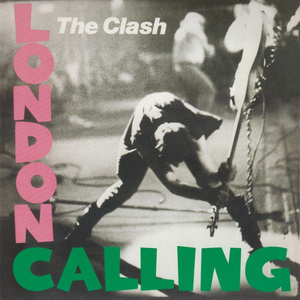
The second track reaches back to twelve-bar blues rock, "Brand New Cadillac," an archetypal rocker from the halcyon days of the 1950's. Punk of course has much in common with the roots of rock and roll, its "back to the basics" approach being indicated by the Elvis-referencing cover art and the image of guitar-smashing. I love that cover, incidentally, to destroy the very thing you're using to create, to destroy your limitations and free your mind. Punk may have much in common with "Brand New Cadillac" but it has considerably less in common with Jazz, but the second track has a slinky, sinister tone, and "Hateful" is confident in its breakneck pace. The Clash aren't shy about their stylistic flourishes. They own them. That's what's so punk. That side culminates in "Rudie Can't Fail," one of the first indications that the album is leaning toward growing up and getting responsible but not losing your edge. The horns and guitars chirp feistily.

This panoply (good word) of styles makes London Calling a mythical figure in rock critic circles. It's so easy to listen to and so hard to pin down in words, because there's just so goddamned much of it. Records didn't typically go an hour-plus, so if you were going to press two LPs worth of music, it had better be worth the effort (especially since, at the time, the band actually managed to outsmart their label into getting it priced as a single-disc!)

Turn disc one over and you're treated to "Spanish Bombs," a romance of sorts set against the Spanish Civil War. Even leaving beside the great lyrics, here is an excellent song, with its recognizably lamenting guitar rift, diving like bombs, and vocal interplay between Joe Strummer and Mick Jones. The blending of love and war is a good indication of the breath of this album's all-seeing eye, wrapping everything together perfectly, here and there, in single songs and between tracks. Following that is "The Right Profile," which swaggers with amazing big city horns, and features Strummer at his most uncontrollable on vocals. The man could wail, and his voice was perfect to represent a man's life coming apart. The man in question is now largely-forgotten Hollywood star Montgomery Clift, depicting the night he smashed his face in an auto accident. There's a pattern here of privileging what some theorists call the "ex-centric" figure, those often left behind or minimized in conventional narrative. It rips history apart at the end with a howl best rendered as ARRBSSSURGH JUH SUFFFURGUHHH ARRRRGGHHHHH!!!!!

I like that about this album: at a time when rock was either proggy or punky, it was privileging all these alternative song forms. "Lost in the Supermarket" manages to be a disco-punk tune that's heart-rendingly introspective, one I often find myself humming on my lonely days. It's got this galloping bassline and kick drum drive that leaves Mick Jones' narrator behind. The side ends with another great global moment, Paul Simonon's "The Guns of Brixton," a heavy reggae lament for the Afro-Caribbean area of London plagued by violence. But before this, there's one f the greatest punk stompers in the canon, "Clampdown." How great is this album? So great that "Clampdown," with its lyrics calling for self-determination and resistance to all forms of control (whether by governments or corporations) its anthemic call-and-answer lyrics, its masterful guitars, and its overall excellent encapsulation of musical rebellion, it's still an underdog in the question of "Best song on the album." Of course there's no objectively correct answer to that, but there's so much going on that the competition is stuff.

If London Calling consisted only of that first disc, those ten tracks, it would be an extremely powerful 33 minutes of music, but this one proves it has much more to offer and spreads its view wider, celebrating Stagger Lee in horns on "Wrong 'Em Boyo" and uniting historic conflicts under "The Card Cheat." Strangely, although the first disc would have made a great album on its own, the second disc feels best like an expansion pack to the first. That's not to say they're inferior, only that they belong in this context. You get a great sense of why these tracks all needed to be heard together. Implicitly, they further and resolve the globe-spanning, all-encompassing route set out on that first disc. The middle of side three contains two great tracks, the bracing corporate piss-take "Koka Kola" and the excellent "Death or Glory," probably the most nuanced depiction of punk fury there will ever be. Is it all worth the effort when it becomes "Just another story?" Anthemic in every sense of the word, and probably the song on the album most responsible for imitators, this is yet another strong contender for best track on the album.

After all this brilliance and creation, the album aptly settles back into modest punk rock mode in what can be taken as either a disappointing last wheeze or a great case of coming full circle. "Lover's Rock," "Four Horsemen" and "I'm Not Down" are either "merely" good rock, or they are "fuck, yeah!" good rock. They help the album along in their own way, even if I don't consider them standouts. More notable is the Caribbean-tinged horn-and-shaker cover of "Revolution Rock," which begins to bring the album to a close, paradoxically considering its opening lyrics, by saying "Everything's gonna be all right." And for some reason, coming from Joe Strummer, you fucking believe it.

And just when you think the album has spent its last dime, said everything that can be said, that glorious fade-up brings us back. "Train in Vain (Stand By Me)" provides a final triumph for the album, proving that for all their globetrotting and philosophizing, they can put everything into a 3-minute pop song, too, and make it seem like the most natural goddamned thing in the world. "Train in Vain" is excellent, a punking-up of British Invasion sounds. It's notable that "Train" initially went unlisted due to the haste with which it was added to the record, but lore holds that it was because the Clash were afraid of being seen as too commercial (that would come later in the wake of "Rock the Casbah" and "Should I Stay or Should I Go.")

For me, London Calling isn't about the message anyway, but about the representation. I remember the exact moment I realized what sort of album I was dealing with. It was very immediate and very complete. It was my very first listen, I was on my bike, it was a warm spring day and the CD had made it to the end of "The Right Profile," the horns were swinging this way and that and I felt as if I had known this song all my life, deep inside my bones. In my experience especially since starting this blog, you don't always get that, where an album becomes part of you so immediately. A lot of them take repeated listens to really dig. Some are up-front but never make that deep a connection. Some never even come close. But you know you've got a great album when it feels like something you've been waiting to hear all your life.

The beauty of London Calling isn't that it has something for everyone, but that it has, in fact, everything for everyone. This isn't a mere sampler, it's a complete work. That's why it has become so monolithic, probably, because it's impossible to pick apart, even despite or perhaps because of its impossibly high quantity of different styles. They all eminate from the center and speak to the universality of the Clash's messages. And everything they do on this record, they do so well.

This album manages to make it near the top of a lot of lists, and I'm not thinking myself revolutionary by putting it on mine. It's very obviously a masterwork, and has obtained that rare critical standing of being unassailable. I've never heard a bad word against it, and I doubt I will by any sound-minded critic. In a weird way, it outshines its fellows on those lists. You could say "Sgt. Pepper is overrated" or "I don't really care for Bob Dylan" or "Exile isn't the Stones' best," but if you listen to this album there's nothing you can justifiably say is wrong with it except that it eventually ends. What happened to me when I first heard it at age 15 is what I think happens to everyone when they listen to this album: my very definition of "great music" redefined itself to be centered on this album. I don't mean to make it anything more than a great record, but it's as great a record as anything ever made, and deserving of all the praise.

It is, as much as music ever can be objectively (and to be clear, it can't, but bear with me here) perfect.

So your next question may be, if it's so perfect, why is it #2 and not #1? I'll tell you soon enough.

Buy this album from iTunes now!


Thursday, February 24, 2011

Nick Drake: Pink Moon

When I was 13, my dad set up a bedroom at his place for me, for when I visited every other weekend. His house was only halfway across town from mine, but it felt further. There was nothing in the room but the bed. Beyond that it was bare, totally un-lived-in, with plain institutional white walls and hardwood floors. I remember lying there in the drafty darkness, maybe with some muffled sound drifting up from the living room stereo but more likely in total silence, feeling completely, insanely alone. Like there was nothing left in the universe to comfort me. I was a pretty dramatic 8th-grader.

Not surprisingly, those feelings were drudged back up when listening to this album. It's so personal and intimate, it could have been recorded in that room. Could have been written in that room. There's nothing I can detect on the record other than Drake's voice and his guitar, plucked and strummed delicately, softly, like he can barely even compel himself to play. You can feel fingers on frets, hear the occasional string twang out of tune. Most of the songs wind up sounding similar, giving the eerie feeling that no matter how hard he tries, Drake never truly gets catharsis. Not surprisingly, after this album's release, and failure to be a commercial success, he withdrew completely and died of an overdose of medication that may have been accidental, maybe not. I'm not about stories like these when it comes to enjoying music, but it helps give a way to think about the music itself.

Because for all his weary sadness, Drake's voice has a warmth to it. Maybe it's his accent or his quiet, whispery way of singing, but it feels very not-dead-yet. The title track, with lyrics that foresee doom, has more awe and wonder at the prospect when he sings, "Pink, pink, pink, pink." The lyrics on that song, as throughout the album, are spare and repetitive, trapped in themselves. The lyrics throughout the album shun the world, shun the self, shun the song. On "Know," he can barely stand to make syllables while he plucks his progressively less melodic guitar over and over. "Know that I love you / Know that I don't care / Know that I see you / Know I'm not there" Then there's the slow, solemn articulation and descent of the instrumental "Horn." There's a mystical, unearthly quality to his despair.

I could go on. At times it seems like Drake is doing a very bad job convincing himself that better times are ahead ("I can take a road that'll see me through") but it takes a very dark mood to come up with "Take a look, you may see me in the dirt / I am the parasite that hangs from your skirt." There's a delicate touch that goes into making a record this achingly personal, this heartbreaking, without making it seem overwrought, forced, or desperate for attention. When I'm mad, I don't go off into spastic fits of rage, but I do sulk, deep and long, and try not to signify it to others, though I usually can't keep it from showing somehow. It seems like a very private pain that was caught on record.

So that brings me to "From The Morning" the album closer, mellow, sweet and sentimental, (as are a few other the other tracks,) but there's a sigh in his voice when he sings, "A day once dawned, and it was beautiful." There's beauty in the world, at least there was once, for Nick Drake. And that's the sad truth, even the beauty of the world can be hurtful from a certain vantage point.

There's a paradox to a record like this. You can't possibly listen to it when you're in a good mood. But if you're down, real low, and you need music that shares your pain, you'll put it on, or a record like this, and by the end, maybe you'll feel like you're not alone. Drake's tragedy was maybe that he didn't have that feeling, but how amazingly he was able to share it with others, even if he wasn't discovered until after his death. Haunting, beautiful.

Buy this album from iTunes now!