Friday, October 18, 2013

Sonic Sandwich: The Icy Poetry of Phoenix and the Stuffiness of White Lies


This is just to remark on the difference between Phoenix's 2008 album, Wolfgang Amadeus Phoenix and their 2013 effort, Bankrupt. I was slow to come around on Wolfgang Amadeus... it was one of my first reviews and I was still sussing out my voice as a critic, so I was more reticent to give it praise, and more keen to take it down for minor flaws. It's one of many pieces of writing I've done that I consider embarrassing to have written. My current opinion of that album is that there's a real beauty to it, a humanity that evades a lot of synth-based music (usually by design,) a certain nuance and icy poetry. Every little bit has its place, and there's a soft touch to it. When I was younger I thought they were maybe aiming too high and missing, but as I've gotten more experienced I've learned that they were right on target. I like just about every track on that album very much.

The follow-up, Bankrupt!, is a different creation. It's much bolder and brasher, noisier, in the mold of Foster the People or Passion Pit. They've filed all those fine points down, and filled in the gaps with, well, whatever sounds. I object to it, in the sense that I liked the earlier product much better, but it's clear they're trying something different. And sometimes it works. Not enough to get a thumbs up from me, but I can adjust my head, I think, to say "Okay, they did this, and assuming it came out like they wanted, it is what it is." There are moments on Bankrupt that really do think are great, like "Oblique City," the closing track, which feels like a good midpoint between the two modes. They are good enough at being a big, hooky band, as on "Entertainment," and "Trying To Be Cool," that they deserve continued success, and they still have ideas as on "S.O.S. In Bel Air" and "Bourgeois," that make the album into a fairly consistent product. I just think they excelled on the previous album.
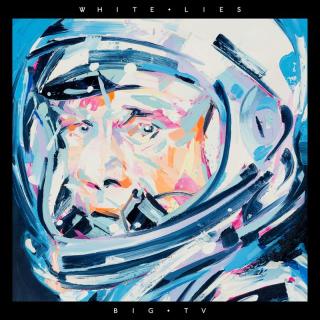
Another album that I reviewed early on was White Lies' second album, Ritual. I found it such a serious, stiff affair, a bit silly and oversized. But there's a charm to that, the deadly melodrama of the musical backdrop and the severity of the delivery, the way the singer just can't seem to loosen up, like your college roommate who's really into New Order. Unlike with Phoenix, who made a conscious alteration to their sound, White Lies appear to have merely ironed out some of the kinks in theirs for 2013's Big TV. They've found a balance of all the attributes in their sound that appeals to people. Everything about this album seems to have leveled up, in conception and execution. It just clicks more.

And I think, objectively, it's a better album, but I miss that weird stilted stuffiness of the earlier one. It's one of those quirks of personal taste, that I prefer the one that is a bit gangly and lumpy, compared to the slick post-success affair. There was a life to it, if a neurotic, utterly mannered one. It was nakedly itself. I would recommend Big TV first, to a new listener, but I'll listen to Ritual more often on my own.

These cases reminded me of each other, so I sandwiched them together in this article. In both cases, I liked the predecessors more, but that doesn't invalidate the later album. There are always questions in situations like this: Is it a response to success, an attempt to paly to the audience, or merely what happens sometimes after you've recorded one album: you want to record something that sounds a bit different? I can't say authoritatively in any direction, and I'm wary of people who presume to. Mine isn't to suggest why Bankrupt! or Big TV sound the way they do, after Wolfgang Amadeus and Rituals. Mine is just to listen, if I like them, and see if I can bring them to others who might.

So here's the bottom line: Phoenix and White Lies are both bands that use a synth-heavy approach rooted in 80s pop music. Whereas Phoenix's is hooky and intended for the dancefloor, White Lies' is contemplative and in its way, romantic. Both albums feature some solid hooks and really well-done tracks, although both bands have recorded albums I like better. Sometimes, you've just got to lay your stance bare.

One of my little pet peeves in other reviews is when the critic simply cannot get over their opinion of the earlier CD enough to judge the new one on its own merits. And that may in fact be the case here, but I'm willing to cop to it. I like Wolfgang Amadeus a lot, and this is a different thing that I don't like so much. But hey, I didn't always like Wolfgang Amadeus that much, so maybe in time I'll come around.

Wednesday, October 16, 2013

Movie Night: High Fidelity

"What came first, the music or the misery? People worry about kids playing with guns, or watching violent videos, that some sort of culture of violence will take them over. Nobody worries about kids listening to thousands, literally thousands of songs about heartbreak, rejection, pain, misery and loss. Did I listen to pop music because I was miserable? Or was I miserable because I listened to pop music?"

So begins High Fidelity, one of the greatest movies ever made about being a lover of music as well as a sexually frustrated young man. It's based on Nick Hornby's book, from whence I assume most of this amazing dialogue came -- although the movie has the advantage of being able to actually use music. Just look at that quote there. That's my life, and the lives of thousands of young men and women who go through life with their headphones clamped on, miserably longing for each other. You could write an essay about that quote. John Cusack's character, Record Shop owner Rob Gordon, muses to the audience as his girlfriend Laura (Iben Hjejle) walks out. The song he picks to console himself is The 13th Floor Elevators' "You're Gonna Miss Me," a particularly venomous piece of garage rock from the psychedelic era. This immediately stablishes two facts: That he is a connoisseur, and that he is lying to himself.


Rob immediately makes a list of his top 5 all-time greatest breakups (in chronological order) and deliberately leaves Laura off, though it becomes clear she deserves a spot. Rob makes a lot of lists. He and his employees have that obsessive need to rank and categorize everything, especially pop culture, to prove their expertise and their refined taste. Jack Black, as Barry, mocks Rob for including mostly old standbys on his list of Top 5 opening tracks (Nirvana, Marvin Gaye, Velvet Underground: "How about The Beatles? Or fucking Beethoven?") They're elitists, albeit not snobs per se -- Barry extols the virtues of Katrina and the Waves for his mix of Monday mornings songs, and that's as pop as it gets. It's just that you have to be well-versed and able to deploy that knowledge at a moment's notice. Sometimes I flatter myself that I'm okay at talking about music, but I'd make it about five minutes with these guys before we all realized they hated me and I hated them.

But this is an amazing film, which ties that punctilious itemization and exclusion to the need for personal growth. Their shells show signs of fracture early in the film when they see Marie de Salle (Lisa Bonet) performing "Baby, I Love Your Way." It's exactly the kind of well-worn popular tune that Rob, Barry and Dick would despise, but that really does have an emotional truth to it, and only requires a fresh take to remind you why it reached pop greatness. In this moment, music is not about the narratives we create, of reputation or cache value, but it's about the raw in-the-moment feeling that reminds us why we began to obsess over pop music in the first place.


That said, when not berating middle-aged square guys for seeking copies of "I Just Called To Say I Love You," they put their knowledge to good use, enlightening and guiding the masses. This movie contains one of my all-time favourite scenes in any movie, where the three are hard at work: in some ways obnoxiously, but effectively. What gets me is the sureness in Rob's voice when he says "I will now sell five copies of The The EP's by the Beta Band."

"Do it."


I have been lucky enough, in my time working music retail, to have a couple of moments like this. I have a few regular customers who will take my recommendations, but on the rare times when I've been able to select the music for my store, I have been able to catch someone's ear with something they maybe wouldn't have heard otherwise. And the Beta Band is such a great choice for this side, because their sound comes so far out of nowhere, yet seems to elementally pure, with that rhythm and vibe, you can't help but want to know more about this mysterious, powerful sound.


No great movie about music can end without a bit final performance, and in this case it comes courtesy of Barry's band Sonic Death Monkey/Kathleen Turner Overdrive/Barry and the Uptown Five who, despite Rob's fears,give a spirited and full-bodied performance of "Let's Get It On" (Marvin Gaye's name comes up numerous times throughout the film.)

This is at the record release party for the single Rob has produced, marking the point at which the "professional appreciator" finally adds something to the world, something we all secretly long to do. It goes hand in hand with his gradual growth as a person - the last we see from Rob, he's making a mixtape for Laura, featuring, get this, stuff she likes. There are more important things than pushing your particular canon of music on others: there is taste, there is preference, there is mood and temperament that other people have that you might not share, and that's... that's okay. Mostly, it's about learning to love, really love instead of judging and particularizing and obsessing over minutiae. D'aww.

Tuesday, October 15, 2013

The Other One: Third Eye Blind, "Never Let You Go"


It wouldn't be fair to call Third Eye Blind a one-hit wonder. In the late 90's and early 2000s they had a commendable string of hits that included not only "Semi-Charmed Life," but also the similarly ubiquitous anti-suicide jingle "Jumper" and teen heartbreak classic "How's It Going To Be?" But a decade-plus on, "Semi-Charmed" far outshines those tunes that, at the time, reached a similar level of success.

The one song by TEB that I thought never got its due was "Never Let You Go." Having achieved popularity with their earlier singles, they had the task of maintaining that level of success without seeming like they had run out of ideas. "Never Let You Go" does this exceptionally. It starts with the fact that it is built on essentially the chord progression from "Sweet Jane," which is an instant recipe for an indelible hook, then add in some of the same late-90s sunny-gloom of "Semi-Charmed" and "Jumper," and you've got a winner. If it doesn't have the cache of "Semi-Charmed Life," it's still a worthy successor and a perfectly-crafted piece of 90s pop-rock.

Monday, September 30, 2013

Mazzy Star: Seasons of Your Day

Heck of a year for returning bands. My Bloody Valentine dropped their first in two decades on us, the Pixies have an EP, the Replacements are touring again, even David Bowie came out of semi-retirement. Mazzy Star's legacy may not be as bombastic as those heroes, but they have their place, their niche neatly carved out, with the gentle, soft-focus guitar of David Roback and the sweet, whispery vocals of Hope Sandoval. Their new album, Seasons of Your Day is just a really lovely 50 minutes of that. It'll sit nicely on my shelf with recent releases from the xx and Feist, and classics from the likes of Nick Drake and Richard & Linda Thompson. It's power might be the exact thing that people who like Lana Del Rey's music get from her. It's a thing of measured beauty, subtle and low-key, restful and relaxed. Sandoval's cooing voice carries a distant, enigmatic sweetness. The slight instrumentation - full of instruments, but with everything operating at the lower end of the power gauge - takes you in and wraps the whole affair around you. Dusky steel slide blues guitars add weight, a shamanistic feel here and there.

There's a real human spirit at work here. It suggests itself, rather than taking a concrete, knowable form, leaves us to ponder and interpret and to take from it what we can, depending on what we brought in. Personally, tonight, I needed something with this distant glow. This introspective comedown.

I was talking with an aunt tonight about meditation, and about "being present." For all the talk one might sling about putting on an album like this and "drifting away," the question remains where you drift to: deeper inside yourself, it seems. You listen to an album like this and you are forced to just sit there with yourself and take it all in. Think about yourself, think about the world around you, and the one inside.

Monday, September 23, 2013

Sonic Sandwich: Rival Sons and Queens of the Stone Age


Safe to say, 70s-flavoured retro-rock is an increasingly prominent part of the great musical tapestry. For a long time now, there's no shortage of bands in their 20s who grew up listening to music from before they were born and learning from that. I've expounded before on how good it is that these bands exist. They crystallize everything that holds up about Led Zeppelin, Bad Company, Foghat, et al, and remove it from context. Meaning, I'm guessing bands didn't have much of a conception that they were doing "70s rock" at the time, they were just trying to find the way forward from what had been done in the 60s, and what was popular at the time. Now it becomes a conscious decision, a statement of identity. And we've seen enough of it that it's not enough for it to be a novelty or a gimmick. You have to live it.

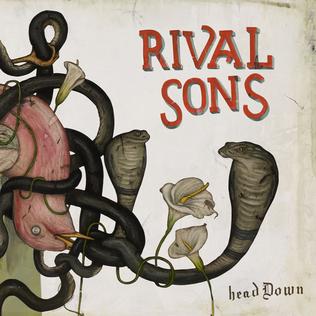
Rival Sons are a band whose work I am always quick to steer people toward if they're looking for something fresh but familiar. I'm thinking of calling it "New Old," and it goes in a category with The Sheepdogs and Monster Truck. On Head Down, they hit all the major hallmarks of a classic rock album, to the point where no classic album might actually sound just like this. There are pummeling party anthems like "Until The Sun Comes" and "Wild Animal," soaring anthems like "Run From The Revelation," and George Thorogood-like bar rock like "All The Way." Beyond being competent imitators, they find their way to some of the more eccentric corners of their chosen era, like "The Heist," which has the most classic of choruses, the Led Zeppelin III style campfire psych jam "TRUE" or my personal favourite track on the album, "Jordan," which calls up the kind of spirituality not typically used in rock music anymore and almost on its own validates the whole deal. An album like this at first feels comfortable and recognizable, then it's impressive that they got it "so right," then at last it just has all the same pleasures as the actual old music. It strikes that balance between repetitive/consistent and wild/energetic.

There's a difference between, say, a 70s-influenced band like Queens of the Stone Age or Foo Fighters, and a real retro-rocker like Rival Sons. The former camp takes the old ways as a starting point and then moves forward, tracing rock back to a certain point and then taking off from there. QOTSA's new album is very much a 2013 affair, offering an alternative representation of rock from what is typically offered to the Top 40 (as if there's any rock on the Top 40.) Their music is loaded with stylistic decisions that are informed by both decades of nostalgia and a generation of experimentation. It has classic appeal and modern sheen. It takes chances that may in fact alienate fans of the old ways, simply by being modern. That's the downside. The upside is that you get the freshness, the inventiveness of a defined artistic voice. If it scares people off who are looking for comfort, so much the better, because the people who prefer it will like it more. For instance, "The Vampyre of Time and Memory" sounds like something that could have been recorded in the 70s, but doesn't sound exactly like something we know of that was recorded in the 70s. This is the rock that is dedicated to pushing the form forward, or at least keeping it alive in the now. They're not just paying tribute, they are taking up a cause. For shit sakes, Elton John appears ("You need an actual queen on the record!") on the awesomely proggy "Fairweather Friends."

The common denominator to both these albums is that they cut the bullshit that's piled up in rock over the last few decades: the accumulated cultural memory of hair metal, post-grunge, and rap-metal. They use pulverizing riffs and power-fantasy lyrics to assert a huge sound that is completely carefree and escapist. This is headbanger paradise.

Friday, September 20, 2013

Movie Night: Wayne's World

Wayne's World is probably one of the first movies I ever saw that was explicitly about music, and more importantly about people who enjoy it. It came out when I was 5 and theoretically too young to understand its humour, but as early as Grade 2 I remember walking around the playground trying to remember all the words to "Bohemian Rhapsody."

The movie was based around a popular skit from Saturday Night Live, so they didn't have to do a lot to establish the characters. It opens with a scene of Wayne and Garth doing their show, Rob Lowe's character hatching a plot to commercialize them, and then a monologue where Wayne turns to the camera to fill the audience in on the details of his life that might not be obvious from the setup. Then Wayne, Garth, and their two cameramen buddies go out for a drive and listen to "Bohemian Rhapsody," which is cued up to about halfway through.


They just drive around and sing along to "Bohemian Rhapsody." Early in a comedy movie, when most writers would be looking to cram in as many jokes as possible. And that is just the perfect song choice for this type of scene. In general, the usage of music, the way the characters think in terms of classic rock songs, is pretty great: Garth's sex fantasy is set to "Foxy Lady" by Jimi Hendrix, Wayne's pining for Cassandra is set to "Dream Weaver" by Gary Wright, and there's a scene where Wayne can't help but sing "Hey Mickey" by Toni Basil, because it was the last song he heard before he left the house that morning.

One of the movie's best scenes occurs when Wayne and Garth get backstage passes to an Alice Cooper show; Alice was enjoying a revival at the time and performed his then-recent cut, "Feed My Frankenstein." He also gets to show off his considerable knowledge of Native American peoples.


The musical crux of the movie, though, is Cassandra's band, whom Wayne helps win a record contract with their cover of Sweet's "Ballroom Blitz." The cover choice gets across exactly what kind of band they are, emphasizing Cassandra's glammy sex appeal. Notably, it's a song about music, about a party getting out of hand, with crazyass rock imagery. The version of this song that appears in a comedy movie is considerably less silly than the original take by Sweet, though.


Wayne's World is not only a really great movie based on a popular skit, it's a savvy movie about music, both the people that make it and listen to it. Wayne and Cassandra both struggle with the implications of success in their respective media, dealing with the compromises it entails. In the end, the movie isn't against success, but prefers it on one's own terms.

Wednesday, September 18, 2013

Does it Rock: Babyshambles, "Nothing Comes to Nothing"


I'll admit that I'm not overly familiar with the Pete Doherty songbook... The Libertines are one of those bands that I "get," and appeals to me, but I want to like a bit more than I do. That said, the songs I've heard off this Babyshambles album have really hit the spot for me. It's like Vampire Weekend's instruments being played by Cage the Elephant, or Joe Strummer covering the Gin Blossoms (or... Pete Doherty covering the Gin Blossoms.) It's not overly sophisticated stuff, power-pop chords and a real messy delivery. Absorbing stuff here. It rocks.