Showing posts with label 2010 Favourites. Show all posts

Sunday, February 27, 2011

Hollerado: Record in a Bag

"Juliette" came roaring into my life one early 2010 day. I was at work, trying not to listen to the radio as usual -- we have a 4-hour loop of current hits that enables each of us employees to get very familiar with the every Justin Bieber song's intricacies. Then over the speakers came roaring this gigantic riff, this vintage garage sound worthy of the Kinks, but with a modern sheen and a great chorus. My ears perked up. I knew this was something I needed in my life.

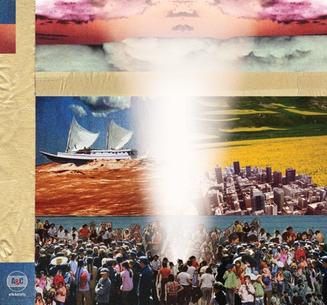
It arrived later: Record in a Bag. As the title suggests, it is quite literally a record in a bag. The CD case sits in a plastic ziploc bag full of confetti and other goodies. The confetti is appropriate, since the music contained on the CD is a pure celebration, from their bombastic guitars to their pulsing drums to their weary-yet-charming vocals. The title, prosaic and direct, was fitting for the sound of it: Hollerado are stylish, but not afraid to be honest about what they are, this ragged-sounding, classicist rock band. No tricks or games, but everything they do, they do creatively and excellently.

I was skeptical when I first put the disc in and heard the deliberately jokey "Holleradoland" -- yeah, it has character, but I usually like to get down to business with my opening tracks. So for me, the album begins with the second track, "Do the Doot Da Doot Do," which swings gleefully from its nonsensical refrain, with manic energy and squealing guitars. From then, Hollerado makes some of the most full-bodied rock and roll heard in decades, with more rhythm and heart than I'd heard in years. Vocalist Menno Versteeg wails with wild abandon and enthusiasm, and the band plays in kind, with an earnest sense of humour to boot.

See, that's what I like about this day and age. Some of our best bands, writers and performers have mastered the art of being fun and being funny while also being sincere and deep. Because that depth doesn't always come from the extreme-ness of your expression -- your louder yelling, your supposedly more meaningful lyrics -- it can come from a small moment that seems to symbolize everything. On the road-tripping "On My Own," they sing, "There's a sweater in my dresser drawer that I wear when I'm sick / But the winter's finally over so I won't be bringin' it." It's so weird that this little snapshot couplet can cover so much. Hollerado is ultimately about the little things: they throw in great little guitar moments, nifty background vocals, and interstitial moments like whistling and organs and a capella intros. When was the last time you felt like you could describe an album as "clever?" And not even in a way that implies sarcasm, smugness, or terminal irony.

'Cause yes, it rocks. They make that abundantly clear on the now-viral "Americanarama," which eventually occurred to me as a sort of transatlantic "London Calling," as the band marvels at the country's self-destruction by apparently natural means. "Heyyyyy Philadelphiaaaa / Where'd you go?" is a clarion call for the new decade. Other tracks backing the album up run from the sunny, reflective "Riverside," to the country-blues-inflected "Hard Love," and "Got To Lose," which seems to be an ode both to heartbreak and to natural selection: "We came down from the trees, singing / You've got to lose love if you want to find love!" ("You've got to looooose! You've got to looooose!") I didn't like this lyric until I thought about "find" as a verb and realized it wasn't about having love but that thrill of finding it all over again. And somehow that evolution metaphor seems to work. Then there's "Fake Drugs," which is a good bit of plastic funk, and "Walking On The Sea," which sounds like it might've been at home on a late-90's Big Shiny Tunes compilation. The lonely, jaunty, whistling outro bleeds perfectly to the revelry that comprises the final track.

"What's Everybody Running For?" closes the album urgently, breathlessly, as the band observes the chaos that ensues when the only bar in a small town (they hail from Manotick, Ontario) burns to the ground. The album seems to carry a loose narrative about a road trip through post-apocalyptic North America, but maybe that's all in my head, and maybe it's all tongue in cheek. And it ends with a warm, discrete in-studio applause that feels genuine because whether you noticed or not, something has been accomplished.

Not only did 2010 sound like this album for me, but this album sounds quintessentially 2010 -- present and ready for action, joking, half-serious, fun and uncontrollable. Jose Strummer once said he was partial to albums "made by adolescents" (I'm thinking he meant 20-somethings rather than 12-year-olds) and this is exactly what he was talking about.

This was my favourite album of 2010. I didn't expect it to be -- for a while about half of the album sat unlistened-to while I found better things to do, until curiosity got the better of me, along with the nagging feeling that I was missing something. Then when I was first making this list up it occurred to me how much more I enjoyed listening to this album all year than anything else. It has so much heart and so much spirit, it feels like it's been with me all along.

Look. It's no great critical statement to say Arcade Fire made a great album in 2010, or Gorillaz or Kanye or LCD Soundsystem. But when even Black Keys' down and dirty brand of blooze-rock gets treated like a novelty, I have to wonder, who is standing up for pure good old fashioned rock and roll? Unassuming, unadorned, raw, fun-ass rock? It may not consider itself a great piece of art, but this album was made to be enjoyed and it's plainly irresistible. It doesn't even sound conventional, going way off the rails at any moment with enthusiasm and life. This is what people are thinking when they think of the power of rock. And from a pure enjoyment standpoint, I don't see things getting much better.

At my job, I have the occasional opportunity to offer recommendations. Sometimes people actually ask me for advice, and sometimes their tastes align closely enough with mine that I feel like I can take a stab, and in those cases, I usually reach for this album. I tell them "Look, I'll play you one song and you don't have to buy it, but I'm positive you will walk out of here with this album in your hands." And they always do. This isn't music you keep behind a velvet rope and dust off every once in a while to do some appreciatin'. This is music you keep with you.

Buy this album from iTunes now!

Record in a Bag is the final installment of my 4-part "Favourites of 2010" series. Albums 4-2 were: Broken Social Scene's Forgiveness Rock Record, Locksley's Be In Love, and Zeus' Say Us. The point of this exercise was not to create a pure monolithic ranking of all music from 2010, but to think about what I like and why, both as a means of creating dialogue about music and expressing my tastes, which may help you understand the background of my own reviews. Thanks for indulging me! Here's music:


Monday, February 21, 2011

Zeus: Say Us

It begins simply, with the anxious tapping of percussion, the drumsticks against the rim of the snare drum, and ends in a swell of instruments, pianos, slide guitars, gorgeously drenched harmonies and whirling organs. In the twelve tracks it takes to get there, everything happens. Maybe.

At first glance, the debut album by Zeus seems to be easy to put your finger on, but the more I listened to it, the more overtaken I was by its various elements. The songs are too well-constructed to be jammy trips, and yet just a step or two off balance with pop songwriting. The instruments, passed from member to member along with the microphone, are rarely used the same way twice. Albums like Say Us are the reason I like albums: sometimes they add up to a beguiling whole that goes beyond the individual songs on them. And as distinct as those songs are, they still feel unified, propelled from one to the next, broken only by the imaginary, fabricated designation on the package: "Side A / Side B."

"How Does It Feel?" the song that opens the album with those taps (which soon give way to sympathetic pianos and mocking guitars,) unfolds in its 2:49 as a blueprint for the rest of the album: do as much as you can, one thing after the other, as well as possible. So when the guitars and pianos clash back and forth like a duet, the guitars raise the stakes with a blistery solo but the pianos get the last laugh as they climb into the clouds for that last chorus.

Like that song, the album slowly unfolds itself, showing its tricks one after another and never lingering, never repeating. It's like (don't say it, urges a voice inside me,) Abbey Road, where every contributor is given full support and helps build the whole, whether it be the country-blues of "The River By The Garden" or the hazy "Fever Of The Time." None of it feels like a genre exercise, and though the mysterious lyrics often keep the listener at bay, it also never has to reach for sincerity. It's all in the expression.

The second half excites me more than the first, with one of the finest moments coming in the changeover between "You Gotta' Teller" and "I Know." The former track is a monstrous, charged, organ-based thundering rocker that sounds like Vanilla Fudge doing "You Keep Me Hanging On." The latter is a dreamy, galloping plea for sympathy. When the urgent heat of "Teller" is finally brought to its end, there's just a brief moment of quiet, before the cool breath of "I Know" drifts in with its quivering beauty. "Now I know, now I know / How it feels, how it feels..." although what "it" is is never explicitly said. The lyrics throughout this thing as a whole form an exhaustive exploration of communication.

No matter who is writing each individual song, or who is playing what, most of them tend to come back to: thinking, feeling, speaking, hearing, interpreting, understanding, wondering, knowing and telling. The songs encompass this impressive scope by doing their work to convey or obscure feelings. "Marching Through Your Head," with its pulsing pianos, manages to get into sound that feeling of pacing back and forth trying to work out a problem with your lover, "Do you feel it all the time / the way she preys upon your mind? / She's a fiend for your love, and that's all..." combined with the most effective hook on the album, the one that will most likely be marching through your head, but will keep surprising you when you come back to it. Or the loving, longing "The Sound of You," which takes a person's voice as their essence, and wonders, "How could we know, how could we know, how could we know?" The album closer (after the gathering storm of "Heavy On Me") is "At The Risk of Repeating," which is another tune about trying to get at the heart of the matter and still coming up short. But what words can't say, music often does. That music often has enough power, or enough charm, to keep you coming back.

I don't know if it's really the musical variety, or the lyrical mystery that kept me coming back to this album. It's just amazing how good it sounds, how well it does quiet and modest, as well as powerful and anguished. The boys in Zeus attack their tunes like a bunch of seasoned vets taking on excellent new material: the music is in them and it's in their nature to get it out.

Say Us doesn't make a grand statement, it's a rather unassuming record with many great surprises that aren't necessarily obvious the first time you listen. You'll think "This is a pretty good song," once or twice every five minutes and put it away and forget it, but if even a scrap of a tune remains in your brain, you'll want to take it out again and sooner or later it'll get into you. Tellingly, Zeus' debut EP (does anyone buy those or are they just a lark?) was called Sounds like Zeus. And no matter how hard I tried, I couldn't come up with any easier way to explain their sound. I even stooped to a Beatles comparison. But, speaking as a guy who has struggled to express himself once or twice in the past (I know, hard to believe,) this album speaks for itself. It's something you've just gotta feel for yourself.

Buy this album from iTunes now!

Say Us by Zeus was the third installment in my 4-part "Favourites of 2010" -- it comes in at #2, ahead of Broken Social Scene's Forgiveness Rock Record and Be in Love by Locksley.


Tuesday, February 1, 2011

Locksley: Be In Love

Locksley's first album, "Don't Make Me Wait," took me by surprise in 2009. Here was a band I'd heard nothing about, but whose look intrigued me into sampling a few tracks. And when I decided I liked all of them, I bought the album and found even more pleasure. So it was preordained when they announced their second album for 2010 that I was going to buy it. It was possible my expectations were going to get too high, but after months upon months of listening, I realized this was a better CD. they had refined their sound from a rough, British Invasion throwback into something that takes everything that worked about the past and points it at the future. It's retro without being an imitation. It's current without being contrived. This was my third favourite album of 2010.

As with most great albums, the title seems to say it all: be young, be excited, Be In Love. The album is so in-the-moment, so electrifying and so clear in its desire to get your feet tapping and head bobbing, the rest of the world seems to melt away. At first examination, Locksley's approach to rock seems incredibly basic, even naive, until you realize no band seems to actually sound like this. This is what we call the British Invasion sound, the Beatlemania sound: dance club worthy rock that isn't leaden down by angst or blues. Oh, it isn't an immaturely optimistic record by any means (its subtleties won't hit you until well after the songs have absorbed you) but it's so smart about its complications that you barely even notice where the efforts were made. That's the trick: it seems so natural and so easy, but if it were, you'd hear more like it. You don't. Not in 2010. Maybe not ever.

They come to the party with a nearly endless supply of hooks and melodies. Sometimes they arch, like on "Love You Too" or flow like the gorgeous sentimental "Days of Youth." Probably my favourite is "Darling, It's True," whose triple-ringing riff carries a rhythm of its own and underscores the pleading lyrics without making them seem cloying. This is sharp songcraft.

Freed from the desire to be dazzlingly different on every track (and thus risk running out of ideas,) Locksley creates a batch of songs that never lose their energy, drag or become tiresome. There just enough difference between the tracks, though, to ensure that every one offers its own unique pleasure. After two or three listens you might find yourself singing along without realizing you'd remembered the lyrics. Partly it's that they're good at making music that feels physical, that seems to interact with the listener. A lot of songs feature non-lexical "Oh-ohs" and "Yeah-yeahs," notably the almost parodic "The Whip," which tells a story of impatience and jealousy wrapped up in an irresistible hook, or "On Fire," which breaks free of the pop constraints of the rest of the album and lets you really feel the flames of anguish.

There's a ton of call-and-response here, which adds with the dueling guitars and snappy choruses to make you feel like the band is presenting a unified front, making music that really incorporates all of them. At least three of the four members take vocal duties (I can't tell whether the drummer ever sings or what, but Jesse, Jordan and Kai all have distinct voices that interplay all over it.) One of the best is the back and forth on the nervous "It Isn't Love," or the turn-taking blues of "The World Isn't Waiting." But whenever one of them, most notably Jesse Laz (whose voice is most recognizable on "On Fire," "Darling It's True" and "21st Century") steps to the front, he takes command. Laz has one of the great rock voices of this generation, unpolished yet melodic, like he's channeling young John Lennon. Each vocalist brings something different, though, and the band varies on the theme so extraordinarily well.

The songwriting is strong, too. Though they're always singing about love (or maturity,) it's never in an easy, uncomplicated way. It feels like they stand in the aftermath of young heartbreaks trying to reach back to those days of youth when it was easier, knowing what they know now.

So yeah, here's a band that knows the ins and outs of how to record great rock and roll. I know that, due to the way the market is, this isn't the kind of CD that's going to smash the charts in 2010, but it offers those most necessary of pleasures. It gets in touch with the raw primal desire that motivates kids to pick up guitars generation after generation, and it molds it into something better than I've heard in a long time. Music like this is fairly easily dismissed in critical circles, but you've gotta respect not only the heart and energy that goes into making it, but the effect it produces at that place inside you that remembers what it feels like just to rock. Be in love with this record tonight.

Buy this album (now simply titled "Locksley") on iTunes now!


Locksley's Be In Love is the second installment of my Favourite of 2010 list, after #4, Broken Social Scene's Forgiveness Rock Record. Though I'm not huge into ratings and rankings, I do enjoy collecting up a small group of albums and telling you "Here's what I really liked in 2010."

Thursday, January 27, 2011

Broken Social Scene: Forgiveness Rock Record

Say what you will about me as a reviewer, but I have a different perspective than most practiced music journalists. I can tell you that right now because most of the reviews for Broken Social Scene's Forgiveness Rock Record were really about their previous work, the generally-considered-masterpiece You Forgot It In People. Me? I haven't even heard You Forgot It In People. It predates my interest in current music and I haven't gotten around to it (although it's on the list.) So my opinion about Forgiveness Rock Record is just my opinion about Forgiveness Rock Record. And besides, I make it a policy to keep my remarks limited to the thing I'm actually reviewing, as much as possible. This wasn't even going to be a review, since the CD isn't new to me. But I'm also trying to get into filling this site out with retrospective reviews going forward, so I don't strain for content.

It's actually hard to know what to make of this record. It's difficult music, but it's definitely music to my ears. It seems to be about everything: that is, it does not merely contain songs about everything (heartbreak, world-weariness, bitter parent-child relationships, primadonna actresses, oil spills, masturbation and yes, maybe even forgiveness,) but it is about everything. It's like a quilt made of patches: you can see all the little pieces strung together, but you can still pull it all over you.

The music itself is great because it just has this arresting "what next" quality that always seems to pay off. Sometimes it's buzzy and fussy and charging, like the aptly-named "Chase Scene" and the frantic "Forced to Love." Sometimes it's a shimmering dance ballad (such a thing is possible: just give a listen to Robyn's awesome "Dancing On My Own") like "All to All" or the reflective "Sentimental X's." Sometimes it's delicate yet powerful, like the horn-blasting "Art House Director" or the whirring drum-based "Ungrateful Little Father," which seems to take forever (in reality, a 3-minute ambient coda) to spin to its ultimate end, leaving issues unresolved (hey, just like real relationships.) And three times on the album, the group reaches for the epic and succeeds.

The first is the opening track, "World Sick." The second is "Meet Me In The Basement," an instrumental that says more with a few flourishes of guitars and strings than most lyrics do. The last is the climactic "Water in Hell," which does indeed flow like rapids through the underworld, and treats us to an amazing refrain (From what I can tell/ There's water in hell!) that somehow seems to sum the album up nicely, offering sweet release from otherwise eternal pain. It's joyous in its way, and the album seems to bridge between pleasure and suffering.

"World Sick," though: what an opener. At nearly 7 minutes, it's the longest thing here; even with its coda, "Ungrateful Little Father" doesn't sustain itself as long. And yet it never feels like it's going into "Hey Jude" territory (and I love "Hey Jude.") It rises and falls like any great rock song of its type, but it does so at a natural, leisurely pace: the writers of a song like this aren't desperate for pop simplicity, but more on that later.

I've heard it described as a reach for the stadium, but I think that's an oversimplification. The sound here is too nuanced to have been designed for that stage, despite the fact that it would fill it as well as any Kurt Cobain quiet-loud experiment. There's a meticulousness to the verses, the way it seems to plink along and bubble just under the vocals, rising just in time for the (yes) anthemic chorus. And those instrumental breaks are nothing to sneeze at. But listen again when he sings "I get world sick / every time I take a stand" and the audio track seems to fall like the embers of fireworks. That's not merely stadium rock. That's music that sounds like itself. It evokes something in me: that weariness but need to keep moving. I get world sick, everything's falling down, I want to give up but I can't let myself.

I don't talk a lot about lyrics lately. Albums like these tend to push vocals down in the mix and they become so underprivileged as to be unimportant to my enjoyment of the record. I mean, I can't understand half of what Joe Strummer sings on London Calling, but it's still one of my favourite records of all time. So I don't "know" what half or more of the songs on this one are about. I know what they make me feel. Well, I don't "know," since it's music and I can't put my finger on it, but I feel like I feel it.

Several of the reviews I read also tried to frame the content of the album in terms of its title. "Forgiveness, what could it mean?" Titles are important -- EVERYTHING ABOUT AN ALBUM IS IMPORTANT -- but I'm more interested in those other words. "Rock Record." Here's an album that needs to tell us in definite terms that it is rock, and that it is a record (that is, a definite whole, archaic as that term seems to people, I still call them records because they're recorded.) Calling this piece "rock" seems about as simplistic as calling London Calling "punk," but both cases are an exercise in mind expansion for those of us obsessed with labels. It's so hard to put your finger on this album, so why not just call it rock? Here's a statement about what "rock" can be in the 21st century.

If I have a problem with the album, it's that I find myself looking at the edges of the quilt too much during songs (to resurrect a lame metaphor from earlier in the review,) thinking about how it is made and fits together. But even though I mostly listen to it in bits an pieces on random, the sequencing is terrific: in those moments when I let myself drift away, it's absolutely absorbing.

I slotted it in at #4 on my "Favourites of 2010" list. I'll be talking about some of the others in coming weeks. I just wanted a case to say: here's an album I liked, here's what I feel like when I listen to it.

Buy this album on iTunes now!