Sunday, January 30, 2011

Stars: The Five Ghosts

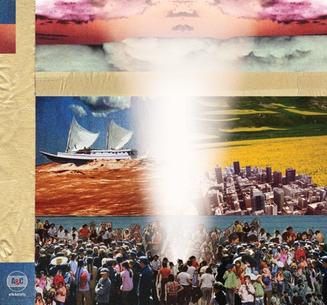
What do you think is going to happen when you have a mopey, melancholy lot of Canadian indie-popsters like Stars, and direct them toward a concept album linking romance, loss, and loneliness with death and the afterlife? Hm? Eh? It's called he Five Ghosts and it is about ghosts. Ghosts for your retro-80's dance pop.

It's a lonely, haunted, quiet, cold album, made all the more lonesome because there's actually a lot going on amidst the mourning. Ever walked down a busy city street on a cold dreary fall day? Everyone just drifts onward with no regard for others in the world, but there are so many of you. This music is like that. Synths and beats sparkly as quiet, lamenting vocals waft over them. "Thousands of ghosts in the daylight," sings co-lead vocalist Torquil Campbell on "I Died So I Could Haunt You," "One day we all disappear / We walk till we get to the harbor / They'll never know we were there." The contrast between the lively instrumentation and the dead vocalization is pretty substantial.

It's hard to get ahold of, what the music is supposed to be like. The band tries, sometimes too hard and sometimes unsuccessfully, to reach a kind of profound moment that underlies their music. Here and there it strengthens it, and elsewhere it makes it sound a bit silly. I don't like the opening track, "Dead Hearts," much for its verses, a silly little call and response thing played utterly straight. Though the chorus contains one of the better lyrics on the album, "It's hard to know they're out there / It's hard to know that you still care," which is the first indication of the depth of the ghost metaphor, about the intangible nature of love and human feeling. But they push the seriousness and strain it a fair bit on the album. I'm troubled by "We Don't Want Your Body," whose verses are too deliberate to be funky and loose, and whose chorus uses the line "You sold your soul to ecstasy / So you could have some sex with me," which just such a silly goddamn thing to say. "Some sex." It's otherwise a good song, but that stiffness does them in whenever the album starts to catch fire, and takes me out of the experience.

Amy Millan carries most of her parts beautifully. Her voice has a modest yet sultry quality to it, that could go from being utterly bemused by the world to being supremely seductive. It runs that spectrum in her first solo go, "Wasted Daylight," and while "Fixed" isn't much of a vocal showcase, it's a great piece of songcraft that bounces along so energetically it seems to have been important from another album and band. That "You / You hold my heart" hook is a winner, though, and "How Much More" toward the end of the album lifts the spirit up higher than I would've expected. And "Changes" gives us a modern Peggy Lee or Patsy Cline, both in tune and attitude. Off-kilter though it may be, I can see "The Passenger" having a life outside this album: it's where their cinematic (character and storytelling) tendencies mesh best with the music itself.

But yeah, the album takes chances that often don't pan out or are just hard to listen to. "The Last Song Ever Written" and "He Dreams He's Awake" gradually build toward their point, but there's something so fundamentally-unbalanced about their construction that leaves a bad taste with me. The former is more clever than I initially gave it credit for, and the latter has its place in setting the mood and building the aura of the album. But generally speaking Torquil's voice is my least favourite aspect of Stars' sound, as it represents that strain for meaning.

This isn't a lovable album. It won't wrap its arms around you, it doesn't aim to please, that much is clear. It's serious, sad-ass music, and you have to be in a particular mood to even appreciate it, which is not an ideal condition for good music. I know Stars mainly by two previous singles, "Your Ex-Lover Is Dead," and "Reunion." Those two songs are not exactly "I'm a Believer," when it comes to pop sunshine. They're dreary, storytelling break-up songs. And here's an album that breaks up with life, with the world around you. At its warmest, it's ice cold, and at its most joyful it's still numb.

They definitely wrote and recorded the album the album they meant to, although they didn't probably hit all the points they aimed for. The real question is whether that works for you. Because it's not going to be easy to get into, and if you do, it may not even be that rewarding. I think it's underrated because of that, and because of its tendency (due to its construction and goals) to strain for meaning and reach into pretension. But on every listen, I found more and more to recommend it until I found more tracks I liked than did not.

Whether it succeeds or not, it's music that tries for something, and in fact winds up with something, something I haven't heard before. Feelings stir up in this album that you may not be willing to face. But you might be surprised by what you find when you listen to this one.

Buy this album from iTunes now!

Thursday, January 27, 2011

Broken Social Scene: Forgiveness Rock Record

Say what you will about me as a reviewer, but I have a different perspective than most practiced music journalists. I can tell you that right now because most of the reviews for Broken Social Scene's Forgiveness Rock Record were really about their previous work, the generally-considered-masterpiece You Forgot It In People. Me? I haven't even heard You Forgot It In People. It predates my interest in current music and I haven't gotten around to it (although it's on the list.) So my opinion about Forgiveness Rock Record is just my opinion about Forgiveness Rock Record. And besides, I make it a policy to keep my remarks limited to the thing I'm actually reviewing, as much as possible. This wasn't even going to be a review, since the CD isn't new to me. But I'm also trying to get into filling this site out with retrospective reviews going forward, so I don't strain for content.

It's actually hard to know what to make of this record. It's difficult music, but it's definitely music to my ears. It seems to be about everything: that is, it does not merely contain songs about everything (heartbreak, world-weariness, bitter parent-child relationships, primadonna actresses, oil spills, masturbation and yes, maybe even forgiveness,) but it is about everything. It's like a quilt made of patches: you can see all the little pieces strung together, but you can still pull it all over you.

The music itself is great because it just has this arresting "what next" quality that always seems to pay off. Sometimes it's buzzy and fussy and charging, like the aptly-named "Chase Scene" and the frantic "Forced to Love." Sometimes it's a shimmering dance ballad (such a thing is possible: just give a listen to Robyn's awesome "Dancing On My Own") like "All to All" or the reflective "Sentimental X's." Sometimes it's delicate yet powerful, like the horn-blasting "Art House Director" or the whirring drum-based "Ungrateful Little Father," which seems to take forever (in reality, a 3-minute ambient coda) to spin to its ultimate end, leaving issues unresolved (hey, just like real relationships.) And three times on the album, the group reaches for the epic and succeeds.

The first is the opening track, "World Sick." The second is "Meet Me In The Basement," an instrumental that says more with a few flourishes of guitars and strings than most lyrics do. The last is the climactic "Water in Hell," which does indeed flow like rapids through the underworld, and treats us to an amazing refrain (From what I can tell/ There's water in hell!) that somehow seems to sum the album up nicely, offering sweet release from otherwise eternal pain. It's joyous in its way, and the album seems to bridge between pleasure and suffering.

"World Sick," though: what an opener. At nearly 7 minutes, it's the longest thing here; even with its coda, "Ungrateful Little Father" doesn't sustain itself as long. And yet it never feels like it's going into "Hey Jude" territory (and I love "Hey Jude.") It rises and falls like any great rock song of its type, but it does so at a natural, leisurely pace: the writers of a song like this aren't desperate for pop simplicity, but more on that later.

I've heard it described as a reach for the stadium, but I think that's an oversimplification. The sound here is too nuanced to have been designed for that stage, despite the fact that it would fill it as well as any Kurt Cobain quiet-loud experiment. There's a meticulousness to the verses, the way it seems to plink along and bubble just under the vocals, rising just in time for the (yes) anthemic chorus. And those instrumental breaks are nothing to sneeze at. But listen again when he sings "I get world sick / every time I take a stand" and the audio track seems to fall like the embers of fireworks. That's not merely stadium rock. That's music that sounds like itself. It evokes something in me: that weariness but need to keep moving. I get world sick, everything's falling down, I want to give up but I can't let myself.

I don't talk a lot about lyrics lately. Albums like these tend to push vocals down in the mix and they become so underprivileged as to be unimportant to my enjoyment of the record. I mean, I can't understand half of what Joe Strummer sings on London Calling, but it's still one of my favourite records of all time. So I don't "know" what half or more of the songs on this one are about. I know what they make me feel. Well, I don't "know," since it's music and I can't put my finger on it, but I feel like I feel it.

Several of the reviews I read also tried to frame the content of the album in terms of its title. "Forgiveness, what could it mean?" Titles are important -- EVERYTHING ABOUT AN ALBUM IS IMPORTANT -- but I'm more interested in those other words. "Rock Record." Here's an album that needs to tell us in definite terms that it is rock, and that it is a record (that is, a definite whole, archaic as that term seems to people, I still call them records because they're recorded.) Calling this piece "rock" seems about as simplistic as calling London Calling "punk," but both cases are an exercise in mind expansion for those of us obsessed with labels. It's so hard to put your finger on this album, so why not just call it rock? Here's a statement about what "rock" can be in the 21st century.

If I have a problem with the album, it's that I find myself looking at the edges of the quilt too much during songs (to resurrect a lame metaphor from earlier in the review,) thinking about how it is made and fits together. But even though I mostly listen to it in bits an pieces on random, the sequencing is terrific: in those moments when I let myself drift away, it's absolutely absorbing.

I slotted it in at #4 on my "Favourites of 2010" list. I'll be talking about some of the others in coming weeks. I just wanted a case to say: here's an album I liked, here's what I feel like when I listen to it.

Buy this album on iTunes now!


Thursday, January 20, 2011

Broken Bells: Broken Bells

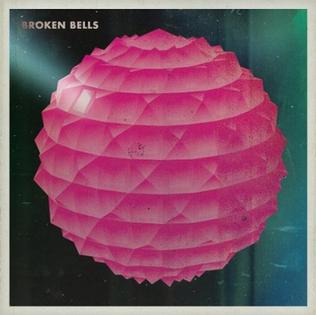
I feel like, in a lot of my recent reviews, I've chucked around a lot of adjectives. And while it's very difficult to describe something without using, you know, descriptive words, I'm running out of options, having a hard time keeping myself from repeating, and just generally working harder to come up with elaborate turns of phrase that are both clever and accurate. So I'm resolving to chill out on the over-description for the time being, until I find an album that is truly worth it. This is fair enough, because I think the only word needed to describe Broken Bells by Broken Bells (aiiee, my first self-titled!) is "atmospheric." Now I'm gonna spend like 700 words trying to explore what that means.

To me, it means that there's room to get up in between the sounds on this record. There's not a ton going on, but the slight instrumentation melds into a powerful serving. Unlike, say, Sleigh Bells, which uses a very limited number of elements and disorients, Broken Bells aims to hypnotize. Keyboards and acoustic guitars take turns softly humming in tracks and between them. The percussion is slight enough to fall into the background, but funky enough to keep the music going.

A lot of the time it's effective. "The High Road," which kicks off the album, is an instant winner with its humalong chorus. "Trap Doors" carries you away with great ease and swells underneath you.

"The Ghost Inside" would be another great tune with its really neat groove if it weren't for its Achilles heel: falsetto male vocals. Oy! If you've got a set of testes your name isn't "Prince" (or "Formerly-Known-As"/unpronounceable symbol/whatever) it's un-advisable to make a go at them. It's not a good expressive mode and tends to say "I'm trying too hard." Even though it's a good song. And while "October" takes a bit of a while to go from its twinkling piano introduction to its moment of release, it's mostly worth the trip.

So that's the double-edged sword of being "atmospheric." It's music that gives the listener time to move through and really take it all in, but if the listener is ready to move on before the music does, it gets irritating. When a song spends too much time contemplating itself without offering its listener something in return, it gets boring, as this CD sometimes does. Sometimes even in good tracks. Broken Bells plays catch and release with its listener at bit too much, if that makes any sense. The back end of the CD gets like that, and it might take you until halfway through "Mongrel Heart" to really notice the song you're listening to. By then it's on to "The Mall and Misery," which brings you back down to Earth by flirting with riffs and a few charging drum beats.

So that's "atmospheric." It's soft and subtle, but sometimes dull, especially if they try too hard to sustain it too long. What's more, it's a little too self-serious, so when James Mercer asks "What amounts to a dream anymore? / A crude device; A veil on our eyes" I find myself asking him to lighten up a bit. This song has a nice but overly-measured wigout moment in the chorus, which uses the falsetto better than "Ghost Inside."

But if you really want to know what I'm talking about, it's the bossa nova-tinged "Your Head Is On Fire," with its whispering chorus and subtle strings. In it, Mercer sounds vocally like Rivers Cuomo, but more relaxed than Cuomo's ever sounded in his career (and I like Cuomo,) but the song doesn't quite get there, which happens a lot here.

It was tough, getting older and learning that not all music had to rock hard to be good. I can even kinda hear the 15-year-old Scotto screaming at me across the decade for digging this CD as much as I do, but in the years since I've been him I've learned a bit more to value the nicer, lighter touches. I'm not all about it, but it has its place. This reminds me of The Beta Band, but I can't listen to the Beta Band for too long.

This album has a lot of charms but it doesn't seem to know how it wants to spent 10 tracks. Maybe it's just electrified elevator jazz, maybe it's this year's The XX, maybe it's just good soft tones for twentysomethings to have dispassionate, anonymous makeouts to. If any of this sounds good to you, check out at least a few tracks.

One snappy line to conclude the review: "The high road is hard to find," and they find it at least once in that song, but have trouble getting back to it. Zing.

Buy this album from iTunes now!

Tuesday, January 18, 2011

Dire Straits: Money for Nothing

As the Canadian proprietor of a music blog, I feel I have to comment on this. Last week, the Canadian Radio & Television Council finally listened to the lyrics to Dire Straits' hit "Money For Nothing" and realized it contains rather prodigious use of the word "faggot" and banned it, since, you know, you're not actually allowed to use that word on the radio. In fact, I don't think you ever were, which made it puzzling that I've heard it countless times on the only radio station I listen to, Q107 (Toronto's Classic Rock.)

Fittingly, it comes not long after the media sensation caused by the censored version of Mark Twain's Huckleberry Finn. What's weird, however, is the fact that I fall on opposite sides in both cases. I'm against the censoring of Huck Finn, but I totally get the censoring of Mark Knopfler. And I like Dire Straits.

Don't get me wrong: the usage of the respective slurs is similar. Twain uses the n-word to reinforce the plight of the African-American in pre-war Missouri. It would've been common usage back then, and a common notion that blacks were not people. The word has come to symbolize everything ugly about racism, and even generally makes people uncomfortable in it's "We're taking it back" context. I remember a really anvilicious episode of African-American comic Robert Townsend's lameass sitcom "The Parent 'Hood" where his son asked, innocently, why some black kids were willing to use this word, and he got a thousand-yard stare as he sighed "I don't know, son... I just don't know." Omitting it from the text scrubs a pretty vital part of the meaning of the book.

In the song, Knopfler takes the voice of a laborer in an appliance store, slacking off while watching MTV. He's got to move the refrigerators and colour TV's, while some dumbass guitar player gets his "Money for nothing" and his chicks for free. The offending verse goes like this:

That little faggot with the earring and the make-up
Yeah buddy, that's his own hair
That little faggot's got his own jet airplane
That little faggot, he's a millionaire.


The (justifiably envious) blue collar workersees the prissy, effeminate rock stars that were on the scene in the mid-80's (I'm not sure whether it refers to Motley Crue, David Bowie, Sting, Elton John, the Pet Shop Boys or Knopfler himself) as, in Knopfler's words, running a "good scam." He has a grudging respect for them. And it's completely realistic that the character would use that slur (and apparently he wrote it based on the real situation from which it arose.) But there's a huge difference between writing a word in a book that gets taught in an English Lit class, and using a word in a Top 40 hit.

In an English class, you have a teacher guiding you through the text, explaining the context and meaning of the word and how it relates to the theme of the book. On the radio, in your car, you just hear a catchy lyric that goes "faggot" and think "Did he just say faggot? That's fucked up." Context isn't something people consider.

Really, the entire verse is redundant. The unedited version of the song runs 8:26. The label issued the radio-edited 4:07 version on the last Dire Straits compilation, Private Investigations: Te Best of Dire Straits and Mark Knopfler. I've got it on my iPod and there's no measurable effect on the song except that I don't get uncomfortable listening to it near my family members. As much as I dislike censorship, the slur is kinda unnecessary.

Still, classic rock stations feel the need to get indignant. (Surprisingly, classic rock radio stations are resistant to change.) Q107 in particular has been really snarky about it. And I get it, they have a loyal fanbase, they can whip people up into a frenzy, but it's not terribly productive to get pissy about the right to broadcast what is generally considered hatespeech. You can teach it in a classroom, that's fine in my books: but not for free over the airwaves -- there are sponsors to think about.

I'm not usually pro-censorship, I just think it would've been better if Knopfler had gone with a less controversial alternative, like "That little fucker."

In general, I like the song. Even with the slur, the lyrics are intelligent and catchy, and it's all hooked around a bitchin' riff that easily brings to mind the kind of MTV shenanigans Knopfler's writing about. Here's the edited version: As you can tell, without the word "faggot" it clearly makes no sense whatsoever:

Sunday, January 16, 2011

Tokyo Police Club: Champ

What a welcoming sound is Tokyo Police Club's Champ. Good, simple rock seems increasingly hard to come by lately, and all too easily dismissed by the critics. It seems like a minor moment in music, and to a certain degree it is, but not because it's not a grandiose, profound statement. It's just hard to escape the stigma of being merely good rock. It feels like it's been about a year since the last time I heard a rock record that didn't desperately want to be something bigger. Those records sometimes succeed and sometimes get overblown and obnoxious. An album like this is fated to be seen as an underachiever, all-too-familiar and not overly ambitious. Whether you think it's important to be ambitious or not, this works for me: I've listened to it about eight times since I opened the package yesterday.

This is probably not because it's an intensely life-changing listen. It's just so immediate and in-the-moment that it seems to rush by unexpectedly, so when it's done, I want to start again. "Favourite Food" (hurray for Canadian bands using Canadian spelling) is an ideal opening track, easing the listener in with a few abstract keyboard flourishes (the album isn't utterly devoid of ambition and thoughtfulness, after all, they use their keyboards deftly throughout) and slowly unpeeling a downtempo strumming tune into an anthem. Acoustic guitars and soft keyboard tones give way to drum fills and jangly REM type riffs and away we go.

Sometimes they're a little punky, like on the blistering "Wait Up (Shoes of Danger)," or on "Big Difference," which has the relateable chorus of "That's why I can't send you Christmas cards / It's why I have to keep you in the dark / Less big words and more exclamation marks." Sometimes they sound like irresistible pop, like on "End of a Spark," or on "Not Sick," which is led by a great drum beat while the keyboards deploy the main rhythm to match it. And "Gone" echoes The Coral, which is a sentence I never thought I'd write, since not even The Coral echo The Coral. It's fun and a little drizzly.

I don't want to go the "sound of a generation" route with this: it's really just a nice record. Even so, I know my generation does disaffection the way Lennon's did rebellion and Cobain's did angst. But we still like to rock, so I'm all for the chorus of "Favourite Colour," which manages to hook an anthemic riff around what is essentially first-date small talk. This album is sorta the sound of many small moments collected over time, little observations preserved, deliberately recalling a time when staying up late was key. I think it's something my generation picked up by listening to Pinkerton over and over and watching Wes Anderson films and Garden State too many times, but it could just be me. Not that this sounds like the soundtrack to Garden State: it's too lively for that. And "Breakneck Speed" wraps all of that detachment and resignation up in a Coldplay or Kings of Leon-sized riff, shines it up real good, and shoves it in your culture hole, reaching for the epic while knowing they're stuck on Earth. In those moments where the band creates a sound that could fill a stadium, they never fail to provide a solid percussive base for their rock that many MOR arena-size groups neglect.

"I remember when our voices used to sound the same / Now we just translate." Dave Monks' voice has that detached sigh, wistful on one hand, optimistic and sincere on the other. All this uncertainty comes out on the final track, "Frankenstein" which brings the chorus of that song back by asking "Tell me it's good to be back" and tying the request to a watery synth riff worthy of Phoenix. It all comes together so smoothly, you'd think it was too easy to be so good, but I doubt it.

Now all of this is well and good, but like I said, this album is not some grand statement, it's just a good rock record. All of this generational business is put in the service of some deft hooks and cool choruses. It's interesting, but it's straightforward enough that the sound will particularly appeal to high schoolers learning there's such a thing as good rock, but aren't yet looking for Broken Social Scene or Arcade Fire. For some kid born in 1995 or 97, he might pick Champ up today and come back to it in 5 or 10 years and think, "This was the first really good CD I ever got," the same way I think of Green Day's Dookie or Offspring's Smash (note: I had older brothers, so this age is shifted way down for me.) It's good music to be a teenager to, or to feel a bit more like one. You could just lie on your bed with your girlfriend and listen to a song like "Hands Reversed," and wonder where you're headed.

Buy this album from iTunes now!

Friday, January 14, 2011

Cover: Cee Lo, "No One's Gonna Love You"

Amidst all the hype of a hit single like "Fuck You," the fact disappears that Cee Lo Green is a talented-ass guy with a good ear for composition and a great voice. Years after Gnarls Barkley's "Crazy" has stopped appearing on the radio (and nobody thinks much about it anymore) you might remember he also covered Violent Femmes' "Gone Daddy Gone," a tune which itself owed to blues of yore (quoting Willie Dixon.) "Fuck You" is a great genre experiment, a revived motown sound that took on a life of its own as a 2010 smash. No matter what my opinion of his cuss-laden hit single and its radio-friendly censored version (which I hear every three to four hours at work) I'm more interested in the fact that this exists:


The Band of Horses original is very good, but a strong cover can turn a great tune into a classic. It works by ensuring that all the feel of the original is retained even in its altered form. Whereas the BOH version is contemplative, Cee Lo's is demanding and pleading, sung with conviction rather than resignation. The result is a slightly different but significant take on the song. This sort of thing used to happen all the time, when artists like Joe Cocker could make great careers out of interpreting. It doesn't happen as much anymore, because we tend to put "interpreters" down. But this dude, whether you like him or not, is no copycat. This is legit.

I don't think I'll be buying the album. I've got too many CD's lined up and there's sure to be more, so I doubt I'll get around to it. But this is very reassuring.

Thursday, January 13, 2011

Sleigh Bells: Treats

There's a controversial song on The White Stripes' White Blood Cells album called "Aluminum," where Jack White uses the drums and guitar to replicate the sound of an aluminum processing plant. It's an abrasive, mechanical, repetitive, feedback-laden piece of avant-garde music that I admire, yet I leave off my iPod because I don't need it disrupting my day when I've got my playlist on random.

Treats is like an entire album of that song if the machine broke down, gained a sentience, repaired itself, and went on a killing spree. This is a hostile record. It is coming to get you. After my first listen, I just wanted the emergency personnel to drape a blanket over my shoulders, hand me a cup of cocoa, and tell me things were going to be okay. But they're not going to be okay, are they?

If this sounds like a wholly negative review, I assure you it's not. It's not a glowing endorsement, but I'm just trying to give you a good idea of where my head is at. The album begins with "Tell 'Em," a blitzkrieg of shotgun-blasting guitars and drums, sometimes working against each other to instill a deep sense of panic in the listener. At times, the album is downright Brechtian. The guitars range from merely loud to ear-rapingly noisy. The drums seem somehow wrong. Singer Alexis Krauss has an unearthly high voice, singing at the top of her register for a lot of the songs, clashing with the chaos below and only making the elements seem to fight harder against each other. "Rachel" begins with her panting heavily and ends with cooing while synths climb up to meet her. Frequently, she just grunts and I can't tell whether it's the kind of grunting done in the bedroom or at the gym.

Occasionally, it's tuneful, and I think the chaotic approach makes their "songier" songs that much more effective. "Rill Rill" is downright near-danceable and "Infinity Guitars" is rather awesome in its chanting, stomping, crunching, squealing glory. Other times, it just fucking hurts, like on "Crown on the Ground" which stabs you repeatedly then dances in your blood as it reaches it breathless climax.

The most effective part of the album is the way all the varying elements refuse to meld. The guitars and the drums and the voice -- and the occasional synth, production tricks and yes, so it seems, actual sleigh bells -- all stand distant and isolated so that they can work against one another to wrap their talons around the listener and pull him this way and that. It's a masterwork of disharmony. At its best it seems like an immensely rewarding work of experimentation. At its worst, it sounds like something an rather talented teenager might've accidentally cobbled together on Garage Band.

I don't sleep well on nights when I listen to "Treats." It's intimidating, relentless, and utterly irrational. This is not fun music. This is not a good time. This is panic distilled. The ominous final track offers the threat or promise that there are more "Treats" to come with its staggering riff and pulsing keyboards and utterly arrhythmic percussion. It may not be my ideal record, but it's extremely effective and affecting: it stirs something up in me, which all good music must, it's just that it puts this ability toward fearful rather than helpful ends. But that feeling alone is worthy of revisiting, and on my subsequent re-listens, I was more and more accustomed to the chaos. I got a bit more immunized and I started hearing songs where I'd previously only heard the noise. I'm just afraid now of what might happen if I delve too deep into the parts of the mind capable of creating such noise.

Just don't play it near your dog, and don't try to whistle it on the elevator.

Buy this album on iTunes now!