Sunday, April 7, 2013

Serious Contenders: Hanson, "MMMBop"


The 90s were a fertile time for seemingly upbeat pop songs with secretly dark, sophisticated meanings: "The Way" by Fastball is a tragic romance (in that a couple seeking to escape their day-to-day lives ends up missing and eventually in real life dead) "Semi-Charmed Life" by Third Eye Blind is about meth addiction, "You Get What You Give" by the New Radicals is a rallying cry against commercialism, and I'm pretty sure "Fly" by Sugar Ray is about the JFK assassination. Or maybe not, but those other three, yes. By far, I would say, the biggest contradiction of the lot is Hanson's "MMMBop." No, this is not a stupidly late April Fool's joke. It's a well-documented fact that the lyrics to "MMMBop" are about the fleeting nature of youth, and about the uncertainty that we can ever know for sure who is really with us: "So hold on to the ones who really care / In the end they'll be the only ones there / When you get old and start losing your hair / Can you tell me who will still care? / Mmm bop, da ba du bop..."

This song was written by teenagers. It very nearly resembles morose poetry scrawled in the margins of a history textbook, but the fact is, the Hanson Brothers were (still are!) pop-literate musicians and songwriters who could marry the unwarrantedly-profound musings to an insanely catchy pop hook, based around, I think, the same chord progression as the Velvet Underground's "Sweet Jane" (itself a forefather of the dark-light pop blend.) And they came up with this completely insane yet totally accurate chorus to sum it up, which you would absolutely never guess based on the sound of it, far from the first thing you would arrive at if you were writing this song: "In an mmmbop, they're gone." An "Mmmbop," apparently, is a brief instant in time: you have people for a short period, and then suddenly (mmmbop) they're gone. And it just sounds like babytalk.

It would be a great catchy old pop song even without a hidden meaning, and I'm not sure that being secretly mature and observational makes the song any better but it accounts for its existence that way. The song's meaning does get stronger, though, when sung in the ebullient voice of a youthful pop song, itself a fleeting thing. It's very "in the moment," so much so, for 1996, that it has those DJ scratches randomly in the mix, along with cowbells.

There will always be those who don't recognize the song's greatness. It's better than you think but it could still not be for you because it is, again, overwhelmingly poppy, even with the actual content, and still sung by a shrill-voiced trio of precocious then-teenagers who are the last people you'd expect to muse about "When you get old and start losing your hair." That contradiction is the inherent difficulty in these secretly dark pop songs is that the form they take somewhat squirrels up their message. For those with ears to hear it, though, this is a serious contender.

Thursday, April 4, 2013

Best Song Ever: April 2013 (Round 1)


I've been going a little stir crazy lately. The little elves inside my brain that write my reviews have been fatigued since the new year: despite being flush with great new releases by the likes of Hollerado and David Bowie, not to mention finally getting into Husker Du, it's a little tough getting anything going, as far as writing for this site. I'm reluctant to return to the grind. Then an idea hit me. A really stupid idea, but maybe a fun one.

About a year ago, the entertainment site Vulture ran a series of articles designed to determine the best TV drama of the past 20 years. They used a tournament bracket setup and a panel of esteemed judges. It made for a really entertaining bunch of articles. Every now and again I have thought it might be interesting to find a way to incorporate something like that into SOTW.

So what has happened is that I had iTunes select 32 random tunes from my (active/checked) library: some are things I've covered on SOTW, some are my old personal favourites, some are objective classics and some are recent gems. And maybe some suck but I just happen to have them. Although the idea of pitting entertainments against each other is inherently an incorrect way of looking at it (I cannot stress that enough,) I am nakedly admitting that I'm just doing this for shits and giggles. The song that wins this tournament (be thankful I'm not doing full albums) can't possibly be the literal best song ever. By necessity, it's something that I listen to anyway, and I loves me some music so I'm not going to be too harsh on any of these songs. In doing this, hopefully, it will spotlight a lot of great tunes that haven't come up in regular conversation lately. Let's speed through the first half of our opening round:

Tokyo Police Club, "Frankenstein" vs. Japandroids, "Fire's Highway"

Tokyo was one of the first albums I truly, completely loved after starting this blog, and "Frankenstein" is a fantastic closer to that album, acting as a comedown from the jittery, hooky synth-power-pop, with its mellotronic tones and quivering guitars, and that staggering drumbeat. It's very odd that this competition begins with something that wraps up its original album so completely and satisfactorily.

It's an old favourite versus a new one, though, because Japandroids was one of the best albums of 2012, and "Fire's Highway," with its splashing riffs and thundering drums sums up its qualities succinctly. It's got those echoing, anthemic "oh's" and coarse vocals. "Fire's Highway" is definitely a great piece of an excellent whole, but "Frankenstein" is a complete listening experience on its own. It gets the nod.

Winner: "Frankenstein"

David Bowie, "Love is Lost" vs. The Exploding Hearts, "I'm a Pretender"

In one corner, a dense, pulsing, organ-fueled, moody track from David Bowie's great new album. In the other, a snotty, brash piece of mid-2000s pop punk. You might think you know the answer, but you don't. All things being equal, and the Bowie album being great, its newness works against it, and I haven't had enough time to become as attached to it, especially not this particular song, as I have to the perfectly raucous Exploding Hearts.

Winner: "I'm a Pretender"


Joel Plaskett Emergency, "Penny For Your Thoughts" vs. Richard & Linda Thompson, "Shoot Out the Lights"

Oof. This bracket is a killer. "Penny" is a key part of the terrific concept album that is Ashtray Rock, a cheeky, playful and catchy as hell ode to young love. And "Shoot Out The Lights" is a lumbering, towering freefall of depression and despair. It just hits that sweet spot. I've got to give it to RT, who bring one of my favourite guitar solos ever to this track. I feel like Joel would understand.

Winner: "Shoot Out The Lights"

The Who, "Substitute" vs. Japandroids, "For The Love of Ivy"

The BC Duo face tough competition for the second time tonight, going up against major-minor Who fave, "Substitute." Not the most beloved Who song, but also not my favourite track off Celebration Rock -- if it swapped places with "Fire's Highway" this would be a running battle. In the end, The Who's original takes it over Japandroid's cover. The best Who songs are quirky and weird and hard rocking all at once, and this is no exception.

Winner: The Who


Jack White, "Blunderbuss" vs. The Eels, "The Longing"

Not the closest matchup of the tournament so far, but definitely the most downbeat. The shimmering Nashville Skyline-esque beauty of White's solo debut title track goes up against a free verse poem set to a ghostly waltz by Mark Oliver "E" Everett. And make no mistake, as part of El Hombre Lobo: 12 Songs of Desire (which I'm totally gonna review soon) it's a key track, bringing a deep dimension of pain and despair in its refrain ("Surely there are other things to life / But I can't think of one single thing / That matters more than just to see her...") but "Blunderbuss" is one of the best tracks on one of the best albums of last year.

Winner: "Blunderbuss"

Arcade Fire, "Wasted Hours" vs. Talking Heads, "Once in a Lifetime"

This seems to be a recurring theme: matching songs that are great as part of a complete package against songs that can be listened to at any time in any situation. The Neil Young-tinged "Wasted Hours" is a great part of the overarching sound of The Suburbs, with its dusky-lazily strummed twang. But "Once in a Lifetime" is fucking "Once in a Lifetime!" I don't even need to tell you why it wins.

Winner: "Once in a Lifetime"

Nirvana, "Sliver" vs. Aerosmith, "Movin' Out"

Holy shit, this is regrettable. I have actually said "Sliver" is my favourite Nirvana song. Not always, but I have. It just sums them up so perfectly, their power and poppiness, their angst and perverse humour, writing a punk-grunge song from the perspective of an angsty child forced to stay with his grandparents. "Grandma take me home" is maybe one of the most surprisingly awesome rock lyrics ever (up there with the Pixies' "it's educational!") But look who they're up against. Much to the chagrin of many of my bemused colleagues, I have professed my lifelong love for that band time and again. And "Movin' Out" is not minor Aerosmith, it's got that sinewy riff, those hippie hangover post-psychedelic philosophy class lyrics that are utter nonsense but work better because of it. Rip the heart right out of my chest why don't you.

Winner: "Movin' Out"


Arcade Fire, "Ready to Start" vs. Lit, "My Own Worst Enemy"

Arcade Fire makes its return appearance coming up against one of the biggest rock hits of the 90's. And I love me some 90s rock, but with one of the most dense, subtle-yet-rocking tracks off The Suburbs, the 2011 Best Album Grammy winners take it. That lyrics, "I would rather be alone than pretend I feel all right" just does it for me, man.


Talking Heads, "Take Me To The River" vs. Tokyo Police Club, "End of a Spark"

I think Talking Heads' reading of Al Green's sexual-angst-via-religion "Take Me To The River," as a tightly-wound plastic funk explosion is one of the greatest covers ever committed to tape. And "End of a Spark" happens to be one of my favourite tracks off Champ and a terrific piece of 2010 alt-power-pop. And with both bands already having a slot in Round 2, it's an interesting scenario. If the Heads didn't win, it would be because it's not the even-better Stop Making Sense version but the original recorded version. Or perhaps because there's an inherent push against covers in this contest.

Winner: "End of a Spark"

Aerosmith, "Lightning Strikes" vs. my bloody valentine, "only tomorrow"

Two more different tracks from my iPod, you could hardly find. On the one hand, sludgy early-80s hard rock from Aerosmith's redacted era. On the other hand, a track from My Bloody Valentine's 2013 comeback album, the gauzy, low-fi, moaning, squealing, sighing, shoegaze epic mbv. It's bad enough I gave 'Smith the nod over Nirvana, I know James Leask would flay me if I passed over mbv for this one. Or at the very least, he would cancel my scheduled appearance on his podcast next week. Luckily for him, and mbv, this is minor Aerosmith we're talking about: Joe Perry wasn't even with the band for this album, and while I think it happens to be underrated, it's still not in the same league as one of the best tunes from this terrific album, mbv: I love the way it builds and culminates in that staggering, beautiful riff.

Winner: "only tomorrow"

The Hives, "Hate To Say I Told You So" vs. Gin Blossoms, "Hey Jealousy"

Now here's a matchup: the razor sharp garage punk of early-2000s Hives and the warm fuzzy aw-shucks self deprecation of the Gin Blossoms. It's not an easy win for the Blossoms, but it's a clean one.

Winner: "Hey Jealousy"

Joel Plaskett Emergency, "Written All Over Me" vs. Arctic Monkeys, "Brianstorm"

Joel! So glad you're back. Here we see the opening track from his "Truthfully, Truthfully" album paired against the opening track of Arctic Monkeys' second disc. For me, Favourite Worst Nightmare takes a few tracks to really hit its stride, and "Brian" is an only-okay holdover from the Whatever People Say I Am era. "Written All Over Me," meanwhile, exudes all the charm and wit that permeates all of Plaskett's music, a mischievous, down home chunk of riffage that always gets me going. Great curtain raiser.

Winner: "Written All Over Me"

Deer Tick, "The Bump" vs. Deer Tick, "Chevy Express"

Now here's a wild card. I had never even listened to Deer Tick before a few weeks ago, when someone showed me A.V. Club's Undercover series, featuring a terrific take on one of my all-time favourite songs, Harvey Danger's "Flagpole Sitta." I got the album, Divine Providence, and I liked it, and then moved on. Then my random playlist generator sat these two songs, neither of which I could recall from memory, right next to each other, the only instance in round one of a band going up against itself. So I left it in - and revised my proposed "only one song per band" rule, just to see how it played out. "The Bump" is them at their bar band best, and "Chevy Express" is a more intimate ballad. Both great and for different reasons, but I've gotta give it to the former.

Winner: "The Bump"


Matt Mays, "Indio" vs. The La's "I Can't Sleep"

Matt Mays released a great album in 2012, which I will review soon, and "Indio" is a terrific intro to it, with its dusty, mystic southwestern feel. Against weaker opposition, it might have won, but "I Can't Sleep" is The La's at their peak power, right up there with "There She Goes." Life's not fair sometimes.

Winner: "I Can't Sleep"

The Vaccines, "Wetsuit" vs. Zeus, "Kindergarten"

"Wetsuit" brings to mind tunes like "Favourite Food" from Tokyo Police Club, or Joshua Tree era U2, the way it builds modestly to ignite a towering inferno. It's maybe not as grandiose as all that, but it's a good listen. The first Zeus record was one of my favourite records of 2010, and here's some high spirited madness from them. They edge out the win.

Winner: "Kindergarten"

The Animals, "House of the Rising Sun" vs. The Who, "Behind Blue Eyes"

It could be the case that this entire tournament is a contest to see who gets to come in second to the winner of this match. Based on reputation alone, these might be the two heaviest hitters of the lot, and they are up against each other in round one. "House of the Rising Sun" was my favourite song as a kid: Eric Burdon's voice is so dour and enigmatic and gloomy, and that guitar is just so perfect, as the organ bubbles under the surface before overtaking it completely.

Both these songs have their mystical qualities. The Who has already advanced in this tournament, but not like this. That was early Who, this is mid-Who, Who's Next, post-Tommy, circa Pete Townshend completely losing his marbles in the Lifehouse debacle and coming back with one of the most phenomenal records of all time. "Behind Blue Eyes" is the hypothetical villain song, building to that great climax, this is that band at nearly their best (besides "Baba O'Riley," for sure.) This is the hardest call of the night. What's more, it comes back to that same dilemma: a great single, or a great album song.

Really listening, really thinking about it, hearing the individual strings of Pete Townshend's guitar, the crawling of John Entwhistle's bass, one of Roger Daltrey's best vocal performances, and then that moment when Keith Moon's drums come in. Songs like this are what you're really thinking of when you think of the Who. And it's not even 8 minutes long. It's actually shorter than its hit single opponent. If I could only hear one of these songs ever again, I don't know if I'd pick the same, but tonight, it has to be.

Winner: "Behind Blue Eyes"


So maybe I do have a bias against covers (although "Rising Sun" may as well be an original.) It's quite a selection I have for myself in Round 2. Place your bets and get ready to get disproportionately mad... if you're not already.


Sunday, March 31, 2013

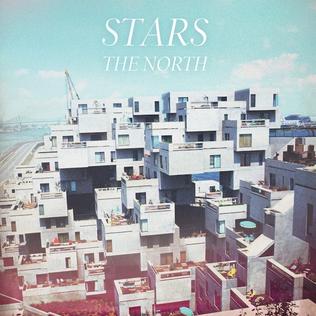
Stars: The North

As we crawl slowly out of this winter of 2013, I find myself thinking of this very good Stars album, which came out toward the beginning of it and seems to capture its character. On the title track, Torquil Campbell sings, "It's so cold in this country... every road home is long." That seems to sum up the album pretty well: although it's fairly lushly instrumented and accessibly hooky, the sound is very minor and subdued, with the wall of sound working to overtake the moody, theatrical vocals. The backdrop is pale but deep. The singers are hushed and aching, lonely and isolated and singing about it.

It's an interesting item after the band's previous album, The Five Ghosts, which I reviewed early enough on that I can't bear to look back on what I said. There were a number of powerful, mold-breaking moments on that album, and a number of wide shots that didn't land with me. The North has a higher floor and lower ceiling: they don't go out of their range as much, and as a result they wind up with an album that is a more consistent and overall enjoyable listen, but one with a less thrilling upside. I can listen to it the whole way through, and only a few tracks will stand out as being high points, and even fewer will stand out as being lesser ones.

It's made mostly out of chilling, frozen pop, which like much of Stars' music skirts an 80s-like line between dance and rock. "Backlines" transmutes from a guitar riff to a synthy chorus and builds string-laden denouement. The elements never clash because they are all with a single purpose. Their command over tone on this album is impressive. The liquid "Lights Changing Colour" and mystic duet "Loose Ends Will Make Knots" are among the finest, most Starsy in atmosphere. "Progress" improves on some of the stilted indie-beat of The Five Ghosts, revealing one of many moments where you really see the heart of the album. "Through The Mines" feels like a reminder that as good and popular as Of Monsters and Men is, Stars got there first and are capable of doing it as well as ever. Amy Millan's voice is a beautiful coo. As more and more top acts feature female vocalists, none has quite the bittersweet earnestness of hers.

Nestled between these moody atmospherics are some nimble indie pop tunes that are bright and upbeat but don't quite break the tone of the album, helped by Campbell's stately delivery. "Hold On When You Get Love And Let Go When Give It" benefits from this restraint, with the music swelling beneath him and gradually overtaking him. "A Song Is A Weapon" is my favourite individual moment on the album, balancing the precious tone with a catchy beat and good lyrics.

The album cinches up its mastery of tone, its command of "swoony indie rock balladry" with the closing tracks, the staggering "The 400" with its choked up refrain of "It has to go right this time", and the tactful dubstep-lite of "Walls" with its call-and-answer vocals. Ultimately, the album leaves more suggested than outright stated, which is where it has the edge over its predecessor.

Stars are a good band, but sometimes hit and miss with their album packages. Here it all seems to come together. The songs stand out from each other but also stand together into a 43-minute piece that plays very well in a single sitting. I think none of the songs on it will be as well-regarded, years down the line, as "Your Ex-Lover Is Dead" or "Reunion" or, for me personally, "Wasted Daylight." But this is the set they've probably been hoping they would put together for many years. Each song isn't a knockout, but as it goes on all the pieces go into place and the individual moments assert themselves for what they are. Pick it up if you were thinking about it, and you'll be glad you did.

Buy this album now: iTunes (Canada) //iTunes (USA) // Amazon.ca // Amazon.com


Wednesday, March 27, 2013

Sonic Sandwich: You Only Stroke Once


One thing that vexes me, that I guess you could say compels me to keep trying to write about music, and in particular argue with people who can't hear me, is The Strokes. I don't know why. All in all not a lot of critics have much negative to say about them. But at the same time, every new release of theirs seems to be met with a halfhearted smile, a shrug, and a saying "Is This It was really good, wasn't it?" I just don't think they get their due.

Their debut is a really good album, as evidenced by the fact that I'm talking about it right now, same as any of those critics. But it's in the past, and they have become a band that is constantly fiddling with their sound, adding and subtracting various elements with varying degrees of success but often coming out on top. I wish I could write a review of their new album, Comedown Machine, in a way that strayed away from this topic, but as the years roll by The Strokes are doomed to stay in the shadow of their debut. It's not enough to stay good after a strong first impression, people expect you to keep getting better somehow. Rock and roll is about serious works of art, not reliable collections of good (and diverse!) tunes.


And make no mistake, the tunes are there: every Strokes album has its share of rock solid tracks that I will love to hear until I inevitably go deaf. Angles, their reluctantly-praised 2011 effort, contains no fewer than four excellent tracks that could not have appeared on Is This It. If I was going to recommend only one album of theirs, I might even skip right to Room on Fire, the same way I'm starting to wonder if I maybe like the Arctic Monkeys' second album better than their first. When The Strokes finally put out at Greatest Hits disc, I'm sure everyone will act like they knew all along, and that the other albums were just weighed down by dross, but I find them thoroughly listenable in all the shadowy corners too.

I haven't given Comedown Machine the level of attention I need before I can really make a review, but I find it so far to be a moody, distant, but impressively constructed record, the underside of the gleaming dance-rock of Angles. It's different than the others, just like the others are different for each other, and I think it's time to step back and take notice that this is not the band that a lot of people think they are or want them to be. They're something much more rare: a changing animal, that spends one album in one skin before subtly shedding it to reveal the next. This was once standard operating procedure for top rock acts, and in retrospect they get praised for it, but there are tons of examples from back then, too, of critics and pundits being unable to appreciate a good thing while it was happening. And this retrograde way of thinking isn't called out, because hey, it's 2013 and The Strokes haven't been "The Big Thing" in about ten years. And fair enough. I just always think it's best to look at music as something you listen to., and this set holds up to that.

I've written extensively on the burden of expectations, and it's something none of us will ever be free from. My official stance now is to treat all these albums, as much as I can, as a debut album. Meet the new Strokes.

Saturday, March 23, 2013

Cover: Ronnie Hawkins & The Hawks, "Hey Bo Diddley"


Back when The Band was still The Hawks, they backed Ronnie Hawkins on this cover of Bo Diddley's original, which takes elements from both "Bo Diddley" (which is based on the "Hush Little Baby" lullaby) and "Hey! Bo Diddley" (which is based on Old Macdonald.) The thing that bites me is that growing up, I only knew this version from the oldies radio station, and assumed it was Bo's original. So until tonight I was mad trying to find the version with this exact phrasing.

I came to think of it because I was listening to "Hare Krishna" by Husker Du, and I thought "Hey, they're doing a goof on 'I Want Candy!' Wait, 'I Want Candy' is just a Bo Diddley beat! Oh yeah, like a million songs have that beat in them!" It's a great, timeless rhythm that keeps getting used in rock music (though you don't hear it much anymore) because it's solid and propulsive but also sinewy and suggestive. "Bah-bah-bah---a-bah-bah." Check out this quote from Wikipedia about its prevalence:

“Other songs employing the Bo Diddley beat include “(Marie’s the Name) His Latest Flame” (1961) by Elvis Presley, “I Want Candy” by The Strangeloves, “1969” (1969) by The Stooges, “Panic in Detroit” (1973) by David Bowie, “Mr. Brownstone” (1987) by Guns N’ Roses, “Hari Krsna” (lyrics are even sung to the tune of ‘Hey Bo Diddley’) by Hüsker Dü from their album Zen Arcade, “Faith (1987) by George Michael, “Desire” (1988) by U2, “Boa-Diddley” (1990) by Phillip Boa and the Voodooclub, “Movin’ on Up” (1991) by Primal Scream, “Woodcutter’s Son” (1995) by Paul Weller, and “Screwdriver” (1999) by The White Stripes.[50] Other examples include “Magic Bus” by The Who, “Rudie Can’t Fail” by The Clash, “Get Me to the World on Time” by The Electric Prunes, and “Party at the Leper Colony” by “Weird Al” Yankovic.[51] Some of the more subtle uses of the Biddley beat include “Hateful” (1979) by The Clash and “How Soon Is Now?” (1985) by The Smiths.”

Wednesday, March 13, 2013

Sonic Sandwich: People, Hell, Angels, Scary Monsters & Supercreeps


So, where ya been, Scotto?

I've been taking a little hiatus for the last month or so. Unlike the one I took last summer, there's no crisis or breakdown behind this one, I'm not frustrated or bored or angry at music or my ability to write about it. I spent January and February devoting a bit more time to a promise I made myself regarding other projects. But that didn't stop awesome music from coming out or being available in the back catalog. So part of what I was doing, between pushing fictional characters around in Word documents, is trying to come up with a way I could do this site regularly and not utterly drain myself every time I open up a New Post tab. Although I'm still not sure how it's gonna turn out, I'm gonna workshop some kind of possible new format that involves me just freestyling about stuff I've been listening to, what's out now or what old music I finally got around to. So basically... this site, still.

Just yesterday saw the release of the new David Bowie album, The Next Day, which you absolutely should be buying right now, if you haven't already. Back in January we we got a glimpse into this thing with the advance single, "Where Are We Now?" which was gorgeous and exceptional and both new and classic at once -- the rest of the album delivers on that promise. I think the great thing about Bowie releasing an album in 2013 is that we are now in a time when new work by old artists is very highly valued. Bowie was a working artist all through the 90's and up to the early 2000s and his new releases were, despite good marks from critics, received lukewarmly. Allmusic aptly describes him as being "taken for granted" during this period, as audiences maybe grew weary trying to suss out what his current "thing" at any time was. As someone who made his bones as an innovator, seeming to fall behind the pack was death, even as he was making good music ("I'm Afraid of Americans" rocks.) I remember when I was in high school and his last new albums were coming out, either Heathen or Reality, and the public response was basically "Oh, a new Bowie album? It's not Ziggy Stardust, it's not Heroes, it's not Let's Dance... so whatever." Then again I was 15 and not particularly paying attention so maybe I don't know for sure.

But in 2013, after a decade of absence, David's audience can be less self-conscious about being eager to receive him and appreciate what he does. At this point his "thing" can basically just be "Being David Bowie," whatever that may mean. I'll leave to Bowie scholars to pinpoint periods of reference: "This from Heroes, that from Station to Station, a bit of Hunky Dory and then Scary Monsters..." I don't really think like that, but some do and that's cool. But it sounds like Bowie and even better, it sounds vital. There's an audience for it, I daresay a huge one. There's an entire generation of folks like me who have now grown up voraciously absorbing music that was recorded before we were born. If you didn't buy any of those 90s Bowie albums, pick this one up anyway.

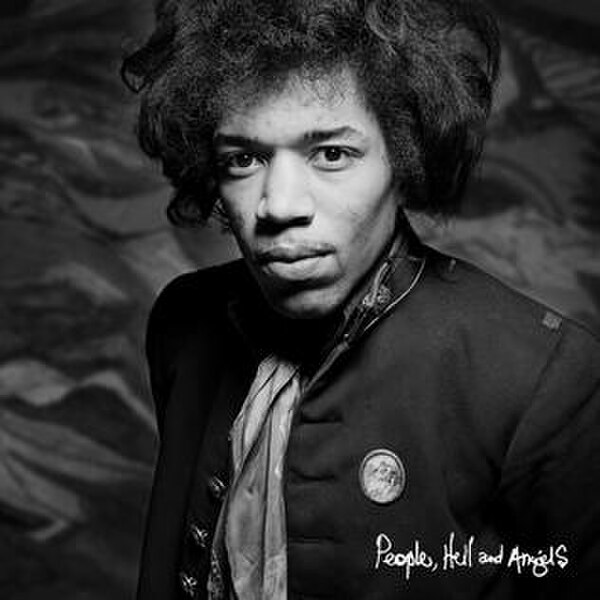
Also released last week was the third and, I think final, "new" Jimi Hendrix album. For those curious, as I was, it turns out that before he died he was working on a huge, huge project, and recorded maybe three LPs worth or more of material with his Band of Gypsys, but then it was caught up in legal disputes after his death, and released in inferior formats over the years. The previous two released were First Rays of the New Rising Sun and Valleys of Neptune. This one, People Hell & Angels, feels more gritty and human, than say, if your idea of Hendrix is "Purple Haze" or "Voodoo Chile." There are horns and backup vocals and things that didn't seem synonymous with Hendrix's traditional canon. Most importantly though, these are full-bodied, lush recordings, not rough sketches, demos or outtakes left off earlier albums due to inferior quality. These sound like they were either ready for release in 1970, or not far off and touched up very well. Considering that for 40 years his library has consisted of three albums, I think people should be very into this "new" Hendrix, I believe the last there will ever be. Considering I just recently promoted the Gary Clark Jr. album by saying "If you can't have new Hendrix you can at least have this," I would feel silly not putting my stamp of approval on this one.

Saturday, March 2, 2013

Cover: Philosopher Kings, "Cry"


I think the Philosopher Kings' take on Godley & Creme's tune is one of those cases where the cover severely outdoes the original. The first version is a good song, haunting and hurtful in its way, but Jarvis Church's 90s band pumps it up into a danceable bit of soulful pain. They wring out hooks that are only slightly in the original and help it reach its full potential.